Helping design and engineering professionals discover, evaluate and specify technologies and processes that shorten the design cycle and enable success.



Digital Engineering April 2026
In the latest issue of Digital Engineering, we take a look at the latest innovations in design for additive manufacturing, including the use of natural language inputs, social media cosplayers, and AI integration. The issue also includes a feature…

January Special Focus Issue: Design for Additive
In this Special Focus Issue of Digital Engineering, learn about the latest advancements in design for additive manufacturing, including new software tools, additive in automotive, custom medical devices, and more.
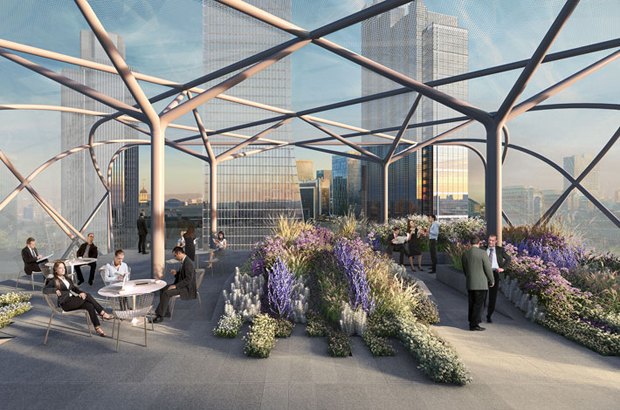
While a number of entities, including NASA, have shown interest in this application of 3D printing, one of the first to actually employ it in the field is the construction firm, Skanska. The company will be utilizing AM as part of the construction of the Bevis Marks project in London. Topping the new construction will be an ETFE roof, supporting by 3D printed cladding.
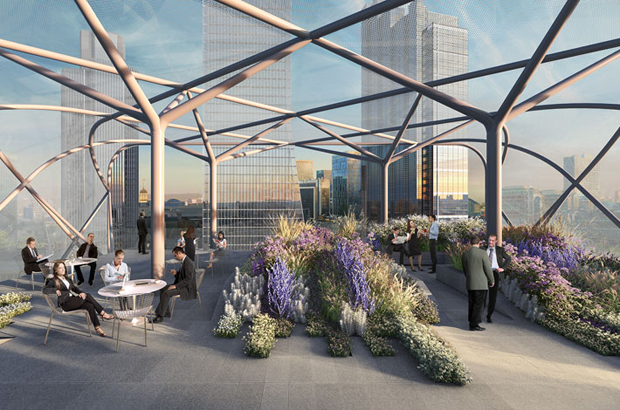
ETFE stands for ethylene tetra fluoro ethylene, and is a new building component being used to replace glass in a number of projects. The material is similar to Teflon, and can be shaped from a polymer resin into thin layers of foil. Pair a couple layers of the foil as part of a window design, and ETFE can be inflated like a balloon to keep out the rain, yet still allow nearly 95% of light to pass through.
Because ETFE is much lighter than glass (similarly sized windows weigh around 1% when built with ETFE), the material gives architects a fair amount of freedom when designing decorative elements of a structure. 3D printing compliments this freedom by offering further options when it comes to lightweight designs.
In the case of the Bevis Marks project, the original plan called for a complex shroud of eight different cast steel nodes to hold up the ETFE roof. Building the shroud through traditional manufacturing methods was considered either too costly, or lacked an aesthetic appeal, so the company turned to AM.
“We’re very excited by it – it’s the first time the company has used the technique,” Skanska project manager Jonathan Inman told Construction Manager. “But we’re currently talking to other clients about other opportunities for 3D printing.”
3D Systems’ service bureau, Quickparts, built new shrouds using Nylon PA 12 and SLS. The finished parts were painted to resemble steel and have already been installed. While the parts would not be able to hold up glass windows, the combination of ETFE and 3D printing has created a high tech and eye-catching roof terrace.
Below you’ll find a video about Skanska.
Sources: Construction Manager, Architen Landrell

John Newman is a Digital Engineering contributor who focuses on 3D printing. Contact him via [email protected] and read his posts on Rapid Ready Technology.
Follow DE
Join over 90,000 engineering professionals who get fresh engineering news as soon as it is published.






About Us · Contact Us · Editorial Team · Advertising · Privacy Policy · Subscriber Services · © 2026 Digital Engineering 24/7 · Peerless Media