Helping design and engineering professionals discover, evaluate and specify technologies and processes that shorten the design cycle and enable success.



Design & Simulation Software Guide 2025
In this Special Issue, Digital Engineering presents its second annual guide to design and simulation software vendors.

Special Focus Issue: Artificial Intelligence in Simulation
In this Special Focus Issue of Digital Engineering, we look at the latest trends in integrating AI and machine learning with design and simulation tools. The issue includes features on synthetic data, open-source AI for modeling, AI-powered…
American Rheinmetall Vehicles, headquartered in Sterling Heights, MI, has selected ESTECO VOLTA as its digital engineering framework to collaboratively manage simulation data and conduct multidisciplinary design optimization studies for the U.S. Army XM30 Combat Vehicle program.
The XM30, formerly known as optionally manned fighting vehicle (OMFV), is intended to replace the current Bradley and is expected to introduce a wide range of new capabilities. American Rheinmetall Vehicles was recently awarded one of two contracts for the Phase 3 Detailed Design and Phase 4 Prototype Build and Test phases of the five-phased program.
During the proposal stage, the U.S. Army placed emphasis on digital engineering to allow for rapid integration for the insertion of future technologies. The XM30 is the U.S. Army’s first ground combat vehicle designed using modern digital engineering tools and techniques.
For the digital development phase, VOLTA, as a vendor agnostic framework, was chosen to integrate and automate all third-party simulation tools, and manage all simulation data. Using this approach, American Rheinmetall Vehicles will be able to deliver version-controlled models to the U.S. Army at every stage of the development cycle.
Leveraging VOLTA’s API, American Rheinmetall Vehicles will be able to build and maintain a digital thread by integrating simulation workflows with other enterprise systems such as their architecture and PLM environments.
“We’re very pleased to be selected by American Rheinmetall Vehicles to contribute to their XM30 effort,” says Roel Van De Velde, vice president of aerospace and defense at ESTECO. “Digitally designing a vehicle generates a lot of simulation data, and this data needs to be properly stored, managed, shared and version controlled from a single, authoritative source of truth. Using VOLTA, this data subsequently can be used in multidisciplinary design optimization studies, and analyzed in real time for trade studies and data-driven decision making among all stakeholders."
Sources: Press materials received from the company and additional information gleaned from the company’s website.


With almost 20 years’ experience, the company supports leading organizations in designing the products of the future, today. Our smart engineering suite brings enterprise-wide solutions for design optimization, simulation data management and…
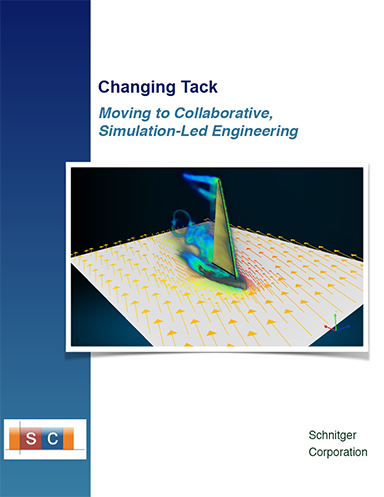
Moving to Collaborative, Simulation-Led Engineering
Simulation is an important part of any enterprise’s quest to create better products, more quickly. Optimizing early in a design cycle can jump-start innovation, enabling the team to explore more alternatives, more quickly — and to make trade-offs based on physical data rather than on gut feel.

DE's editors contribute news and new product announcements to Digital Engineering. Press releases may be sent to them via [email protected].
Follow DE
Join over 90,000 engineering professionals who get fresh engineering news as soon as it is published.






About Us · Contact Us · Editorial Team · Advertising · Privacy Policy · Subscriber Services · © 2026 Digital Engineering 24/7 · Peerless Media