Helping design and engineering professionals discover, evaluate and specify technologies and processes that shorten the design cycle and enable success.



May 2026 Special Focus: Artificial Intelligence in Design and Simulation
In this Special Focus Issue, learn about the latest developments in the integration of artificial intelligence into engineering workflows.

April 2026 Special Focus Issue: Generative Design
In this Special Focus Issue, Digital Engineering takes a look at how generative design solutions can be used across different types of design problems and with a variety of manufacturing approaches to accelerate design space exploration, and…
As part of Expedition 17, NASA astronaut Gregory Chamitoff once spent 198 days in space. That was in 2008. Next week, Chamitoff is scheduled to land in Irvine, California, as one of the keynote speakers at MSC Software's annual user conference. Shamitoff's keynote will be followed by Dominic Gallello, MSC Software's president and CEO, who plans to outline simulation trends past and present.
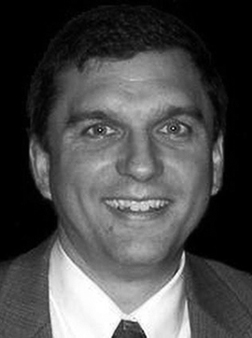
Tony Davenport, MSC Software's marketing manager, is just one of the many people looking forward to meeting a real-life astronaut. "I would love to have been an astronaut," he said. If he were on a similar mission to spend 198 days in space like the keynote speaker, Davenport said he'd bring along an iPad. (In a few weeks, he'll have a chance to ask Chamitoff if it's possible to connect to the internet from space.)
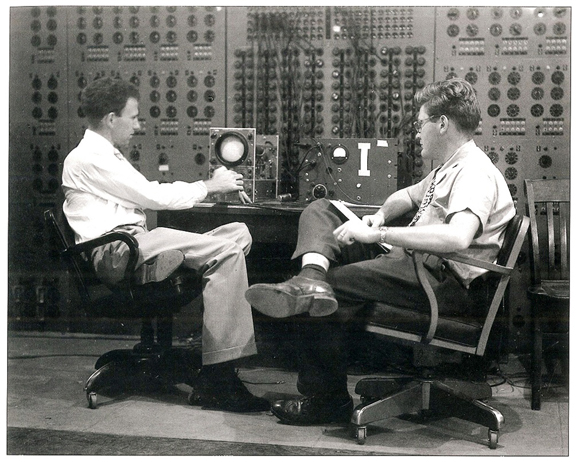
What might Davenport's boss Gallello cover in his keynote? 2013 marks MSC Software's 50th anniversary. Gallello is poised to give a quick review of how simulation was done when MSC Software was just starting out. Davenport said, "One of our founders, Dr. Richard MacNeal, was an electrical engineer. To solve a problem, he'd actually have to go in and change the resistance, actually program from a hardware perspective ... Back then there were lots of planning, like mapping out where the nodes were."
Today, most of engineering simulation is done inside software programs that allows you to replicate real-world phenomenons (liquid flow inside medical equipment, heat distribution inside an engine, and mechanical deformation from stress, and so on). MSC Software is a respected software developer in this area. Its software MSC Nastran is considered an industry-leading package, widely used by professional engineers and designers. The challenge in simulation today, according to Davenport, is "materials and the actual development of the mesh itself."
The wide range of materials available and the dramatically different ways they respond to stresses and loads make materials a special study in its own right. In automotive, the use of composite materials has become standard practice to reduce weight. MSC Software recently acquired e-Xstream, a software developer specializing in material simulation. The company's flagship product, Digimat, "allows engineers to develop material properties through the computer at a micro-analysis level," observed Davenport.
MSC Software's upcoming user conference features presentations from some automotive manufacturers, including those from Airbus, Lockheed Martin, BMW, and NASA Pet Propulsion Laboratory. For more, visit the event page here.
For my conversation with Tony Davenport, listen to the podcast recording below:


Kenneth Wong is Digital Engineering's resident blogger and senior editor. Email him at [email protected] or share your thoughts or suggestions at digitaleng.news/facebook.
Follow DE
Join over 90,000 engineering professionals who get fresh engineering news as soon as it is published.






About Us · Contact Us · Editorial Team · Advertising · Privacy Policy · Subscriber Services · © 2026 Digital Engineering 24/7 · Peerless Media