Helping design and engineering professionals discover, evaluate and specify technologies and processes that shorten the design cycle and enable success.



May 2026 Special Focus: Artificial Intelligence in Design and Simulation
In this Special Focus Issue, learn about the latest developments in the integration of artificial intelligence into engineering workflows.

April 2026 Special Focus Issue: Generative Design
In this Special Focus Issue, Digital Engineering takes a look at how generative design solutions can be used across different types of design problems and with a variety of manufacturing approaches to accelerate design space exploration, and…
Autodesk, among others, has been steadily working to bridge reality capture technology with 3D CAD tools. In its latest effort, Autodesk has partnered with Artec to integrate that firm's lower-cost line of industrial scanners with Project Memento, an Autodesk Labs technology preview. Project Memento converts any reality capture input (think photos and in this case, scans) into high-quality 3D meshes that can be cleaned up and optimized for Web and mobile experiences or directly input into CAD for further design and fabrication work.
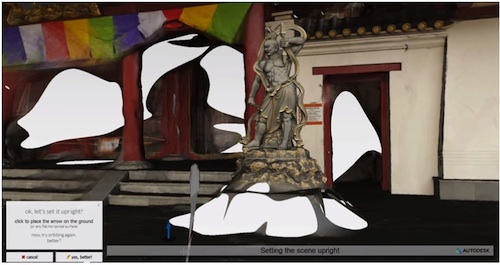 Autodesk Project Memento aims to streamline currently tedious workflows for creating high-quality 3D models from reality capture sensors. Image Courtesy of Autodesk
"We've been going from 3D modeling to reality for years, but now we're at a point where it's possible to go from reality to 3D modeling thanks to the introduction of more affordable handheld 3D scanners," said Evgeny Lykhin, Artec's vice president of product management.
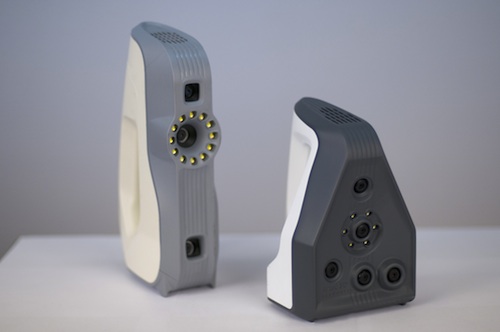
Artec's Eva and Spider scanners, in particular, illustrate the lower price points of industrial models. Both handheld units are priced under $20,000 and offer robust precision and field of viewing capabilities making them a natural fit for manufacturing and industrial design applications, Lykhin said.
 Artec's Eva and Spider industrial 3D scanners will be integrated with Autodesk's 3D CAD products. Image Courtesy of Artec
As a result of the partnership, Autodesk and Artec have been working to enable Eva and Spider models to easily output scans directly to Autodesk's Project Memento for mesh and modeling work with minimal effort. The current workflow for creating high-quality 3D models from scanners is fairly complex, involving multiple expensive tools and requiring users to have a good amount of training and domain expertise.
In addition to the integration work, Project Memento itself takes steps to streamline the reality capture process. It creates a forum for creating and sharing very large 3D mesh models, making it easy to consume those models in workflows that encompass other Autodesk 3D modeling tools like Inventor or AutoCAD. The technology is also being designed with a clean, modern user interface and set of tools that will allow users to get up and running on reality capture workflows without prior knowledge of CAD systems, Autodesk says.
The technology, which originated from Autodesk Labs' work around 2D images and point clouds, can be leveraged in a variety of engineering and manufacturing workflows, including design and quality control use cases. For example, engineers could employ the Artec scanners and the Project Memento service to scan a manufactured component and compare the 3D scan to the original 3D CAD model to see how the unit degrades over time, Lykhin explained.
Watch video to get a look at how Project Memento works.


Beth Stackpole is a contributing editor to Digital Engineering. Send e-mail about this article to [email protected].
Follow DE
Join over 90,000 engineering professionals who get fresh engineering news as soon as it is published.






About Us · Contact Us · Editorial Team · Advertising · Privacy Policy · Subscriber Services · © 2026 Digital Engineering 24/7 · Peerless Media