Helping design and engineering professionals discover, evaluate and specify technologies and processes that shorten the design cycle and enable success.



Digital Engineering April 2026
In the latest issue of Digital Engineering, we take a look at the latest innovations in design for additive manufacturing, including the use of natural language inputs, social media cosplayers, and AI integration. The issue also includes a feature…

January Special Focus Issue: Design for Additive
In this Special Focus Issue of Digital Engineering, learn about the latest advancements in design for additive manufacturing, including new software tools, additive in automotive, custom medical devices, and more.
BAE Systems has joined the AM fold with its first test run of 3D printed parts. In December, A RAF Tornado GR4 had a successful flight and landing after taking off from the company’s airstrip in Warton, Lancashire. Among the 3D printed parts fitted to the plane were protective covers for cockpit radios, support struts on air intake doors, and guards for power take-off shafts.
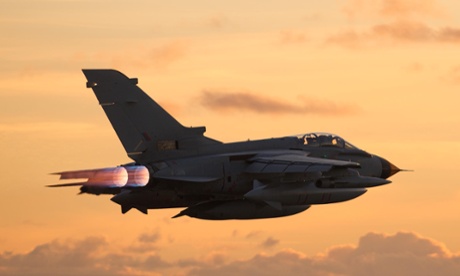
The parts were built on-site in a fraction of the time required to prepare a replacement part using older manufacturing methods. Along with time savings, BAE and the RAF reported substantial cash savings. A number of the parts cost less than £100 (around $163) to 3D print, and decreased costs associated with storing, shipping and building the parts could save the RAF around £1.2 million (just shy of $2 million) over a four year period.
Nearly as important is the ability to build 3D printed parts in the field, on a ship, or wherever they might be needed that has enough room for an AM system. The US has already begun to put 3D printers in the field, and the UK may not be far behind.
BAE is also working on leveraging AM to build much larger parts. A partnership with Cranfield University has produced the largest 3D printed parts ever built in the UK. Using a metal printing process the university refers to as Wire+Arc Additive Manufacture (WAAM), researchers were able to print out a 4 ft. long titanium spar section. The part, which is a key component of aircraft wings, required 37 hours to build using AM instead of the weeks required with older manufacturing methods.
“What we’ve been able to demonstrate from this project is that we have the ability to manufacture titanium parts on this scale,” said BAE engineering lead, Matt Stevens. “The next stage is to continue working together to produce more parts and to develop a robust set of processes so that we can take this technology and apply it safely and seamlessly into the aerospace industry.”
Below you’ll find a short video about the parts made for the Tornado. Don’t bother adjusting your volume, BAE didn’t add much in the way of sound.
Sources: Guardian, BAE Systems, Cranfield University


John Newman is a Digital Engineering contributor who focuses on 3D printing. Contact him via [email protected] and read his posts on Rapid Ready Technology.
Follow DE
Join over 90,000 engineering professionals who get fresh engineering news as soon as it is published.






About Us · Contact Us · Editorial Team · Advertising · Privacy Policy · Subscriber Services · © 2026 Digital Engineering 24/7 · Peerless Media