Helping design and engineering professionals discover, evaluate and specify technologies and processes that shorten the design cycle and enable success.



Digital Engineering April 2026
In the latest issue of Digital Engineering, we take a look at the latest innovations in design for additive manufacturing, including the use of natural language inputs, social media cosplayers, and AI integration. The issue also includes a feature…

January Special Focus Issue: Design for Additive
In this Special Focus Issue of Digital Engineering, learn about the latest advancements in design for additive manufacturing, including new software tools, additive in automotive, custom medical devices, and more.
New startup BioBots would like to make bioprinting more affordable by offering a system that is capable of producing medical quality biomaterials without breaking the bank. The company’s prototype was on display at this year’s SXSW, and has garnered attention for printing a copy of Van Gogh’s ear.
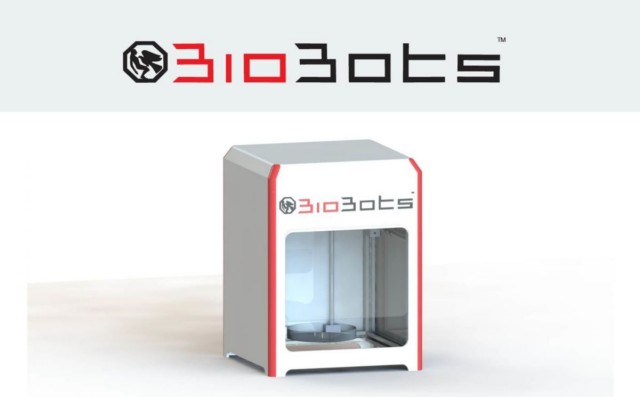 BioBots' prototype is already capable of building biomaterials. Courtesy of BioBots.
Rather than standard materials, such as plastic or metal, used by most AM systems, BioBots uses a special ink that is a mix of cells and sustaining fluids. The ink is jetted out in patterns which are then cured by blue light technology to harden into useful biomaterials, such as cartilage and tissue.
It isn’t yet possible to build viable replacement “parts” for humans, but biofabrication is valuable in producing bone scaffolding to assist recovery, or, more likely, to assist medical testing by generating cruelty-free materials that can be used in laboratories. Using actual human cells rather than animal cells for testing is a leap forward for the testing process.
“We really see it as a product for pharmaceutical companies right now, for companies that are doing clinical drug testing,” co-founder Danny Cabrera told TechCrunch. “You can use these devices to build 3D living tissue models using human cells, and you can use those models which are way more complex than 2D tissues or animals. They really recapitulate the function of the body. And you can use them to develop compounds for clinical settings. And catch the false positives before they get to clinical trials.”
BioBots is hardly the only player in the biofabrication game, but it is going the MakerBot route of offering affordability and ease-of-use. The company hopes to produce systems at a $5,000 price tag, with cartridges of the bioink for around $700. In a business where systems often cost tens of thousands of dollars, that’s a pretty good deal.
Below you’ll find a video about BioBots.


John Newman is a Digital Engineering contributor who focuses on 3D printing. Contact him via [email protected] and read his posts on Rapid Ready Technology.
Follow DE
Join over 90,000 engineering professionals who get fresh engineering news as soon as it is published.






About Us · Contact Us · Editorial Team · Advertising · Privacy Policy · Subscriber Services · © 2026 Digital Engineering 24/7 · Peerless Media