Helping design and engineering professionals discover, evaluate and specify technologies and processes that shorten the design cycle and enable success.



Digital Engineering April 2026
In the latest issue of Digital Engineering, we take a look at the latest innovations in design for additive manufacturing, including the use of natural language inputs, social media cosplayers, and AI integration. The issue also includes a feature…

January Special Focus Issue: Design for Additive
In this Special Focus Issue of Digital Engineering, learn about the latest advancements in design for additive manufacturing, including new software tools, additive in automotive, custom medical devices, and more.
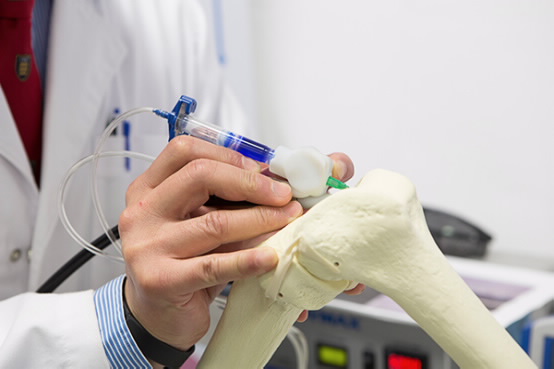
Perhaps inspired by the 3D drawing device, scientists at the Australian Research Council Centre of Excellence for Electromaterials Science (ACES) have developed an AM biopen that allows surgeons to draw live cells directly onto an injury, decreasing recovery times and assisting with the regrowth of bone and cartilage.
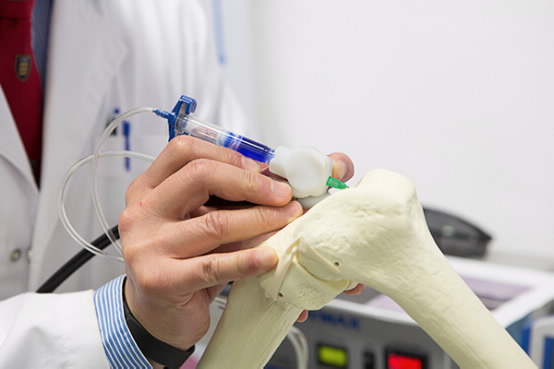
The biopen works in a very similar fashion to the 3Doodler, except that it is filled with bioregenerative hydrogels made from a living cell material suspended in a biopolymer such as alginate (seaweed extract), and protected by an outer layer of the same material. Just like in regular AM, the surgeon builds up layers of the material with each layer being cured by a low-powered ultraviolet light that’s attached to the biopen.
Upon completion of the surgery, the cells begin to multiply and divide into new nerve cells, muscle cells or bone cells, and will eventually help form new musculature and healthy bone. Along with the cells, the biopen can also contain growth factors or medicines that assist in healing the target area.
“This type of treatment may be suitable for repairing acutely damaged bone and cartilage, for example from sporting or motor vehicle injuries,” said Professor Peter Choong, Director of Orthopedics at St Vincent’s Hospital Melbourne and the Sir Hugh Devine Professor of Surgery, University. “[ACES] research team brings together the science of stem cells and polymer chemistry to help surgeons design and personalise solutions for reconstructing bone and joint defects in real time.”
Not only does the biopen operate following AM principles, its swift development and production was also partially the result of 3D printing. Prototypes were built via AM, and the inspiration for the device came from research into growing new knee cartilage from stem cells on 3D printed scaffolds to treat cancers, osteoarthritis and traumatic injury.
Below you’ll find a short video about the biopen.
Source: University of Wollongong


John Newman is a Digital Engineering contributor who focuses on 3D printing. Contact him via [email protected] and read his posts on Rapid Ready Technology.
Follow DE
Join over 90,000 engineering professionals who get fresh engineering news as soon as it is published.






About Us · Contact Us · Editorial Team · Advertising · Privacy Policy · Subscriber Services · © 2026 Digital Engineering 24/7 · Peerless Media