Helping design and engineering professionals discover, evaluate and specify technologies and processes that shorten the design cycle and enable success.



Digital Engineering April 2026
In the latest issue of Digital Engineering, we take a look at the latest innovations in design for additive manufacturing, including the use of natural language inputs, social media cosplayers, and AI integration. The issue also includes a feature…

January Special Focus Issue: Design for Additive
In this Special Focus Issue of Digital Engineering, learn about the latest advancements in design for additive manufacturing, including new software tools, additive in automotive, custom medical devices, and more.
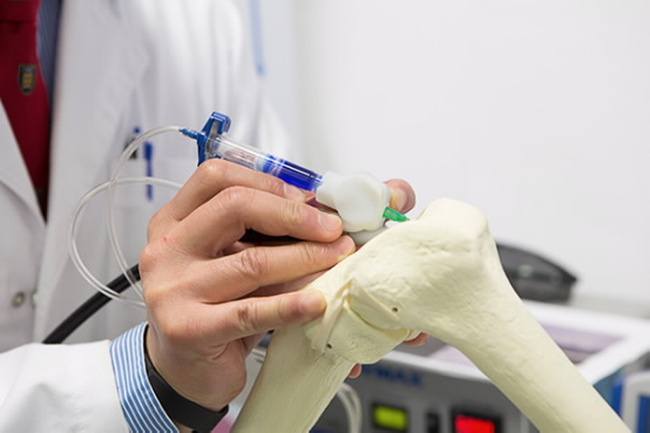
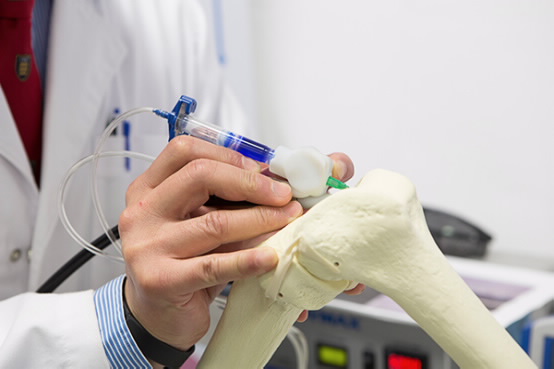
There are already 3D printing pens like the 3Doodler. What the researchers at the University of Wollongong in Melbourne are working on is a pen that can print regenerative cells onto injured body parts. The team is looking for additional sources of funding, according to their post on Thinkable.
The Biopen is being developed at St. Vincent's Hospital, which has a biofabrication department. It would allow surgeons, for example, to "print" stem cells at an injury site, which would encourage the production of new cells as part of the healing process.
“Once implanted, these spare parts are designed to stimulate the body to regenerate itself, then to degrade naturally, dissolving in the bloodstream and eventually excreted," said researcher Cathal O'Connell.
The cells would be delivered via a biopolymer protected by a layer of gel. Cells would then multiply at the wound site. A high-powered, ultra-violet light source solidifies the inks and protects the embedded cells.
Once in place, the stem cells multiply and turn into nerve, muscle and bone cells.
The researchers are part of UOW's Australian Research Council Centre of Excellence for Electromaterials Science (ACES). The device was designed and built using 3D printing equipment.
Currently, the team at St. Vincent's is working on an application to restore articular cartilage of the knee.
Source: Thinkable


Brian Albright is the editorial director of Digital Engineering.
Contact him at [email protected].

Join over 90,000 engineering professionals who get fresh engineering news as soon as it is published.






About Us · Contact Us · Editorial Team · Advertising · Privacy Policy · Subscriber Services · © 2026 Digital Engineering 24/7 · Peerless Media