Helping design and engineering professionals discover, evaluate and specify technologies and processes that shorten the design cycle and enable success.


Sponsored

Digital Engineering April 2026
In the latest issue of Digital Engineering, we take a look at the latest innovations in design for additive manufacturing, including the use of natural language inputs, social media cosplayers, and AI integration. The issue also includes a feature…

January Special Focus Issue: Design for Additive
In this Special Focus Issue of Digital Engineering, learn about the latest advancements in design for additive manufacturing, including new software tools, additive in automotive, custom medical devices, and more.
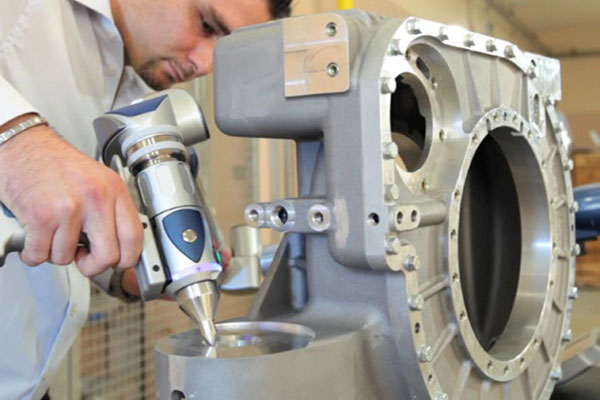
FARO ScanArm Effort FoundryAs global competition stiffens, manufacturing sectors of all stripes are embracing emerging technologies in order to meet customer demands. In the realm of metal casting, Pennsylvania-based Effort Foundry is leading the charge by investing in new technology as part of a continuous improvement program.
Michael Unmann, Director of Machining Operations, Effort Foundry:
“Casting hasn’t really changed much in the last 1,000 years. But now we’re bringing in technology like solidification simulation, reverse engineering, and 3D scanning to prevent defects in our castings and advance our rapid prototyping capabilities.”
Preventing defects and avoiding what can be extraordinarily costly rework is the key to efficiency at an operation where single manufactured pieces can weigh up to a ton. The centerpiece of Effort Foundry’s newfound virtual modeling ability is their 3D scanning hardware and software.
Effort Foundry began its technology transformation by searching for an ideal tool for fast point-cloud collection with high-definition data, repeatable accuracy, and the ability to scan dark and reflective surfaces without spray or targets. After evaluating numerous options, they selected the FARO® ScanArm – a contact/non-contact portable 3D measurement system that combines all of the advantages of tactile measurement with a 3D scanning attachment utilizing blue-laser technology.
FARO Quantum ScanArm Laser Line ProbeAdditionally, they needed to upgrade their software to a powerful reverse-engineering solution that was capable of combining history-based CAD with 3D scan data to create feature-based, editable solid models compatible with their existing CAD software. The offering that best addressed this need was 3D Systems Geomagic® Design X (formerly Rapidform™ XOR™).
Unmann:
“Together, this technology enables supremely fast, accurate, and reliable 3D scanning and modeling capabilities. We call my office the ‘Office of Virtual Manufacturing Engineering’ because we can go from liquid metal all the way to machined part without spending a single hour on the actual shop floor. Without this combined solution we wouldn’t be able to do that.”
In addition to the prevention of defects in their castings, Effort Foundry’s tech push has also enabled it to up its rapid prototyping game with sand 3D printing. Their customers come from some of the most demanding sectors in manufacturing – nuclear, power generation, pumps, valves, military, and more. All need their molds to be cast within incredibly tight tolerances, and in shorter and shorter time frames. 3D measurement technology creates these types of efficiencies, which would have been unthinkable even a decade ago within foundries.
Unmann:
“Because of our ability to 3D scan and model in-house, we can take better advantage of 3D printing to provide customers castings using patternless molds and cores for quick prototyping and rush replacement castings. What used to take six to 20 weeks, we now do in more like two to three weeks.”
The ability to move from “model to metal” in two weeks is a huge competitive advantage for Effort Foundry.
In today’s unpredictable business climate, customer satisfaction is crucial for growth. As mentioned, those customers are quality-obsessed, and Effort Foundry needed the best hardware and software tools available to satisfy them. Customers have come to expect world-class performance at every turn in the supply chain, and if Effort Foundry doesn’t provide it, another foundry will.
“Customers today demand castings of higher quality with fewer defects. With advanced technology, like the solutions from FARO and 3D Systems, we’re able to deliver better products with a shorter lead time.”
Effort FoundryTo gain market share in the competitive field of casting supply, Effort had to address the fact that casting rework can destroy all profits in a job – for both the customer and the foundry. If there is a rejection for a defect, the amount of work for Effort Foundry – root cause analysis, corrective action, documentation, etc. – can be tremendous. And, of course, all that is on top of the rework or replacement castings that would need to be re-cast and delivered – as quickly as possible – to the customer.

Unmann:
“Especially with a Fortune 500 company that has layer upon layer of management, they want an answer as to why something happened. Sometimes, the follow-up on a rejected casting costs us as much as the repair effort.”
Given the high penalties for quality failure, the management team at Effort Foundry judges the cost of this technology to be a worthwhile investment.
Michael Unmann, Director of Machining Operations, Effort Foundry:
“The cost of [the technology] was easy to justify for us. When you factor in the annual dollar value attributed to your scrap, and defect rework, and rejects sent back from customers, the investment garners a significant and timely return.”
The cost and time savings here are crystal clear. Perhaps less obvious is the boost to the organization’s reputation as a vendor that provides high-quality product. This is a not-so-hidden benefit of this investment, and one that puts Effort Foundry in good stead to continue satisfying old customers and winning new business now and in the future.
When you combine high-resolution 3D scanning and powerful 3D modeling capabilities with Effort Foundry’s industry-leading in-house engineering, pattern making, and expertise with the industry’s broadest range of steel alloys, you get an organization that is casting a bright future, indeed.
Interested in learning more about the global standard for portable 3D measurement arms? Want to know what really makes it the most accurate and the only internationally certified portable coordinate measuring machine (PCMM)?


FARO is the world's most trusted source for 3D measurement, imaging and realization technology. The Company develops and markets computer-aided measurement and imaging devices and software. Technology from FARO permits high-precision 3D…
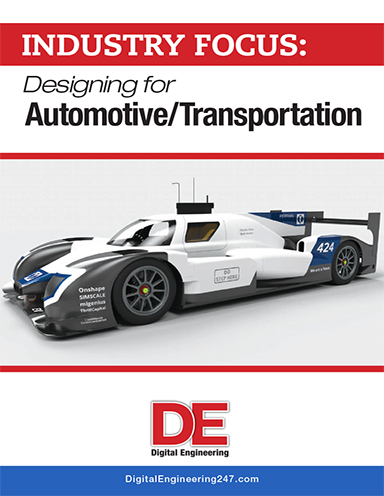
Designing for Automotive/Transportation
The automotive industry is past the point of talking about the disruption coming from demand for electric vehicle powertrains or the potential of autonomous vehicles, and well on its way to responding to those disruptions thanks to advanced engineering technologies. Download this special digital edition.

Join over 90,000 engineering professionals who get fresh engineering news as soon as it is published.






About Us · Contact Us · Editorial Team · Advertising · Privacy Policy · Subscriber Services · © 2026 Digital Engineering 24/7 · Peerless Media