Helping design and engineering professionals discover, evaluate and specify technologies and processes that shorten the design cycle and enable success.



May 2026 Special Focus: Artificial Intelligence in Design and Simulation
In this Special Focus Issue, learn about the latest developments in the integration of artificial intelligence into engineering workflows.

April 2026 Special Focus Issue: Generative Design
In this Special Focus Issue, Digital Engineering takes a look at how generative design solutions can be used across different types of design problems and with a variety of manufacturing approaches to accelerate design space exploration, and…
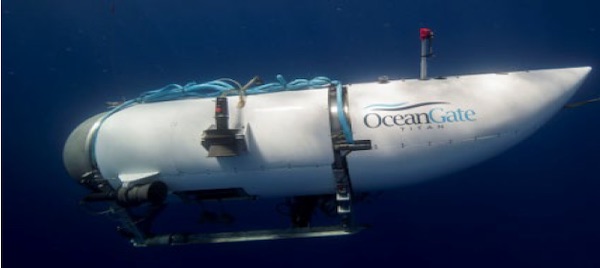
The implosion of the Titan submersible in 2023 was the result of a series of design, engineering and testing failures on the part of OceanGate, the company that built the vessel, according to a new report on the disaster.
The U.S. Coast Guard Marine Board of Investigation (MBI) released its Report of Investigation (ROI) in learly August on the loss of the submersible, which imploded during a June 2023 dive to the Titanic, killing five people including company founder Richard Rush.
The more than 300-page ROI outlines key findings and contributing factors in the casualty and includes 17 safety recommendations aimed at strengthening oversight of submersible operations, improving coordination among federal agencies and closing gaps in international maritime policy.
“This marine casualty and the loss of five lives was preventable,” said Jason Neubauer, Titan MBI chair. “The two-year investigation has identified multiple contributing factors that led to this tragedy, providing valuable lessons learned to prevent a future occurrence. There is a need for stronger oversight and clear options for operators who are exploring new concepts outside of the existing regulatory framework. I am optimistic the ROI’s findings and recommendations will help improve awareness of the risks and the importance of proper oversight while still providing a pathway for innovation.”
The Titan utilized a capsule shape to accommodate more passengers, despite the fact that spherical shapes are more stable under the intense pressures of deep-sea applications. The vessel was also built out of carbon fiber to save weight, but this decision also made the vessel less safe to operate in the deep-sea environment.
The report concludes that the OceanGate team failed to follow basic engineering processes and procedures that would called into question the basic design of the Titan. According to the report:
"The design and testing processes for TITAN did not adequately address many of the fundamental engineering principles that are considered crucial for ensuring safety and reliability for operations in such an inherently hazardous environment. These inadequacies related to TITAN’s hull included: material selection and manufacturing processes; structural analysis and testing; identification and mitigation of risk factors; and process monitoring during manufacturing. "
OceanGate failed to analyze thermal and kinetic effects on the carbon fiber used for the vessel during the curing process, for example. They also did not adequately investigate potential points of failure.
The OceanGate team also ignored the fact that carbon fiber is not used in deep-sea applications.
"[W]hile the strength-to-weight ratio was a considerable advantage, the use of carbon fiber in deep-sea environments remains unproven—unlike the materials with established safety records. There are currently no recognized national or international standards that approve of the use of carbon fiber pressure hulls for submersibles."
The board determined the primary contributing factors were OceanGate’s inadequate design, certification, maintenance and inspection process for the Titan. Other factors cited in the report include a toxic workplace culture at OceanGate, an inadequate domestic and international regulatory framework for submersible operations and vessels of novel design, and an ineffective whistleblower process under the Seaman’s Protection Act.
The board also found OceanGate failed to properly investigate and address known hull anomalies following its 2022 Titanic expedition. Investigators determined the Titan’s real-time monitoring system generated data that should have been analyzed and acted on during the 2022 Titanic expedition. However, OceanGate did not take any action related to the data, conduct any preventative maintenance or properly store the Titan during the extended off season before its 2023 Titanic expedition.
MBI recommendations include restricting the Oceanographic Research Vessel designations for submersibles, expanding federal and international requirements to all submersibles conducting scientific or commercial dives and requiring Coast Guard documentation for all U.S. submersibles. The board also recommended adding Coast Guard personnel capacity at Coast Guard Headquarters to support new construction oversight and field inspections involving submersibles and vessels of novel design.
Further recommendations include requiring operators to submit dive and emergency response plans to the local Coast Guard officer in charge, marine inspection; evaluating the Coast Guard’s subsea search and rescue capabilities; and working with the International Maritime Organization to define passenger submersibles and expand international safety requirements for submersibles operating on the high seas. The board also called for a new Occupational Safety and Health Administration and Coast Guard agreement to clarify whistleblower investigative protocols and improve interagency coordination.
The Marine Board's report is now under review by the Commandant of the Coast Guard. Upon completion of the review, the Commandant will issue a Final Action Memorandum confirming the U.S. Coast Guard's position on the recommendations and any actions to be pursued.
The Marine Board's report is available here.
Sources: Press materials received from the company and additional information gleaned from the company’s website.


DE's editors contribute news and new product announcements to Digital Engineering. Press releases may be sent to them via [email protected].
Follow DE
Join over 90,000 engineering professionals who get fresh engineering news as soon as it is published.






About Us · Contact Us · Editorial Team · Advertising · Privacy Policy · Subscriber Services · © 2026 Digital Engineering 24/7 · Peerless Media