Helping design and engineering professionals discover, evaluate and specify technologies and processes that shorten the design cycle and enable success.




Digital Engineering April 2026
In the latest issue of Digital Engineering, we take a look at the latest innovations in design for additive manufacturing, including the use of natural language inputs, social media cosplayers, and AI integration. The issue also includes a feature…

January Special Focus Issue: Design for Additive
In this Special Focus Issue of Digital Engineering, learn about the latest advancements in design for additive manufacturing, including new software tools, additive in automotive, custom medical devices, and more.
Stratasys Ltd. has announced its collaboration with Baralan, provider of primary packaging for the cosmetics industry, to expand possibilities in cosmetic packaging through Stratasys’ PolyJet technology. Baralan is using Stratasys’ 3D printing specifically to produce end-use parts on glass and plastic containers, offering high-end brands customized, fully decorated packaging that supports personalization and low-volume production runs.
Baralan’s use of PolyJet technology enables multi-color, multi-effect designs directly on bottles and containers, overcoming traditional manufacturing constraints and giving cosmetic brands the flexibility to create eye-catching, brand-specific packaging, Stratasys says.
“Product customization is fundamental for the brand image,” says Maurizio Ficcadenti, global research & develoopment manager at Baralan. “With Stratasys’ solution, we can now offer unique and highly recognizable packaging without the need for costly investments in equipment. This approach aligns with our sustainability goals, and it allows us to meet the growing demand for eco-friendly yet distinctive packaging options in the cosmetics industry.”
“The collaboration with Baralan demonstrates how our technology is driving innovation in the cosmetics sector by enabling high-quality, end-use packaging with faster design iterations,” says Zehavit Reisin, senior vice president, Consumer Solutions Global Sales and Materials Business at Stratasys. “Using our full-color, multi-material with the capabilities of replicating textures, translucency and supporting different properties on different substrates, brands can achieve greater creative freedom and sustainability in their packaging solutions.”
Sources: Press materials received from the company and additional information gleaned from the company’s website.


Every day, our customers find simpler, smarter approaches to stubborn design problemsand greater confidence to confront towering human and technological challenges. Less hindered by the usual constraints, they can imagine, design, iterate and…
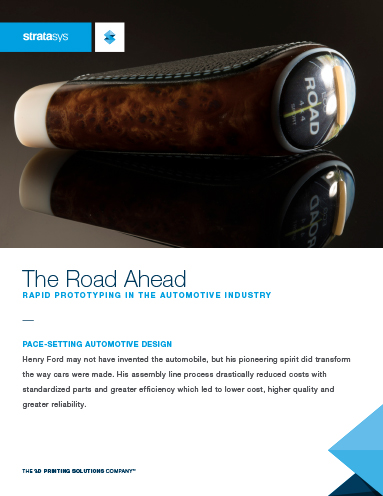
Rapid Prototyping in The Automotive Industry
Henry Ford may not have invented the automobile, but his pioneering spirit did transform the way cars were made. His assembly line process drastically reduced costs with standardized parts and greater efficiency which led to lower cost, higher quality and greater reliability.

DE's editors contribute news and new product announcements to Digital Engineering. Press releases may be sent to them via [email protected].
Follow DE
Join over 90,000 engineering professionals who get fresh engineering news as soon as it is published.






About Us · Contact Us · Editorial Team · Advertising · Privacy Policy · Subscriber Services · © 2026 Digital Engineering 24/7 · Peerless Media