Helping design and engineering professionals discover, evaluate and specify technologies and processes that shorten the design cycle and enable success.



May 2026 Special Focus: Artificial Intelligence in Design and Simulation
In this Special Focus Issue, learn about the latest developments in the integration of artificial intelligence into engineering workflows.

April 2026 Special Focus Issue: Generative Design
In this Special Focus Issue, Digital Engineering takes a look at how generative design solutions can be used across different types of design problems and with a variety of manufacturing approaches to accelerate design space exploration, and…
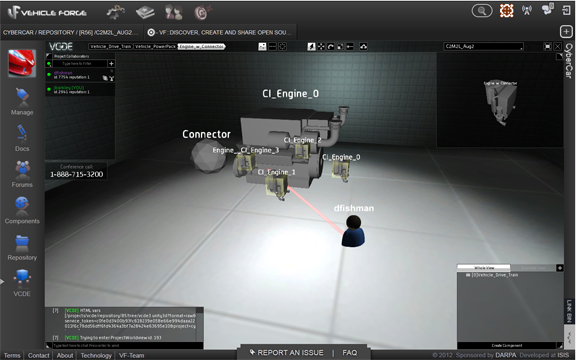
If you think the development of DARPA's next-generation amphibious infantry vehicle is a hush-hush project taking place in the secret bowel of a military base, restricted to chief engineers from Northrop Grumman, you'd be wrong. The design and construction of DARPA's fast, adaptable, next-generation ground vehicle (dubbed FANG) is taking place on the web, in a three-phase contest with cash prizes ranging from $1,000,000 to $2,000,000.
The FANG challenge is open to the public. It's DARPA's attempt to enlist engineers outside its traditional talent pool to participate in the design process. The contest asks participants to register and help develop the vehicle in three steps.
In the challenge, you'll be working with a library of components supplied by DARPA online, accessible to you once you register. Participants use the web-hosted design environment called VehicleFORGE, complete with a built-in CAD file viewer and a virtual design workshop for remote collaboration.
You'll also be using an open-source system design toolset called META. According to Nathan Wiedenman, program manager for META, "The ultimate goal of the META program is to dramatically improve the existing systems engineering, integration, and testing process for defense systems ... It aims to develop model-based design methods for cyber-physical systems far more complex and heterogeneous than those to which such methods are applied today; ... to apply probabilistic formal methods to the system verification problem, thereby dramatically reducing the need for expensive real-world testing and design iteration."
This project falls under the iTAR regulations, which govern the import and export of defense technologies. To be eligible, you must be a U.S. citizen, a lawful resident of the U.S., or a business operating under U.S. laws. Only submissions from registered, verified participants with authorized log-in credentials will be considered.
Registration for the FANG challenge is open now. Submission deadline for the first phase is February 25, 2012. For more, go to DARPA's dedicated site.


Kenneth Wong is Digital Engineering's resident blogger and senior editor. Email him at [email protected] or share your thoughts or suggestions at digitaleng.news/facebook.
Follow DE
Join over 90,000 engineering professionals who get fresh engineering news as soon as it is published.






About Us · Contact Us · Editorial Team · Advertising · Privacy Policy · Subscriber Services · © 2026 Digital Engineering 24/7 · Peerless Media