Helping design and engineering professionals discover, evaluate and specify technologies and processes that shorten the design cycle and enable success.




Sponsored


Cut Retrieval-Augmented Generation (RAG) Hallucinations by 50%
Most teams hit the same wall with enterprise AI: LLMs that hallucinate, pipelines that don’t scale, and infrastructure that’s harder to design than the models themselves.

What Is Intelligent BOM Management? A Guide to Smarter Product Development
Learn how intelligent Bill of Materials (BOM) management helps teams collaborate, reduce errors, and bring innovative products to market faster with cloud-based PLM tools.
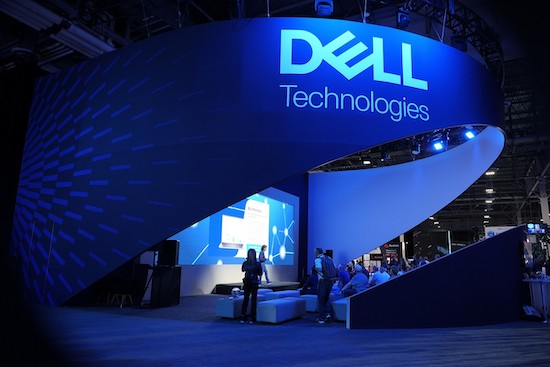
In mid-May, Dell Technologies World (The Venetian, Las Vegas, May 20-21) kicked off, with executives from JPMorgan Chase and Lowe's joining Dell founder, chairman, and CEO Michael Dell during the keynote. Speakers discussed the integration of generative AI into their businesses and data management strategies, using Dell hardware as the IT backbone.
The core of the presentation was about how Dell planned to ride the wave of AI workloads, by highlighting the Dell AI Factory server-class product lineup as the ideal AI infrastructure.
NVIDIA CEO Jensen Huang, who was set to appear at COMPUTEX (Taipei, Taiwan) in the same week, appeared at Dell Technologies World in a recorded conversation. Speaking to Dell, Haung shared his vision of AI agents working in cybersecurity, software engineering, marketing, sales operations, forecasting, and supply chain management. "All these different AI agents can augment our human workforce ... To bring these AI agents to the world's enterprises, some of them want to do it in the cloud, but many of them want to do it on premise," he observed.
Dell chimed in, "Customers want to bring the AI to the data, rather than bring data to the AI ... Many customers are essentially creating intelligence with their proprietary data to enhance their own businesses."
Dell and NVIDIA anticipate a growing need for tailormade IT infrastructures for this type of work. In late May, while announcing its Q1 earnings, Dell revealed its Q1 AI orders reached $12.1 billion, exceeding its 2025 shipments.
Dell and NVIDIA plan to bundle their software and hardware, under the Dell AI Factory with NVIDIA, Version 2.0. Huang said, "[Enterprises] can take their raw data, their institutional knowledge, and put it into the Dell AI Factory, to refine that data. What comes out of it is intelligence."
The latest generation of Dell AI servers are powered by NVIDIA Blackwell GPUs. They offer up to 50x more AI reasoning inference output and 5x improvement in throughput than the previous Hopper platform, according to NVIDIA.
AI Factory 2.0 is built on Dell data-center products with NVIDIA GPUs. Among the core products are the air-cooled Dell PowerEdge XE9780 and XE9785 servers, alongside the liquid-cooled Dell PowerEdge XE9780L and XE9785L servers. According to Dell, the new PowerEdge servers support up to 192 NVIDIA Blackwell Ultra GPUs with direct-to-chip liquid cooling. They can be customized with up to 256 NVIDIA Blackwell Ultra GPUs per Dell IR7000 rack. Dell says its PowerEdge XE9680 can deliver up to four times faster large language model (LLM) training with the 8-way NVIDIA HGX B300.
The AI Factory lineup also includes:
the Dell PowerEdge XE9712 with NVIDIA GB300 NVL72, with 50 times more AI reasoning inference output and five-fold improvement in throughput;
and the Dell PowerEdge XE7745 server with NVIDIA RTX Pro 6000 Blackwell Server Edition GPUs (available in July 2025), build with validated NVIDIA Enterprise AI Factory design with support for up to 8 GPUs in a 4U chassis, optimized to run physical and agentic AI applications for robotics, digital twins, and multi-modal AI applications.
Huang said, “We have Grace CPU versions. We have air-cooled versions and liquid-cooled versions. We have versions designed for running in virtualized environments, like VMware and Red Hat. We have systems that are designed to run with Kubernetes, and the developers will use brand new Dell workstations with our RTX Pro GPUs and AI GPUs.”
Dell revealed its plan to support the NVIDIA Vera CPU, via the NVIDIA Vera Rubin platform, with a new Dell PowerEdge XE server.
For individual users who prefer to work with AI-ready hardware at their desk, Dell offers the Dell Pro Max AI PCs, powered by NVIDIA Grace Blackwell GPUs. The company is planning to release the GB10 and GB300 as part of the Pro Max lineup.
The GB10 features the NVIDIA GB10 Grace Blackwell superchip. It comes with one Petaflop (1000 TFLOPS) of FP4 computing power, with 128GB LPDDR5x Unified memory, and supports up to 200Bn parameter models.
The GB300 features the NVIDIA GB300 Grace Blackwell Ultra Desktop superchip. It delivers 20 Petaflops (20,000 TFLOPS) of FP4 computing power, features 496GB LPDDR5X CPU memory and 288GB HBM3e GPU memory, and supports up to 1 trillion parameter models.
At Computex, Huang announced a major partnership that brings his company together with the Taiwanese government and Foxconn. “We are delighted to partner with Foxconn and Taiwan to help build Taiwan's AI infrastructure, and to support TSMC (Taiwan Semiconductor Manufacturing Company) and other leading companies to advance innovation in the age of AI and robotics,” he said.
In a press announcement, NVIDIA revealed it's working with Foxconn Hon Hai Technology Group and the Taiwanese government to build an AI Factory supercomputer to deliver NVIDIA Blackwell infrastructure to researchers, startups, and industries.
"Foxconn will provide the AI infrastructure through its subsidiary Big Innovation Company as an NVIDIA Cloud Partner. Featuring 10,000 NVIDIA Blackwell GPUs, the AI factory will significantly expand AI computing availability and fuel innovation for Taiwan researchers and enterprises. The Taiwan National Science and Technology Council will use the Big Innovation Company supercomputer to provide AI cloud computing resources to the Taiwan technology ecosystem, accelerating AI development and adoption across sectors," said NVIDIA.
At COMPUTEX, NVIDIA also revealed its NVIDIA NVLink Fusion, a new silicon for building semi-custom AI infrastructure. "NVLink Fusion also equips cloud providers with an easy path to scale out AI factories to millions of GPUs, using any ASIC, NVIDIA’s rack-scale systems and the NVIDIA end-to-end networking platform — which delivers up to 800Gb/s of throughput," NVIDIA said.
Taiwan-based hardware makers announced they would deliver their DGX Spark and DGX Station personal AI supercomputers. "AI has revolutionized every layer of the computing stack -- from silicon to software,” said Huang. “Direct descendants of the DGX-1 system that ignited the AI revolution, DGX Spark and DGX Station are created from the ground up to power the next generation of AI research and development.”
The company also announced its plan to speed up the transition to enterprise AI factories with NVIDIA RTX PRO Servers and a new NVIDIA Enterprise AI Factory-validated design for data centers. The new architecture is meant to deliver acceleration for AI, design, engineering, and business applications.
RTX PRO Servers are built with NVIDIA RTX PRO 6000 Blackwell Server Edition GPUs. NVIDIA hopes to drive the shift from CPU-based systems to efficient GPU-accelerated infrastructure with these servers.


Since its founding in 1993, NVIDIA (NASDAQ: NVDA) has been a pioneer in accelerated computing. The company’s invention of the GPU in 1999 sparked the growth of the PC gaming market, redefined computer graphics, ignited the era of modern AI and…
Cut Retrieval-Augmented Generation (RAG) Hallucinations by 50%
Most teams hit the same wall with enterprise AI: LLMs that hallucinate, pipelines that don’t scale, and infrastructure that’s harder to design than the models themselves.

Brian Albright is the editorial director of Digital Engineering.
Contact him at [email protected].

Join over 90,000 engineering professionals who get fresh engineering news as soon as it is published.






About Us · Contact Us · Editorial Team · Advertising · Privacy Policy · Subscriber Services · © 2026 Digital Engineering 24/7 · Peerless Media