Helping design and engineering professionals discover, evaluate and specify technologies and processes that shorten the design cycle and enable success.


Sponsored
 Dear Desktop Engineering Reader:
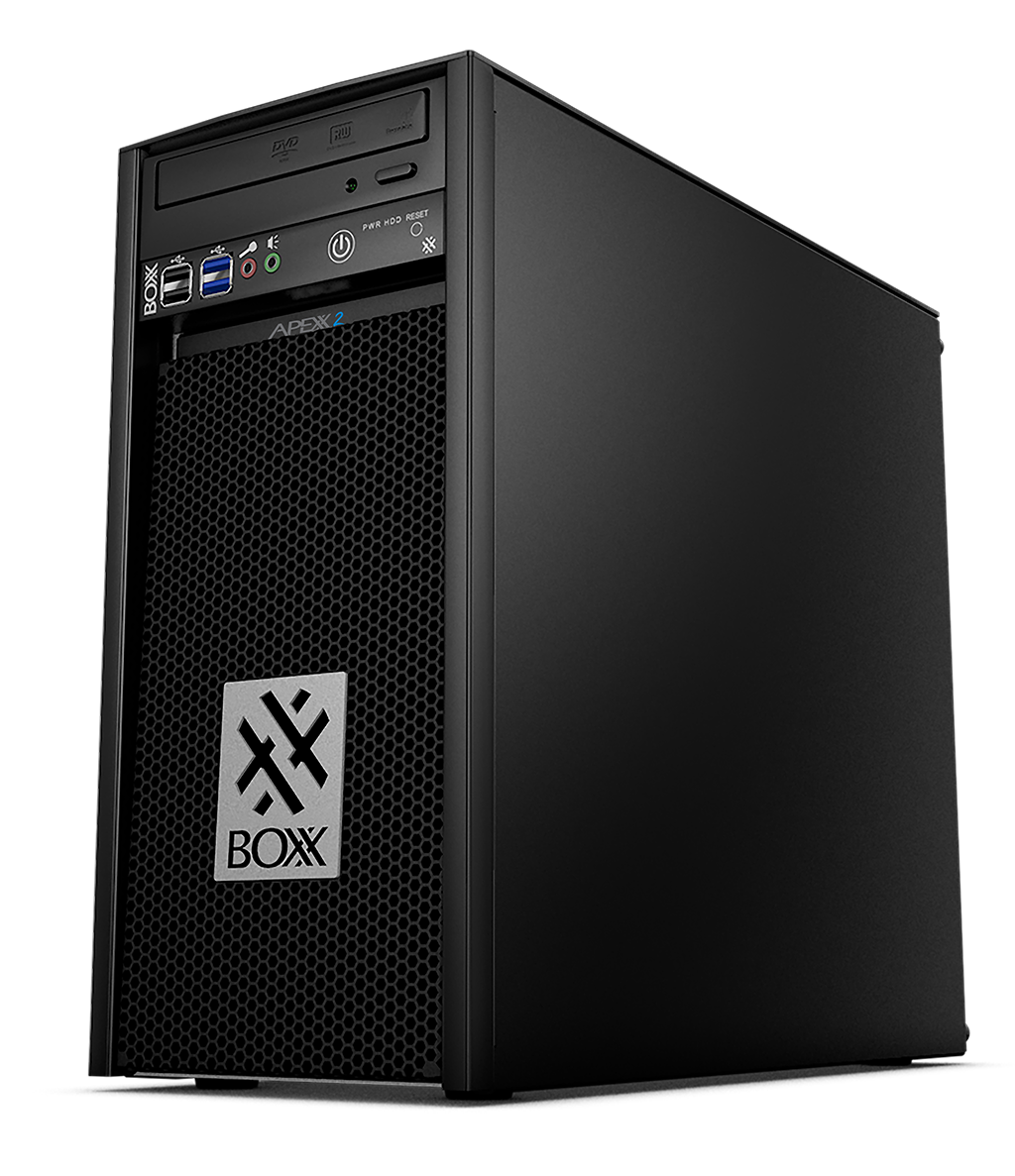
 David Cohn nailed BOXX Technologies in a workstation review in Desktop Engineering: Its systems have consistently delivered peak performance … perfect for CAD and 3D modeling applications. BOXX recently extended its APEXX 4 and APEXX 2 lines. These new models have professional-level workstation for serious CAD/CAE professionals written all over them. Today’s Pick of the Week write-up has the details, but here’s a quick peek.
First and foremost, the new APEXX 4 7402 and APEXX 2 3402 workstations leverage eight-core Intel Core i7 processors with overclocked speeds above 4GHz.
BOXX Technologies has made an art out of overclocking CPUs, and you can get to more about the technology from a link in today’s write-up. In simple terms, overclocking can significantly speed up humdrum but critical single-threaded tasks that stress a CPU like panning or opening/closing an assembly. For multithreaded simulation and rendering jobs, everything is faster since you get more speed by reducing the bottlenecks in many CAD applications and leverage the power of multiple cores when you need them.
What else do these babies have? Well, the APEXX 4 7402 and APEXX 2 3402 run 64-bit Windows, have NVIDIA Quadro K620 graphics accelerators and come with 256GB of SSD (solid-state drive) primary storage. Both are liquid-cooled and have filtered airflow cooling systems.
Beyond the overclocked CPU and those components, a BOXX-suggested base APEXX 4 7402 workstation starts with 16GB of RAM (upgradable to 64GB), a DVD±RW optical drive, networking connections and a slew of USB ports and internal expansion slots. The APEXX 2 3402 has a lot in common with the APEXX 4 7402. It has a compact form factor, fewer internal expansion slot and it supports less total memory and graphics capacity.
Both workstations are highly customizable. In fact, if overclocking is a BOXX art, customization is its mania. At heart, they’re geeks. They love building things. Options include Linux, AMD FirePro graphics, other NVIDIA graphics cards, a Blu-ray drive, all sorts of storage devices and things like USB mice/keyboard combinations.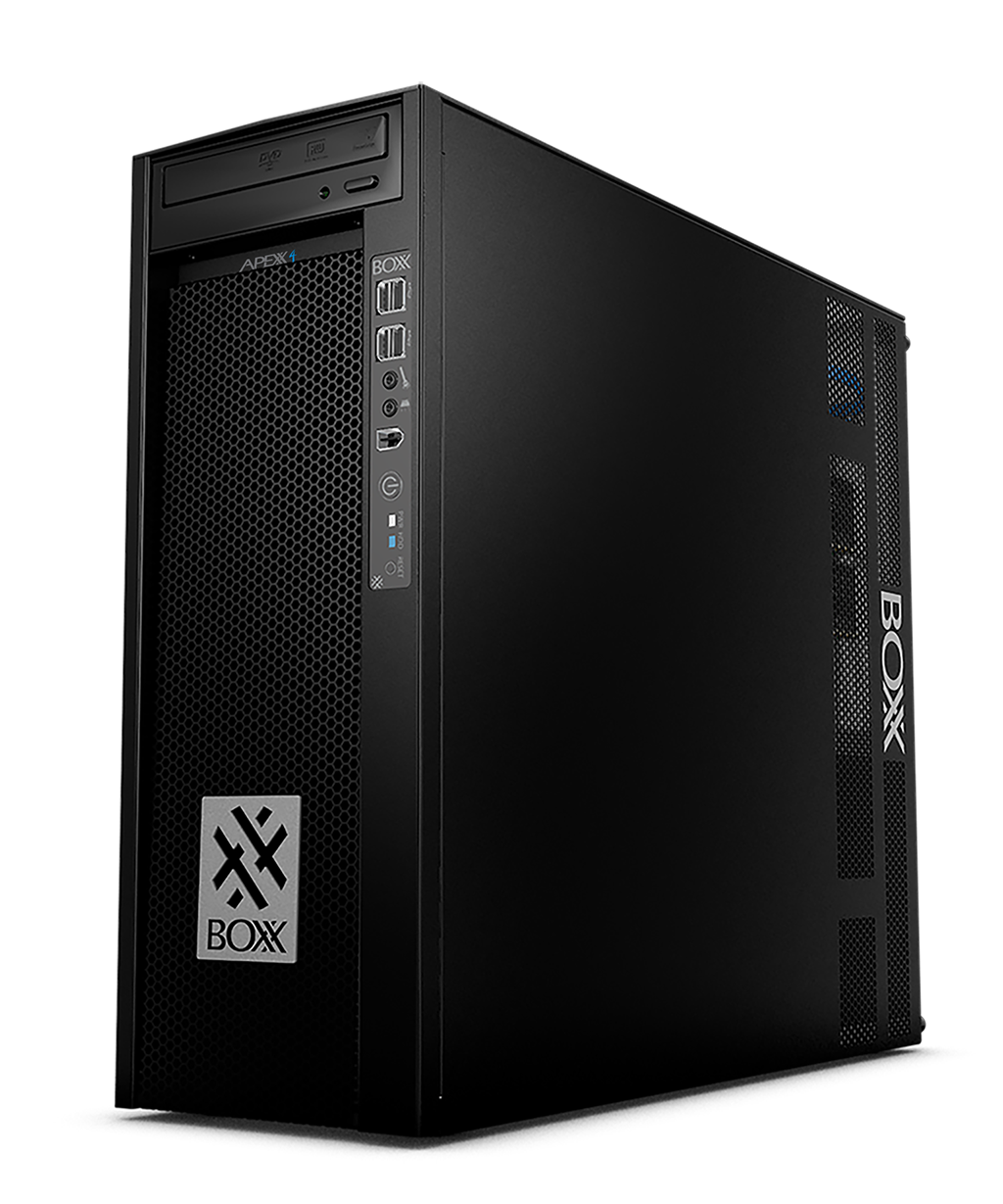 For engineering applications such as simulation and rendering, the APEXX 4 7402 workstation features an eight-core Intel Core i7 processor overclocked to 4.125GHz. This customizable workstation supports up to four GPUs (graphics processing units), 64GB of memory and up to 1.2TB of SSD 2.5 storage. Image courtesy of BOXX Technologies Inc.
The short of it is that BOXX Technologies has engineered a pair of workstations offering high- and higher-performance for simulation and rendering. The APEXX 2 3402 and APEXX 4 7402 are for engineers, product designers and other pros whose careers depend on their local computing resources to provide the utmost performance. Hit today’s Pick of the Week link and news write-up links to learn more. Good stuff.
Thanks, Pal. – Lockwood
Anthony J. Lockwood
Editor at Large, Desktop Engineering
Learn more about the new BOXX APEXX 2 and APEXX 4 workstations here.


Anthony J. Lockwood is Digital Engineering's founding editor. He is now retired. Contact him via [email protected].
Follow DE
Join over 90,000 engineering professionals who get fresh engineering news as soon as it is published.






About Us · Contact Us · Editorial Team · Advertising · Privacy Policy · Subscriber Services · © 2026 Digital Engineering 24/7 · Peerless Media