Helping design and engineering professionals discover, evaluate and specify technologies and processes that shorten the design cycle and enable success.




Digital Engineering April 2026
In the latest issue of Digital Engineering, we take a look at the latest innovations in design for additive manufacturing, including the use of natural language inputs, social media cosplayers, and AI integration. The issue also includes a feature…

January Special Focus Issue: Design for Additive
In this Special Focus Issue of Digital Engineering, learn about the latest advancements in design for additive manufacturing, including new software tools, additive in automotive, custom medical devices, and more.
Stratasys Ltd. shares the launch of FDM PA6/66-GF30-FR, a new flame-retardant composite material designed to enable rail and transportation manufacturers to produce certified end-use parts and spare parts.
The new material expands Stratasys’ portfolio of industrial-grade, rail-ready FDM thermoplastics and is engineered specifically for use on Fortus 450mc and F900 systems.
The new material meets EN 45545-2 HL2 (R22/R23) and FMVSS 302 fire safety requirements, delivering high stiffness and strength suitable for load-bearing, functional rail applications.
Designed for production environments, the material offers printability, surface finish, and repeatable part quality. Its flame-retardant PA 6/66 base polymer is reinforced with 30% glass fiber,. Compatibility with SUP4050B breakaway supports enables post-processing and throughput for end-use parts, Stratasys reports.
“Stratasys is strategically focused on mobility, transportation, automotive, and industrial applications, where our high-end additive manufacturing solutions have a real advantage in meeting production and certification requirements. The launch of FDM PA6/66-GF30-FR demonstrates our excellence in design for mobility applications,” says Rich Garrity, chief business unit officer at Stratasys. “By expanding our rail-certified FDM materials portfolio, we’re enabling customers to scale additive manufacturing with greater flexibility and confidence, while producing parts when and where they’re needed.”
FDM PA6/66-GF30-FR is generally available for Fortus 450mc and F900 systems. Additional specifications and supported applications are available on the product page: https://www.stratasys.com/en/materials/materials-catalog/fdm-materials/fdm-pa6-66-gf30-fr/
Sources: Press materials received from the company and additional information gleaned from the company’s website.


Every day, our customers find simpler, smarter approaches to stubborn design problemsand greater confidence to confront towering human and technological challenges. Less hindered by the usual constraints, they can imagine, design, iterate and…
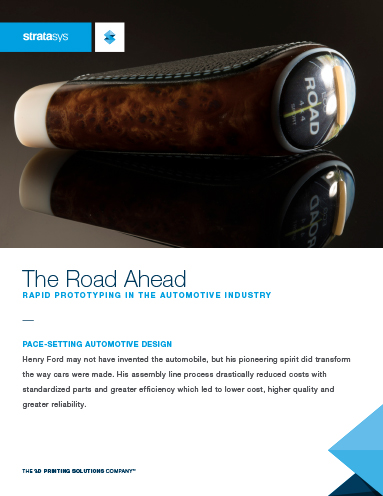
Rapid Prototyping in The Automotive Industry
Henry Ford may not have invented the automobile, but his pioneering spirit did transform the way cars were made. His assembly line process drastically reduced costs with standardized parts and greater efficiency which led to lower cost, higher quality and greater reliability.

DE's editors contribute news and new product announcements to Digital Engineering. Press releases may be sent to them via [email protected].
Follow DE
Join over 90,000 engineering professionals who get fresh engineering news as soon as it is published.






About Us · Contact Us · Editorial Team · Advertising · Privacy Policy · Subscriber Services · © 2026 Digital Engineering 24/7 · Peerless Media