Helping design and engineering professionals discover, evaluate and specify technologies and processes that shorten the design cycle and enable success.



Digital Engineering April 2026
In the latest issue of Digital Engineering, we take a look at the latest innovations in design for additive manufacturing, including the use of natural language inputs, social media cosplayers, and AI integration. The issue also includes a feature…

January Special Focus Issue: Design for Additive
In this Special Focus Issue of Digital Engineering, learn about the latest advancements in design for additive manufacturing, including new software tools, additive in automotive, custom medical devices, and more.
Desktop Metal makes available Commercially Pure Copper for its Production System series of additive manufacturing devices. Desktop Metal says its new copper achieves < 99.95% purity.
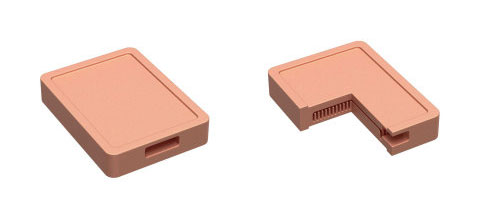
Copper offers excellent thermal and electrical conductivity, making it ideal for products requiring heat or electricity transfer, such as cold plates, pucks and manifolds, heat sinks, heat exchangers, and bus bars, as used in power-intensive electrical applications.
The Production System uses Desktop Metal’s Single Pass Jetting technology, which the company says achieves the fastest build speeds in metal additive manufacturing. Copper is the third-most widely used industrial metal, and has been a “highly requested material from our customers,” says Desktop Metal CTO and Co-Founder Jonah Myerberg. The metal has applications “spanning a broad variety of industries, from thermal hardware found in air and liquid cooling systems to conformally cooled coils for transmission of high frequency currents,” Myerberg adds.
Desktop Metal says the Production System platform consists of two printer models: the P-1, a solution for process development and serial production applications; and the P-50, a large form factor mass production solution for end-use parts.
The Production System combines Desktop Metal engineered binders with an open material platform, allowing customers to produce high-performance parts using the same low-cost metal powders used in the Metal Injection Molding (MIM) industry. An inert processing environment enables compatibility with various materials, Desktop Metal says, including high-performance alloys and even reactive metals, such as aluminum and titanium.
Desktop Metal says the new geometric freedom enabled by binder jetting copper allows engineers to explore new, high-performance designs, such as the lattice structures and conformal cooling channels to improve heat transfer.
Commercially Pure Copper is now available for Production System users directly from Desktop Metal. The company had previously made copper available for its Studio System line of 3D printing devices.
To learn more about the Desktop Metal Production System, click here.
Sources: Press materials received from the company and additional information gleaned from the company’s website.


Desktop Metal was started to address a problem—how to make metal 3D printing accessible for engineering teams. In 2013, CEO Ric Fulop began collaborating with world-leading experts in materials science, engineering, and 3D printing. Their work…

DE's editors contribute news and new product announcements to Digital Engineering. Press releases may be sent to them via [email protected].
Follow DE
Join over 90,000 engineering professionals who get fresh engineering news as soon as it is published.






About Us · Contact Us · Editorial Team · Advertising · Privacy Policy · Subscriber Services · © 2026 Digital Engineering 24/7 · Peerless Media