Helping design and engineering professionals discover, evaluate and specify technologies and processes that shorten the design cycle and enable success.



Digital Engineering April 2026
In the latest issue of Digital Engineering, we take a look at the latest innovations in design for additive manufacturing, including the use of natural language inputs, social media cosplayers, and AI integration. The issue also includes a feature…

January Special Focus Issue: Design for Additive
In this Special Focus Issue of Digital Engineering, learn about the latest advancements in design for additive manufacturing, including new software tools, additive in automotive, custom medical devices, and more.
In August, the company announced that its 3D printer created multiple polymer-alloy objects over 24 days inside a thermal vacuum chamber (TVAC) at the NASA Ames Research Center in June. According to the company, this was the first time a 3D printer had built extended structures (the largest was a 33.5-in. beam) in space-like conditions.
"This is an important milestone, because it means that we can now adaptively and on demand manufacture things in space," said Made In Space CEO Andrew Rush. "We have significantly de-risked that technology."
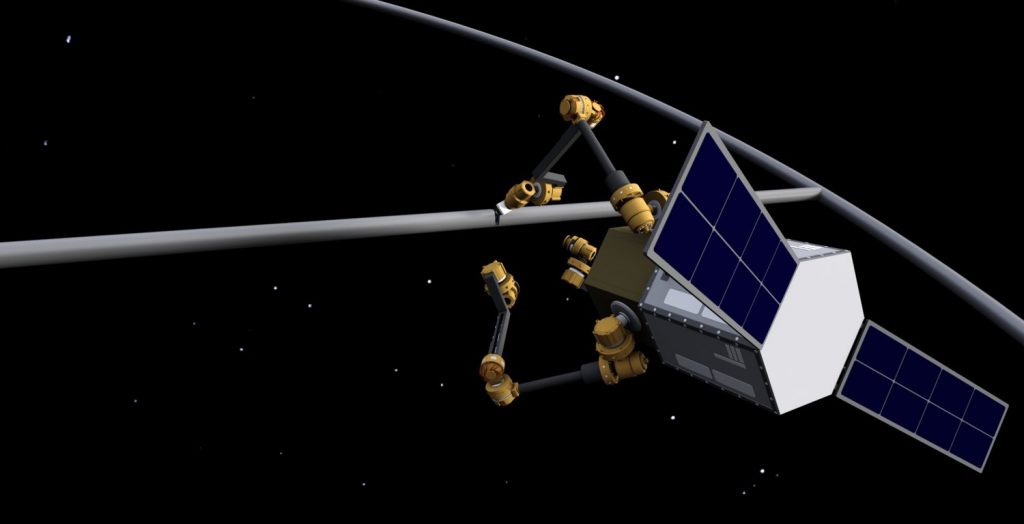
The 3D printer is part of the company’s Archinaut solution, a robotic system that Made In Space is creating as part of a NASA contract. The complete system will include robotic arms that will assemble printed parts.
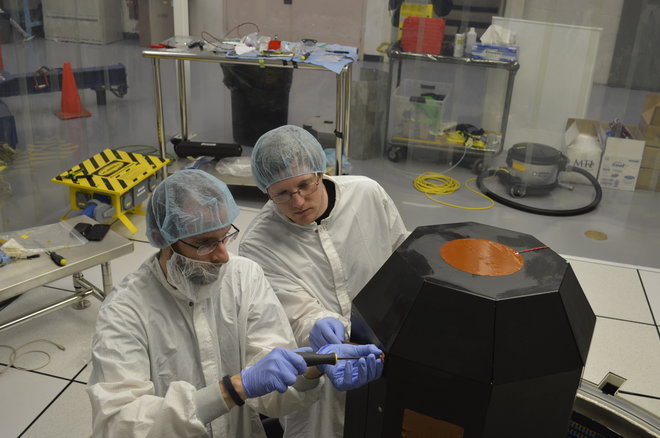
While the June test was conducted under Earth’s gravity, the company has demonstrated zero-gravity printing. Made In Space built two 3D printers that are now aboard the International Space Station.
By printing and assembling structures in space, it is conceivable that the solution could be used to build items that are currently too large to launch on a rocket. For example, NASA hopes to construct very large telescopes that are currently too big to efficiently launch using existing transports.
"We do believe that in-space robotic manufacturing and assembly is going to revolutionize the way we design and deploy and operate systems in space," Steve Jurczyk, the head of NASA's Space Technology Mission Directorate, said at a press conference announcing the tests.
According to Made In Space, the final Archinaut system could be operational by the mid 2020s.
Source: Scientific American


Brian Albright is the editorial director of Digital Engineering.
Contact him at [email protected].

Join over 90,000 engineering professionals who get fresh engineering news as soon as it is published.






About Us · Contact Us · Editorial Team · Advertising · Privacy Policy · Subscriber Services · © 2026 Digital Engineering 24/7 · Peerless Media