Helping design and engineering professionals discover, evaluate and specify technologies and processes that shorten the design cycle and enable success.



Digital Engineering April 2026
In the latest issue of Digital Engineering, we take a look at the latest innovations in design for additive manufacturing, including the use of natural language inputs, social media cosplayers, and AI integration. The issue also includes a feature…

January Special Focus Issue: Design for Additive
In this Special Focus Issue of Digital Engineering, learn about the latest advancements in design for additive manufacturing, including new software tools, additive in automotive, custom medical devices, and more.
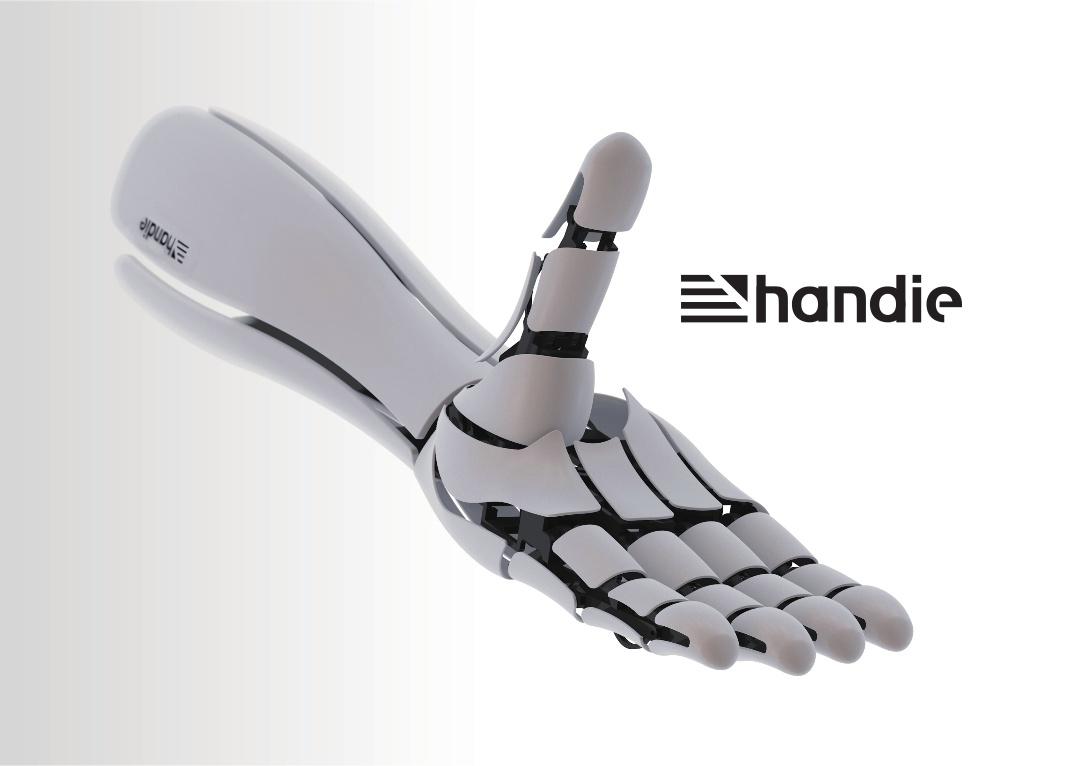
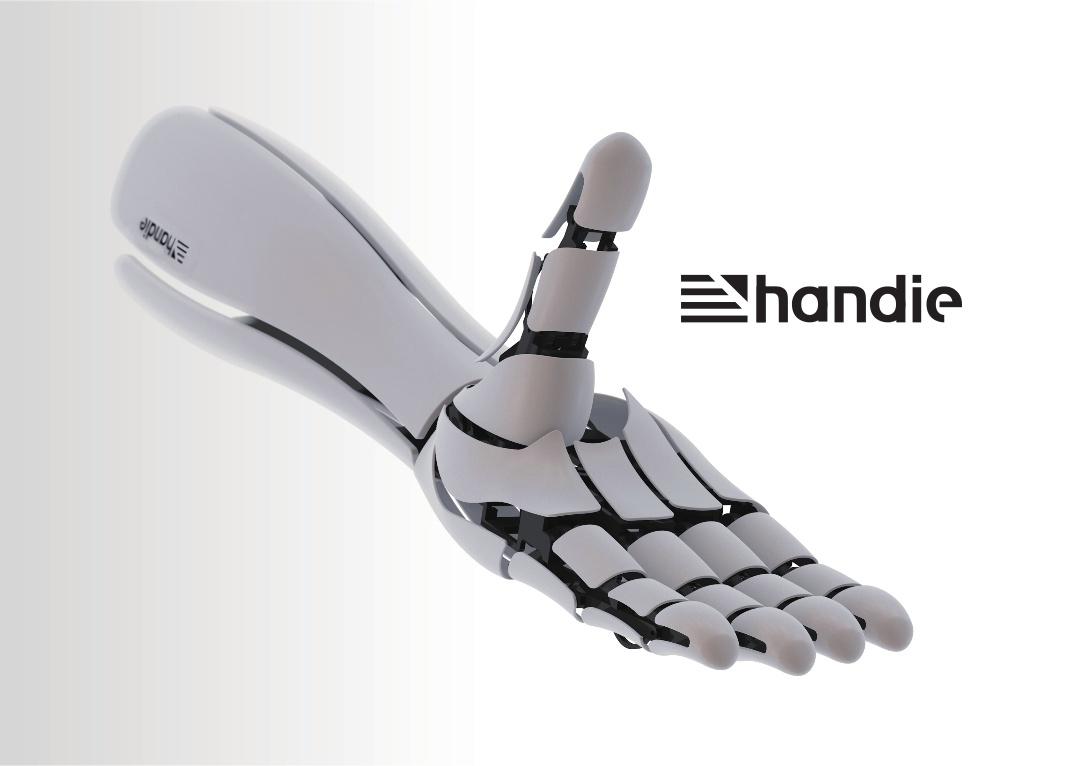
A new prosthetic project, called Handie, was on display at the Maker Faire Tokyo. All non-electronic components of the Handie prosthetic are built with a 3D printers, making it affordable to assemble, and easy to repair. The “brains” of the prosthetic are provided by an app written for smartphones, which further reduces the price.
The Handie team wrote about their reasons for developing Handie upon nomination for a James Dyson Award.
Our team has been working on myoelectric prosthetic hand since (our) college days. We were pursuing (a) highly functional hand that can perform strong, precise and diverse motions. Talking with amputees, however, we realized that high functionality is not necessarily the first priority to reduce their daily challenges. These tasks don’t require dexterous motions. It is rather the 'price' of (the) prosthetic hand that restricts amputees from using myoelectric prosthetic hand(s). Therefore, ''Handie'' is designed to provide amputees with sufficient functions at an affordable price.
Price estimates for the Handie hover around $400, which is a bargain for a prosthetic with electronically enhanced functionality. The prosthetic works by measuring electrical signals produced on the skin of the remaining muscles of an amputee. From there, the team developed a method of driving each finger with a single motor, while at the same time allowing the fingers to passively respond to the shape of an object.
While not as important as functionality, the aesthetics of the Handie are impressive as well. The white and black plastic shell looks like something pulled directly from the futuristic Portal video game, and has a much more finished appearance than most other 3D printed prosthetics. Keeping the brains of the Handie outside the prosthetic should reduce the weight slightly as well, making it less tiring to use for extended periods.
Below you’ll find a video about the Handie project.
Sources: Engadget, James Dyson Foundation


John Newman is a Digital Engineering contributor who focuses on 3D printing. Contact him via [email protected] and read his posts on Rapid Ready Technology.
Follow DE
Join over 90,000 engineering professionals who get fresh engineering news as soon as it is published.






About Us · Contact Us · Editorial Team · Advertising · Privacy Policy · Subscriber Services · © 2026 Digital Engineering 24/7 · Peerless Media