Helping design and engineering professionals discover, evaluate and specify technologies and processes that shorten the design cycle and enable success.



Digital Engineering April 2026
In the latest issue of Digital Engineering, we take a look at the latest innovations in design for additive manufacturing, including the use of natural language inputs, social media cosplayers, and AI integration. The issue also includes a feature…

January Special Focus Issue: Design for Additive
In this Special Focus Issue of Digital Engineering, learn about the latest advancements in design for additive manufacturing, including new software tools, additive in automotive, custom medical devices, and more.
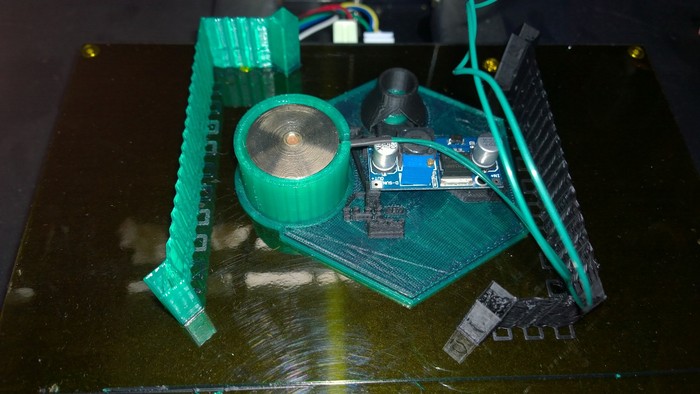 A 3D-printed circuit made using Functionalize's F-Electric conductive filament. Image: Functionalize
The conductive filament could allow users to print circuits, sensors, and other items inside other 3D-printed products. The company claims the F-Electric filament is 1,000 times more conductive than existing materials. The company has printed a key chain LED flashlight to demonstrate how the material works.
According to a statement on the Kickstarter site:
Imagine a world where you can 3D print your cell phone, Internet of Things sensors, drones, or latest in wearable fashion as fully functional devices, complete with circuits and electrical components. That’s where we’re going, and our F-Electric 3D filament is a major step forward in making this a reality. With our breakthrough nanomaterial production process and your creative mind, the sky is the limit in functionalizing the next wave of consumer electronic designs, prototypes and products.
Toutonghi worked at Microsoft off and on until 2011, and was part of the team that developed the Windows 95 kernel. He also founded Vizrea/WebFives, which was later acquired by Microsoft. He also served as CTO at Parallels, which specializes in cloud-based services.
He got the idea for the conductive 3D printing filament while building an electromagnetic rocket for his son's school science project, which included some 3D-printed parts.
"Once we got to the soldering, we slowed to a crawl, so I assumed we could buy some printer or filament to let us 3D print the electronics as well," Toutonghi said. "After searching for some time, I simply found nothing on the market that would let you print circuits and plastic 3D printed components."
The fund raising effort will help the company scale production processes. Supporters at various levels can receive a supply of the filament or a discount on purchases, along with items printed using the material.
Source: Functionalize


Brian Albright is the editorial director of Digital Engineering.
Contact him at [email protected].

Join over 90,000 engineering professionals who get fresh engineering news as soon as it is published.






About Us · Contact Us · Editorial Team · Advertising · Privacy Policy · Subscriber Services · © 2026 Digital Engineering 24/7 · Peerless Media