Helping design and engineering professionals discover, evaluate and specify technologies and processes that shorten the design cycle and enable success.


Sponsored

May 2026 Special Focus: Artificial Intelligence in Design and Simulation
In this Special Focus Issue, learn about the latest developments in the integration of artificial intelligence into engineering workflows.

Design & Simulation Software Guide 2025
In this Special Issue, Digital Engineering presents its second annual guide to design and simulation software vendors.
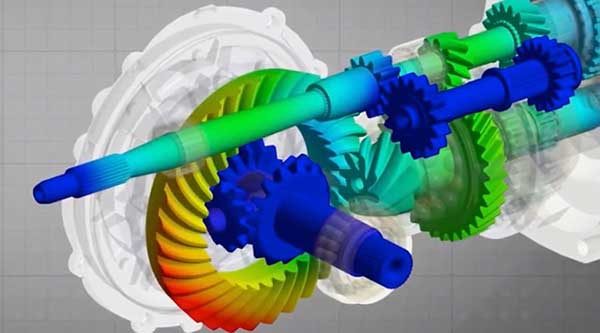
Advancements in computing power have made it possible to simulate larger and more complex engineering problems than ever before on local workstations and compute clusters. More powerful CPUs and GPUs can provide massive speed-ups when it comes to solver performance.
Simulation software developers have responded to these developments by optimizing their solutions to take advantage of all of this power. At Ansys, developers have updated the company’s suite of simulation solutions to leverage access to faster processors, storage systems, and communication sockets available in modern high-performance computing (HPC) clusters.
Ansys recently conducted a webinar explaining how users can accelerate the performance of Ansys Mechanical via an HPC cluster.
According to Ansys, a balanced HPC approach requires modern CPUs, sufficient RAM, fast interconnects, and optimized contact settings within the software.
Upgrading RAM can provide the biggest boost, as it allows the program to hold more solution data in memory during a simulation. Likewise, migrating to a faster network interconnect can also provide acceleration, with an InfiniBand interconnect reducing solution times by at least a third in some cases.
On the CPU side, increasing the AVX instruction set can provide significant speed improvements as well. Ansys has also developed smarter numerical contact algorithms that can take advantage of multiple compute cores, resulting in improvements as high as 25% in solve times.
Check out the Ansys Mechanical webinar here.

Engineering simulation is our sole focus. For more than 45 years, we have consistently advanced this technology to meet evolving customer needs.ANSYS develops, markets and supports engineering simulation software used to predict how product…
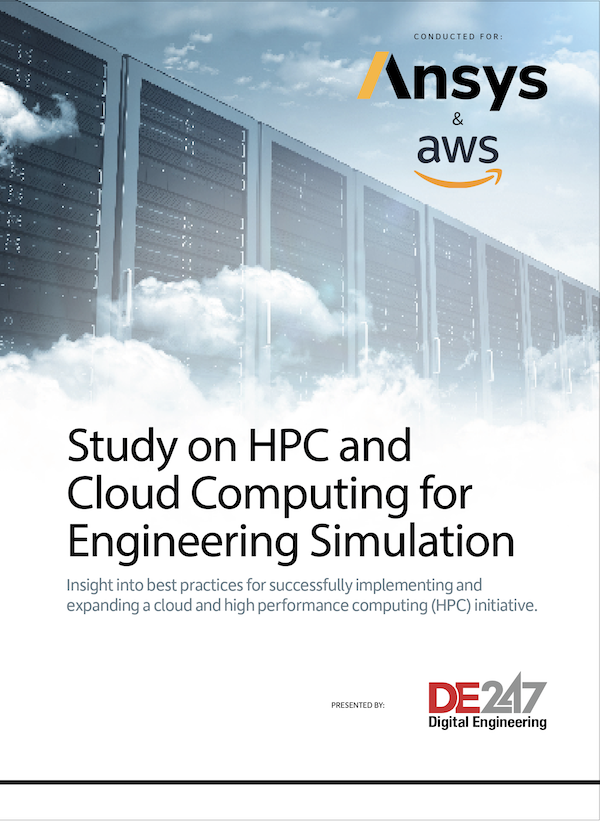
Study on HPC and Cloud Computing for Engineering Simulation
This new research report explores how companies are using HPC and simulation on the cloud.

DE's editors contribute news and new product announcements to Digital Engineering. Press releases may be sent to them via [email protected].
Follow DE
Join over 90,000 engineering professionals who get fresh engineering news as soon as it is published.






About Us · Contact Us · Editorial Team · Advertising · Privacy Policy · Subscriber Services · © 2026 Digital Engineering 24/7 · Peerless Media