Helping design and engineering professionals discover, evaluate and specify technologies and processes that shorten the design cycle and enable success.



Cut Retrieval-Augmented Generation (RAG) Hallucinations by 50%
Most teams hit the same wall with enterprise AI: LLMs that hallucinate, pipelines that don’t scale, and infrastructure that’s harder to design than the models themselves.

What Is Intelligent BOM Management? A Guide to Smarter Product Development
Learn how intelligent Bill of Materials (BOM) management helps teams collaborate, reduce errors, and bring innovative products to market faster with cloud-based PLM tools.
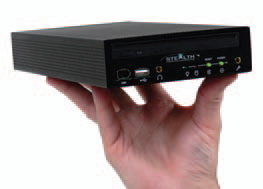 Stealth Computer Corp. (Toronto, ONT; littlepc.com) has released the Stealth LPC-450, an Intel Core 2 Duo rugged mini PC that can fit in the palm of your hand.
The Stealth LPC-450 is housed in a rugged aluminum enclosure measuring 5.7 in. 3 9.9 in. 3 1.65 in. Built-in I/O connectivity includes Gigabit LAN, serial, three USB 2.0, FireWire, video, audio, PS/2 Mouse, and Keyboard ports. Its built-in 2.5-inch high-shock hard drive can store up to 160GBs of data, and a slim DVD/CD-RW optical drive comes standard.
The Model LPC-450 is compatible with Microsoft Vista/XP, Linux, and other OSes; custom configurations are available. Among the optional equipment are a flash drive and DVD burner.
The Core 2 Duo based Stealth LPC-450 is shipping now. Price: $1,395 (to start).
For further details, visit littlepc.com.


DE's editors contribute news and new product announcements to Digital Engineering. Press releases may be sent to them via [email protected].
Follow DE
Join over 90,000 engineering professionals who get fresh engineering news as soon as it is published.






About Us · Contact Us · Editorial Team · Advertising · Privacy Policy · Subscriber Services · © 2026 Digital Engineering 24/7 · Peerless Media