Helping design and engineering professionals discover, evaluate and specify technologies and processes that shorten the design cycle and enable success.



Digital Engineering April 2026
In the latest issue of Digital Engineering, we take a look at the latest innovations in design for additive manufacturing, including the use of natural language inputs, social media cosplayers, and AI integration. The issue also includes a feature…

January Special Focus Issue: Design for Additive
In this Special Focus Issue of Digital Engineering, learn about the latest advancements in design for additive manufacturing, including new software tools, additive in automotive, custom medical devices, and more.
Hungry researchers at Cornell University’s Creative Machine’s Lab have been working with 3D printers and the French Culinary Institute to create delicacies fresh from the printer. Using a modified inkjet 3D printer and materials ranging from chocolate, cookie dough and hydrocolloids (more on this shortly), the team has printed chocolate and sugar cookies, space shuttle shaped scallops, turkey with celery interiors, and other interesting foodstuffs.
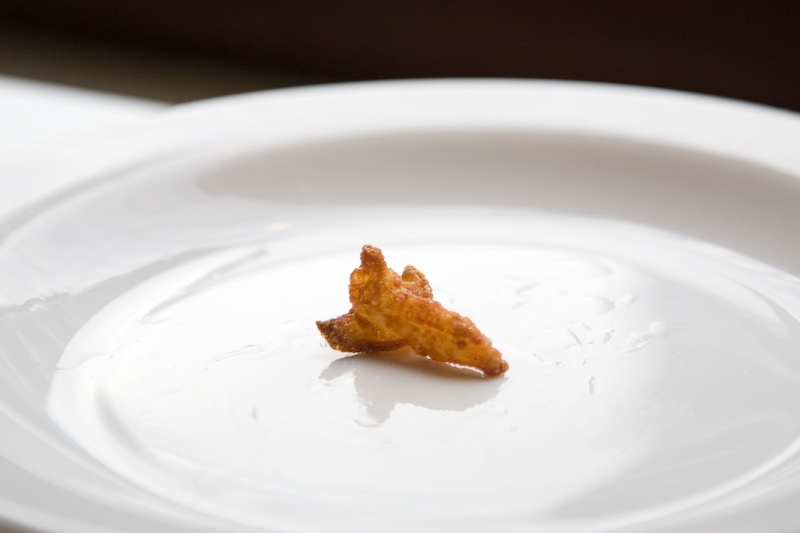
Not only can this process produce edible (and hopefully tasty) food, it can also produce it in shapes that aren’t possible with traditional forms of cooking. Imagine printing out meatloaf in the shape of a bull, creating edible sculptures from sugar and gelatin, or, maybe most interestingly, including messages in your food. How cool would mom seem if happy birthday was printed inside the cake, rather than on it.
So what exactly makes the food? Protein gels and hydrocolloids are responsible for a fair amount of the non-desert type foods being printed. According to the French Culinary Institute, hydrocolloids are, “large molecules that interact with water, and are defined as a type of mechanical mixture where one substance is dispersed evenly throughout water.” While that might not sound particularly appetizing, hydrocolloids basically act as food ink. They can be flavored and can produce different textural consistencies depending on how they are treated.
Below you’ll find a video demonstrating this process.
Sources: Cornell University, the French Culinary Institute


John Newman is a Digital Engineering contributor who focuses on 3D printing. Contact him via [email protected] and read his posts on Rapid Ready Technology.
Follow DE
Join over 90,000 engineering professionals who get fresh engineering news as soon as it is published.






About Us · Contact Us · Editorial Team · Advertising · Privacy Policy · Subscriber Services · © 2026 Digital Engineering 24/7 · Peerless Media