Helping design and engineering professionals discover, evaluate and specify technologies and processes that shorten the design cycle and enable success.



Cut Retrieval-Augmented Generation (RAG) Hallucinations by 50%
Most teams hit the same wall with enterprise AI: LLMs that hallucinate, pipelines that don’t scale, and infrastructure that’s harder to design than the models themselves.

What Is Intelligent BOM Management? A Guide to Smarter Product Development
Learn how intelligent Bill of Materials (BOM) management helps teams collaborate, reduce errors, and bring innovative products to market faster with cloud-based PLM tools.
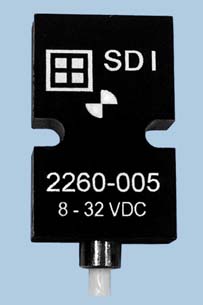 |
Silicon Designs, Inc. (SDI) has introduced the model A2260, an accelerometer designed to meet a variety of automotive R&D, crash test and vehicle dynamics testing requirements such as noise, vibration and harshness (NVH), drivetrain and powertrain testing, vehicle suspension and handling, crash event detection and airbag performance assessments.
The Silicon Designs model A2260 is tailored for zero-to-medium frequency applications, and offers integral amplification and high-drive, low impedance buffering for precision measurements. The accelerometer produces two analog voltage outputs and features a four-wire connection, supporting both single ended and differential modes. Signal outputs are fully differential about a 2.5V common mode voltage.
Sensitivity is independent from the supply voltage of +8 to +32V. At zero acceleration, the output differential voltage is 0 VDC; at full scale acceleration, the output differential voltage is ±4 VDC.
The sensors feature on-board voltage regulation and an internal voltage reference, which eliminates precision power supply requirements, according to the company. The sensor is relatively insensitive to temperature changes and thermal gradients. Within standard range (2 to 400 g), most accelerometers continue to operate after sustained exposures of up to 10K g shock and with limited exposure to temperatures above +200°C.
For more information, visit SDI.
Sources: Press materials received from the company and additional information gleaned from the company's website.


DE's editors contribute news and new product announcements to Digital Engineering. Press releases may be sent to them via [email protected].
Follow DE
Join over 90,000 engineering professionals who get fresh engineering news as soon as it is published.






About Us · Contact Us · Editorial Team · Advertising · Privacy Policy · Subscriber Services · © 2026 Digital Engineering 24/7 · Peerless Media