Helping design and engineering professionals discover, evaluate and specify technologies and processes that shorten the design cycle and enable success.




Digital Engineering April 2026
In the latest issue of Digital Engineering, we take a look at the latest innovations in design for additive manufacturing, including the use of natural language inputs, social media cosplayers, and AI integration. The issue also includes a feature…

January Special Focus Issue: Design for Additive
In this Special Focus Issue of Digital Engineering, learn about the latest advancements in design for additive manufacturing, including new software tools, additive in automotive, custom medical devices, and more.
With the aid of government investments, AeroSud has launched Project Aeroswift. The end goal of the project is to create an AM machine that is capable of printing out parts as large 6.5 ft. x 1.5 ft. The South African National Laser Center has pitched their aid to the project by creating a 5 kW IPG single-fiber diode laser to use in the laser sintering machine. The primary material used will be powdered titanium.
This system will be the first of its kind in the world as it will be able to build (larger) parts; this is critical when making components for the aerospace industry that require precision and high quality. — Federico Sciammarella, competency area manager with the National Laser Centre.
By using AM to create aerospace parts, AeroSud can use variable-density printing to reduce the overall weight of parts, which in turn will reduce the amount of fuel consumed. According to a study performed by EADS, reducing the bulk of an aircraft by just a couple pounds can save upwards of $3,000 per year. The more weight removed, the greater the savings will be.
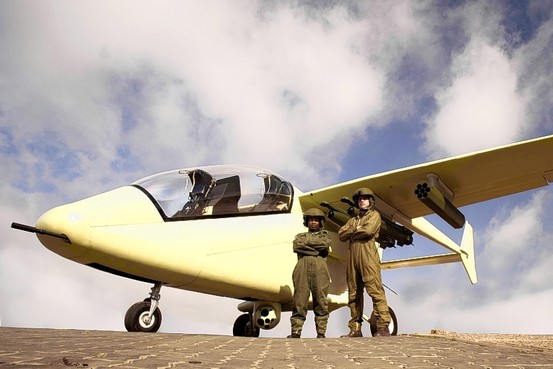
At this point in the process, AeroSud is looking for OEMs (original equipment manufacturers) to supply them with parts to be manufactured when the system goes live.
We're working with the OEMs to develop process qualification. This will probably take three years. Process qualification on new technology like this isn't easy, nor a trivial exercise. The new system will be operational here in 2013 as a pilot plant. Then it will take another year or two for actual process development and qualification approval. We hope to start full-scale production and start selling parts to the OEMs in 2015. Complex, high-value, low-volume parts in exotic materials (typically titanium) for aerospace – that's the niche we're aiming for.—Dr. Paul Potgieter, AeroSud GM.
Below you’ll find a video that examines AM for aerospace on a slightly smaller scale.
Source: defenceWeb


John Newman is a Digital Engineering contributor who focuses on 3D printing. Contact him via [email protected] and read his posts on Rapid Ready Technology.
Follow DE
Join over 90,000 engineering professionals who get fresh engineering news as soon as it is published.






About Us · Contact Us · Editorial Team · Advertising · Privacy Policy · Subscriber Services · © 2026 Digital Engineering 24/7 · Peerless Media