Helping design and engineering professionals discover, evaluate and specify technologies and processes that shorten the design cycle and enable success.



Digital Engineering April 2026
In the latest issue of Digital Engineering, we take a look at the latest innovations in design for additive manufacturing, including the use of natural language inputs, social media cosplayers, and AI integration. The issue also includes a feature…

January Special Focus Issue: Design for Additive
In this Special Focus Issue of Digital Engineering, learn about the latest advancements in design for additive manufacturing, including new software tools, additive in automotive, custom medical devices, and more.
Perhaps inspired by the AM design work going on around the world, students at Nanyang Technological University (NTU) designed the body of their solar powered car to be manufactured via 3D printing. The NTU team was attracted to AM for the body because of the design flexibility offered by the technology. With the entire vehicle being built from scratch, the ability to alter the design and fit the final look of the body to the finished vehicle was invaluable.
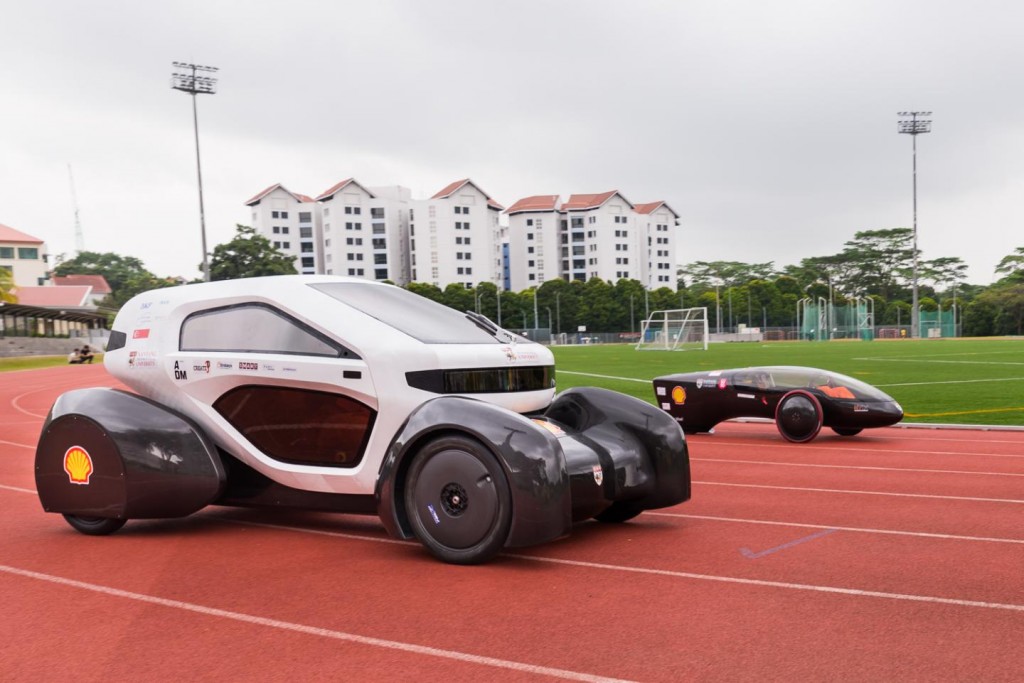 NTU's solar powered concept vehicle includes a 3D printed body. Courtesy of NTU.
“We are extremely proud to have designed and assembled a 3D printed body shell for the electric car, which is Singapore's first and probably Asia's first 3D-printed concept car,” said Professor Ng Heong Wah, team mentor. “The 3D printed car body was pushing existing technology to the limits and we are so pleased that it has paid off.”
The body of the car consists of 150 3D printed parts that were built both at NTU and elsewhere across Singapore. A honeycomb pattern inside the plastic frame increases durability without sacrificing the lightweight nature of the design.
“We decided to go with a 3D-printed cabin made from lightweight plastic, as we wanted to maximise the internal space and driver's comfort while still being able to keeping the weight to a minimum,” said Ilmi Bin Abdul Wahab, a senior computer engineering student who led development. “Despite being an Urban Concept car, it is no slouch and can reach a top speed of 60 kilometres per hour, while maintaining low energy consumption.”
Bespoke solar panels fit into the body and match its curves, allowing the concept vehicle to gather light from nearly every angle, without creating wind drag. The vehicle also sits atop a carbon fiber single shell chassis.
Below you’ll find a video that follows the assembly of the vehicle’s 3D printed body.
Source: NTU


John Newman is a Digital Engineering contributor who focuses on 3D printing. Contact him via [email protected] and read his posts on Rapid Ready Technology.
Follow DE
Join over 90,000 engineering professionals who get fresh engineering news as soon as it is published.






About Us · Contact Us · Editorial Team · Advertising · Privacy Policy · Subscriber Services · © 2026 Digital Engineering 24/7 · Peerless Media