Helping design and engineering professionals discover, evaluate and specify technologies and processes that shorten the design cycle and enable success.



May 2026 Special Focus: Artificial Intelligence in Design and Simulation
In this Special Focus Issue, learn about the latest developments in the integration of artificial intelligence into engineering workflows.

April 2026 Special Focus Issue: Generative Design
In this Special Focus Issue, Digital Engineering takes a look at how generative design solutions can be used across different types of design problems and with a variety of manufacturing approaches to accelerate design space exploration, and…
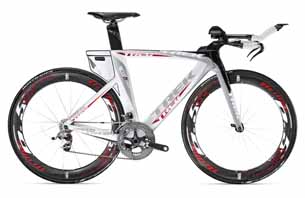 |
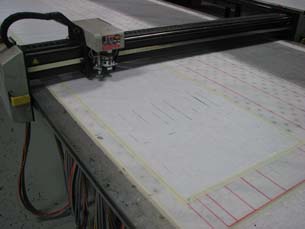
Trek Bicycle Corporation was looking for ways to streamline nesting for its Gerber knife cutters.
“Prior to purchasing JETCAM, static nests were being generated manually,” says Ben Fisher, product manufacturing engineer. “These static nests could take several hours to create and were often inefficient depending on the creator and the part shape. We were looking for an opportunity to decrease our nesting time, maximize our material yield, and possibly generate dynamic nests for daily production. Dynamic nesting could not have been done effectively with our current method of manual nest building.”
The company evaluated the market, finalizing on two systems, however only JETCAM delivered the combined mix of automation and desired interaction. Furthermore, Trek had created a special format to set the cutting speed based on the number of layers to be cut per pattern, and JETCAM could handle it.
“Based on sample nests of common parts we were able to justify the cost with less than one year payback,” says Claude Drehfal, a manufacturing engineer who also worked on the implementation. “Also, JETCAM distributor NestOne allowed us to fully evaluate the software to ensure it met our needs.”
 |
The system was installed in December 2009. Five engineers were trained, with the full installation taking one week. JETCAM Expert, High Performance Nesting and Remote Control Processing (RCP) were installed to act as a “black box,” automatically nesting orders. JETCAM Orders Controller (JOC) was used to manage kits to be nested. Users could batch process nests to determine optimal kit quantities, and also provided the ability to import files from DXF or CATIA generated XML files. JETCAM’s security module also provided user level access rights to functions.
Immediately after going live a number of benefits came to light. Programming time was reduced, as orders were queued in JOC and then passed to RCP for automatic nest processing. Single component automatic nesting (SCAP) is also used to process CAD files, creating geometry and applying profiling automatically.
Trek Bicycle is on target to see a complete return on investment within nine months of install. Several programmers are using a single system, accessed through remote desktop and automated through RCP. They also plan to move to complete dynamic nest generation along with laser kitting at the machines.
For more information, visit JETCAM International.
Sources: Press materials received from the company and additional information gleaned from the company's website.


DE's editors contribute news and new product announcements to Digital Engineering. Press releases may be sent to them via [email protected].
Follow DE
Join over 90,000 engineering professionals who get fresh engineering news as soon as it is published.






About Us · Contact Us · Editorial Team · Advertising · Privacy Policy · Subscriber Services · © 2026 Digital Engineering 24/7 · Peerless Media