Helping design and engineering professionals discover, evaluate and specify technologies and processes that shorten the design cycle and enable success.



Digital Engineering April 2026
In the latest issue of Digital Engineering, we take a look at the latest innovations in design for additive manufacturing, including the use of natural language inputs, social media cosplayers, and AI integration. The issue also includes a feature…

January Special Focus Issue: Design for Additive
In this Special Focus Issue of Digital Engineering, learn about the latest advancements in design for additive manufacturing, including new software tools, additive in automotive, custom medical devices, and more.
Researchers from the University of Exeter have recently published a paper in the Journal of Alloys and Compounds, documenting their work with aluminum composites for use in AM, specifically for use in laser sintering.
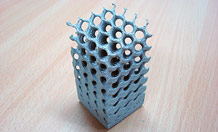
Aluminum is commonly used to manufacture parts in the automotive and aerospace industries. As has been said before, the main appeal of aluminum is its light weight. Reduced weight means lower fuel consumption, which leads to reduced cost of operation.
The goal of the Exeter researchers was to find specific powder mixes of aluminum and other metals. By mixing in an iron oxide combination (for example) the team found they were able to build objects with complex geometries that retained the light weight of aluminum, but were more durable.
“This new development has great potential to make high performance parts for car manufacturing, the aerospace industry and potentially other industries,” said Sasan Dadbakhsh, University of Exeter PhD student. “Additive layer manufacturing technologies are becoming increasingly accessible, so this method could become a viable approach for manufacturing.”
The method developed by Exeter researchers makes building complex geometries easier.
The new materials have very fine particles compared with other composites, making them more robust. The reaction between constituents releases energy, which also means materials can be produced at a higher rate using less power. This technique is significantly cheaper and more sustainable than other SLM methods, which directly blend very fine powders to manufacture composites. –University of Exeter
Below you’ll find a video that discusses some facts about aluminum.
Source: University of Exeter


John Newman is a Digital Engineering contributor who focuses on 3D printing. Contact him via [email protected] and read his posts on Rapid Ready Technology.
Follow DE
Join over 90,000 engineering professionals who get fresh engineering news as soon as it is published.






About Us · Contact Us · Editorial Team · Advertising · Privacy Policy · Subscriber Services · © 2026 Digital Engineering 24/7 · Peerless Media