Helping design and engineering professionals discover, evaluate and specify technologies and processes that shorten the design cycle and enable success.



Digital Engineering April 2026
In the latest issue of Digital Engineering, we take a look at the latest innovations in design for additive manufacturing, including the use of natural language inputs, social media cosplayers, and AI integration. The issue also includes a feature…

January Special Focus Issue: Design for Additive
In this Special Focus Issue of Digital Engineering, learn about the latest advancements in design for additive manufacturing, including new software tools, additive in automotive, custom medical devices, and more.
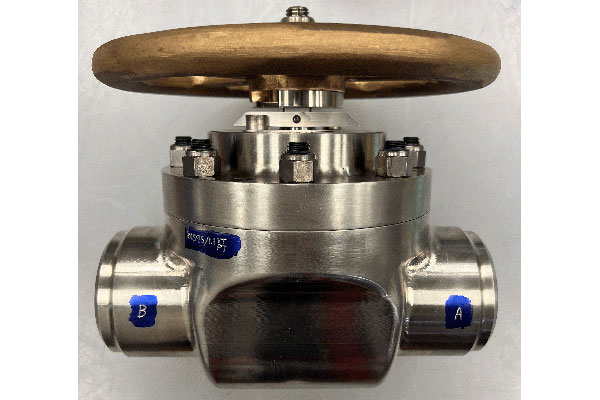
Hunt Valve, a Fairbanks Morse Defense (FMD) company, has been awarded a contract by the Maritime Sustainment Technology and Innovation Consortium (MSTIC) to produce a 3D printed valve assembly for installation on U.S. Navy submarines. Using additive manufacturing to create the 70-lb. valve assembly—this 3D printed assembly is to be installed on a U.S. submarine.
“The utilization of additive manufacturing assembly with copper-nickel for large valve production is a real step forward for our industry,” says Andrew Pfister, vice president, Aftermarket and Product Development at Fairbanks Morse Defense. “Not only does it create a superior product in terms of quality, but the process can significantly reduce lead-in times.”
Until recently, additive manufacturing for submarine components has only been possible for small parts and pieces, and applications for challenging alloys such as copper-nickel have been rare, if done at all. Sand-casted copper-nickel is highly porous and often results in a high fall-out rate. In contrast, valve bodies created through 3D printing reportedly have higher first-time yields, which accelerates the production and delivery timeframe.
Hunt Valve’s contract with MSTIC will allow the 3D valve to be installed on any U.S. submarine class.
“Innovative technologies such as additive manufacturing are essential for building the submarine industrial base to overcome supply chain challenges,” Pfister says. “By scaling additive manufacturing, we can reduce shipping from other parts of the world and increase the speed of production at home—which positively impacts the Navy’s overall strategic goal to deliver a 300+ fleet.”
The valve assemblies for this contract are being developed by Hunt Valve in collaboration with Lincoln Electric. The valve body is produced by Lincoln Electric through additive manufacturing, or 3D printing. Unlike traditional manufacturing, which removes pieces from a base sheet or block of metal to create a component, additive manufacturing stacks layers of copper-nickel together to create the final product. Once “printed,” the valve body is delivered to Hunt Valve to manufacture the remaining components using the standard manufacturing method and then assemble all the parts to create the full valve assembly.
Sources: Press materials received from the company and additional information gleaned from the company’s website.


DE's editors contribute news and new product announcements to Digital Engineering. Press releases may be sent to them via [email protected].
Follow DE
Join over 90,000 engineering professionals who get fresh engineering news as soon as it is published.






About Us · Contact Us · Editorial Team · Advertising · Privacy Policy · Subscriber Services · © 2026 Digital Engineering 24/7 · Peerless Media