Helping design and engineering professionals discover, evaluate and specify technologies and processes that shorten the design cycle and enable success.


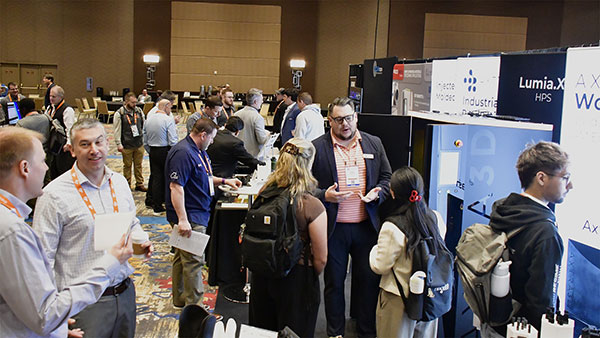
Flight cancellations due to stormy weather across the U.S. coupled with TSA staff shortages and no easy travel path to Reno from anywhere east of the Mississippi couldn’t keep additive manufacturing (AM) users from venturing to the Grand Sierra Resort in Reno, NV, March 15-19, for the 2026 AMUG (Additive Manufacturing Users Group) conference, after its several-year stint in Chicago.
Though numbers were off from recent AMUGs in the 2020s, the 700-plus guests —largely AM users, educators, and OEMs— hailing from the United States, and other countries, including Europe and Asia—came to the “for users, by user” event with intent to network, learn, be inspired, and engage in hands-on workshops while connecting and reconnecting with industry peers, speakers, educators, and friends.
“AMUG is about relationships first and content and everything else second,” said Ben DiMarco, a presenter of the America Makes Hard Knocks session at this year’s event.
Adds AMUG Secretary Heather Natal of GoEngineer, “You’re around the same people for a week. A bunch of 3D printing nerds in one group together who are really passionate to make sure things are moving forward.”
One of this year’s two main keynotes presented on his passion for making a business case out of AM. Ronen Hadar, Senior Director and Head of Additive Design & Manufacturing for The LEGO Group who attended his first AMUG 12 years agi as an engineer, presented on “Additive Manufacturing at Scale in Consumer Goods: The Case of The LEGO Group.”

Early in his talk, he tackled the repeatability challenge with AM: “If you know anything about the LEGO brick—and I know most of you are engineers—you know that if you take away the toy part, it is quite an engineering feat. We make tens of billions of those bricks to a ±20 micron accuracy … We are extremely good at making very high-precision parts many times—exactly what AM is not known for,” Hadar noted, half-jokingly.
He later added, “I cannot stress this enough … data as a core competence and accelerator has been the single factor to make it possible for us to produce these quantities in these kinds of tolerances. The reason the product doesn’t fall apart when you build a LEGO set in your homes is because we are fanatics about those tolerances.”
His talk covered the integration of AM in the toy industry, a segment known for high-volume, low-cost production. The LEGO Group, which now has about 100 AM employees worldwide, has co-developed AM technologies, outcomes of which include the release of its first mass-produced retail set that contains a 3D-printed piece.
Injection molding is one of the company’s absolute main core capabilities, which leads to an obvious question, according to Hadar: “Why on earth AM?” Hadar asked. “Here is where I set the record straight—from our perspective, AM is the magic maker, the stardust that sort of complements everything else we do at the LEGO Group. People who say that AM is here to replace injection molding don’t really know what they’re talking about. It doesn’t need to replace injection molding. It needs to be there to do something that injection molding doesn’t do.”
However, volume is a significant factor when considering use of AM. “Just to set the expectations right, The LEGO group doesn’t do anything below hundreds of thousands,” Hadar said.
The decision whether to go with AM often boils down to cost-benefit analysis: “What’s keeping AM from being implemented in an industry like consumer goods—is the business case of it.
It’s a bit of a non-brainer, also a completely non-emotional decision: Wherever we are cheaper, faster, better, providing more functionality, we will do AM. If we are not, we will not.”
Reflecting on his talk, Shannon VanDeren, owner/president Layered Consulting and current president of AMUG opines that LEGO bricks are “a relatable topic. Very few in the audience have not stepped on or held in their hands a LEGO brick at some point in their lives.” But Hadar’s message extended far beyond child-play memories.
“[What] he was sharing about the tolerances he is holding in repeatability in billions and billions of LEGO bricks—they are deploying additive extraordinarily and they are achieving tolerances that many of us have not achieved. In fact, I told him, after he came off the stage, your team must have the patience of saints to not become disgruntled and disenchanted at failures because metal additive, first-pass yield, is not always terrific.”
From Grimm’s vantage point, Hadar’s ultimate message was “Don’t count additive out. You can make what seems impossible possible.” Grimm also was wowed by Hadar’s mention of mass production of consumer product tolerances. “That blew me away. I would’ve told you you’re crazy. But it’s possible, and that’s encouraging. That may spur some people to rethink their applications or how broad that application can be expanded.”
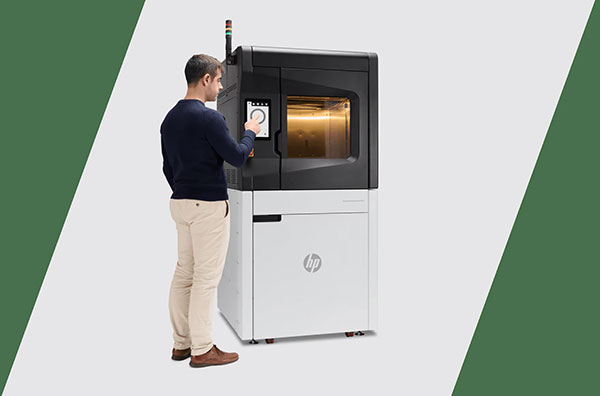
Throughout the event, when not listening to educational tracks, attendees were getting their hands dirty at several popular hands-on workshops including metal casting and materials testing options. Others visited the expo, stopping to mix with dozens of additive experts from companies such as Materialise, Stratasys, GoEngineer, Skuld and more or learning about the latest updates in AM software such as Vixiv’s Vixiv AI or Authentise’s workflow solutions, Cognitive Design Systems’ Cognitive Design or Novineer’s generative design platform. Some visited demo rooms hosted by companies such as HP who demonstrated their new industrial filament 3D printing system along with dozens of AM use cases of their AM product portfolio.
AMUG also hosted another powerhouse keynote earlier in the event: “From Hypercars to Defense Drones: How Two Major Industry Innovators Started Their Partnership Journey at AMUG,” was a collaborative success story between Steve Fournier, of the Additive Designs & Manufacturing Center of Excellence at General Atomics Aeronautical Systems, and Scott Sawyer, Director of Programs at Divergent. The two shared the stage, detailing how an automotive and a defense company discovered transferable additive manufacturing value thanks to their partnership.
“I loved that [this] keynote is a story of finding additive success by basically a collision at AMUG,” said VanDeren. “Two entities who knew nothing of each other until one heard the other on the stage at AMUG in previous years sat down at a coffee shop and just brainstormed. Ultimately now they’re working in unison on very important DoD projects.”
Grimm added, “They repeatedly made the point of telling the audience, ‘Don’t go it alone,’ [advising attendees to] look outside your industry and find those you can connect with, partner with, collaborate with.”
This keynote also revved up DiMarco, technology transition director at the Youngstown, OH-based public-private partnership, America Makes: “I texted one of my colleagues that I’ve been going to additive conferences for 15 years and this is the best I’ve ever been to.”
The presentation involved two people from two different companies who shared the main stage with different but unifying missions, according to DiMarco. General Atomics, an aerospace provider for drones, was wanting to get more rapidly scaled and grow their drone business. The second company, Divergent, had Kevin Czinger present at AMUG a couple years ago. The company’s initial focus was automotive. “And now they’re making complex components and assemblies for drones and aerospace and defense. Hearing them together on stage sharing similar but different goals and missions was really cool,” DiMarco shared. “Together they brought a powerful message.”
AMUG also played host to various other sessions, including a fireside chat between Grimm and Max Lobovsky, co-founder and CEO of Formlabs, who is the 2026 recipient of the AMUG Innovators Award.
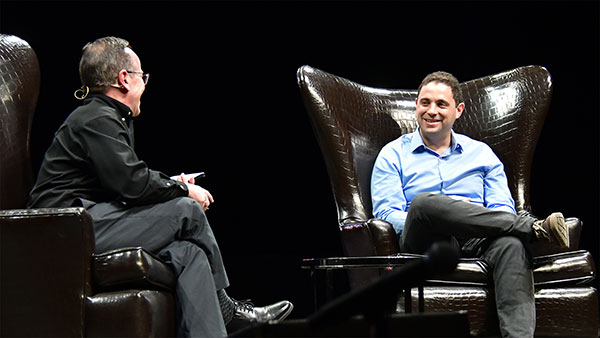
Lobovsky shared some of his AM insights: “Any good engineer should focus on problems, not solutions. If you focus on the problem -- how do we make a good plastic part quickly and cheaply and you're flexible about the solutions you bring to that problem, you're going to make better products...when talking about engineering you need to understand the problem you're trying to solve.”
In another session, DiMarco, led a Hard Knocks program on behalf of America Makes. He said what America Makes wants to bring to the AM community is [to share] lessons learned in public formats like AMUG. “Where did they stub their toe and how do you share that with the community so you don’t make the same mistake twice. For us, America Makes is funded heavily from government sponsorship and we want to be really good stewards of that money,” he said.
The event once again hosted a technical competition, announcing winners in Advanced Concepts, Finishing & Post-Processing, and Members Choice. Also the AMUGderby drew dozens of entries and recruited the help of local Boys Scouts Spanish Springs Troop 443.
The 2027 AMUG Conference will take place March 14-18, 2027 at Harrah's Resort Atlantic City in Atlantic City, New Jersey. Interested in speaking at AMUG 2027? Speaker abstract submission opens September 1, 2026. Email [email protected] with questions.
More Links
America Makes to Host Breakout Session at AMUG
Formlabs CEO Picked for AMUG Innovators Award
AMUG Doles Out Two Scholarships
AMUG Highlights 2nd Keynote Presentation for 2026 Conference


Stephanie is the Associate Editor of Digital Engineering.
Follow DE
Join over 90,000 engineering professionals who get fresh engineering news as soon as it is published.






About Us · Contact Us · Editorial Team · Advertising · Privacy Policy · Subscriber Services · © 2026 Digital Engineering 24/7 · Peerless Media