Helping design and engineering professionals discover, evaluate and specify technologies and processes that shorten the design cycle and enable success.



Digital Engineering April 2026
In the latest issue of Digital Engineering, we take a look at the latest innovations in design for additive manufacturing, including the use of natural language inputs, social media cosplayers, and AI integration. The issue also includes a feature…

January Special Focus Issue: Design for Additive
In this Special Focus Issue of Digital Engineering, learn about the latest advancements in design for additive manufacturing, including new software tools, additive in automotive, custom medical devices, and more.
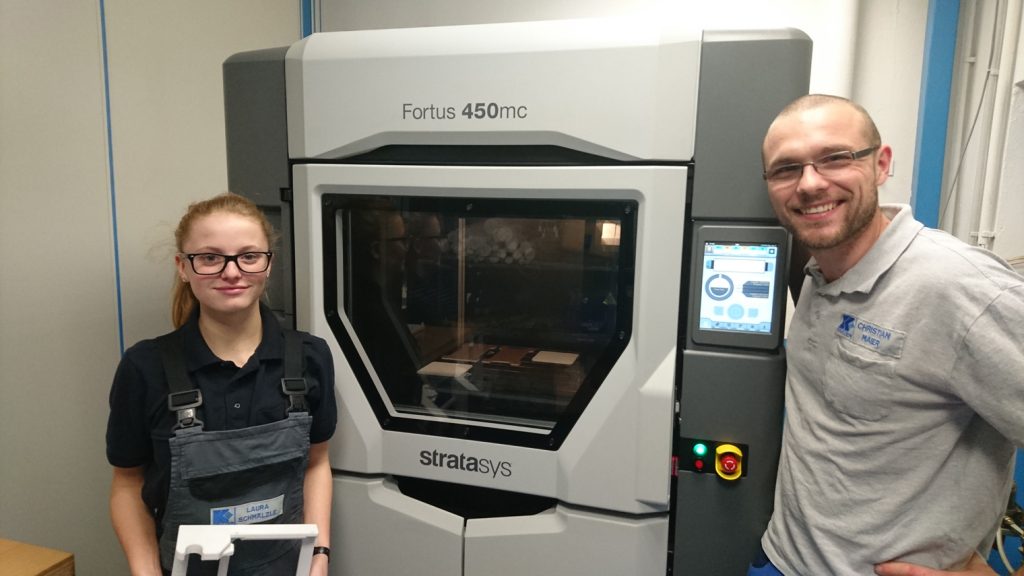 Kratzer's Christian Maier poses with the new Fortus machine. Image: Stratasys
Kratzer uses the fixtures as part of its system of manufacturing milled/honed/grinded parts for dental, automotive, and aerospace applications. Creating fit-for-purpose fixtures quickly can directly impact production flows.
“We have traditionally manufactured parts, which over time naturally start to crack and break,” said Christian Maier, Division Manager Fixture Construction and Training Supervisor at Kratzer. “Previously, we had to wait for the team to manufacture another fixture, which delayed the production process by several days. Now, we have the file, we can have the fixture in just a few hours. This dramatically enhances our production flow.”
The company previously milled new fixtures. The printers allow them to quickly create complex and customized parts.
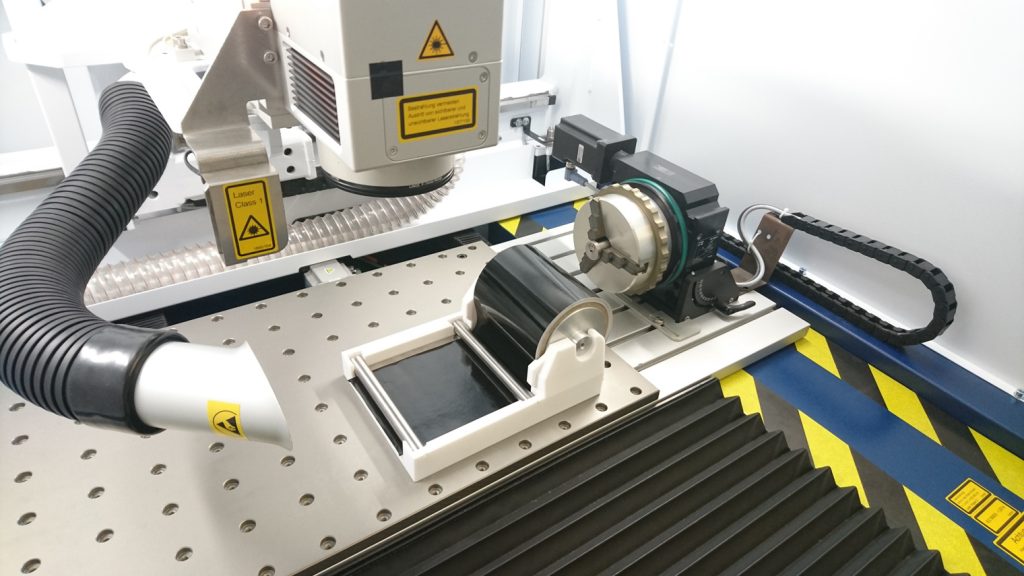 Kratzer now 3D prints fixtures for their laser devices, allowing the company to engrave multiple parts simultaneously. Image: Stratasys
“Since the installation of our new Fortus 450mc 3D Printer, we can have the fixture ready the next day, which results in time savings of up to 90%,” Maier said.
The use of 3D printing has also introduced new flexibility on the company’s production line. For example, using custom fixtures has made laser etching more efficient.
“Very often, our customers require parts that need a serial number, logo or writing applied to them, which is undertaken by our laser machines,” Maier said. “Prior to having our Fortus 450mc, we had to put each part separately into the laser device, or mill customized fixtures for every job to hold several parts. Obviously, this was extremely tedious and time-consuming, but with additive manufacturing, we can create holding fixtures to laser 30 parts simultaneously, saving us an incredible amount of time and labor.”
Kratzer prints most of the durable fixtures out of polycarbonate and ABS, and also uses ULTEM for parts that require resistance to extreme temperatures or exposure to chemicals.
Source: Stratasys


Brian Albright is the editorial director of Digital Engineering.
Contact him at [email protected].

Join over 90,000 engineering professionals who get fresh engineering news as soon as it is published.






About Us · Contact Us · Editorial Team · Advertising · Privacy Policy · Subscriber Services · © 2026 Digital Engineering 24/7 · Peerless Media