Helping design and engineering professionals discover, evaluate and specify technologies and processes that shorten the design cycle and enable success.



May 2026 Special Focus: Artificial Intelligence in Design and Simulation
In this Special Focus Issue, learn about the latest developments in the integration of artificial intelligence into engineering workflows.

April 2026 Special Focus Issue: Generative Design
In this Special Focus Issue, Digital Engineering takes a look at how generative design solutions can be used across different types of design problems and with a variety of manufacturing approaches to accelerate design space exploration, and…
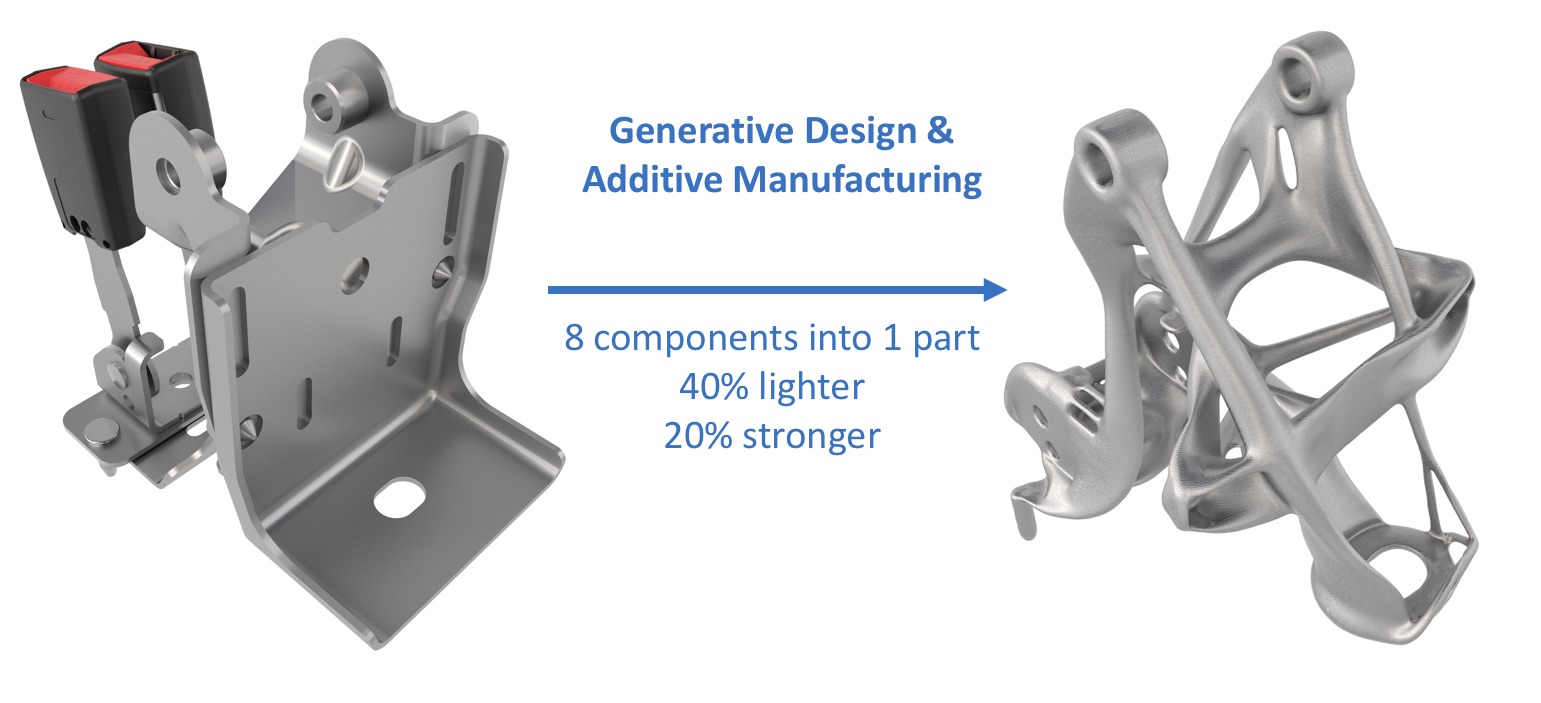
 GM and Autodesk used generative design to create the new seat bracket. Image: Autodesk
GM displayed a 3D-printed stainless steel seat bracket the two companies had developed. With traditional manufacturing, the bracket required eight components from several different suppliers. Now the bracket can be produced as one piece that is 40% lighter and 20% stronger than its predecessor.
GM leveraged Autodesk’s cloud computing and AI-based algorithms, using a generative design approach to create the part. The resultant part has a much more organic and streamlined look than the original bracket.
“This disruptive technology provides tremendous advancements in how we can design and develop components for our future vehicles to make them lighter and more efficient, said GM vice president Ken Kelzer, global vehicle components and subsystems. “When we pair the design technology with manufacturing advancements such as 3D printing, our approach to vehicle development is completely transformed and is fundamentally different to co-create with the computer in ways we simply couldn’t have imagined before.”
The 3D printing effort will support GM’s plans to add 20 new electric battery and fuel cell vehicles to its product line over the next six years. Lighter-weight parts can help improve fuel efficiency and, more importantly, extend the range of EV and fuel cell vehicles – a key stumbling block to creating a mass market for these types of cars.
According to an interview in Reuters, GM’s director of additive design and manufacturing, Kevin Quinn, says that the company hopes to have similar printed parts in its high-end motorsports applications within the year. The technology can also reduce tooling costs, reduce material, and help consolidate suppliers and logistics resources.
You can read more about the design process and see additional variations on the bracket design in this Autodesk blog.
Source: GM


Brian Albright is the editorial director of Digital Engineering.
Contact him at [email protected].

Join over 90,000 engineering professionals who get fresh engineering news as soon as it is published.






About Us · Contact Us · Editorial Team · Advertising · Privacy Policy · Subscriber Services · © 2026 Digital Engineering 24/7 · Peerless Media