Helping design and engineering professionals discover, evaluate and specify technologies and processes that shorten the design cycle and enable success.



Digital Engineering April 2026
In the latest issue of Digital Engineering, we take a look at the latest innovations in design for additive manufacturing, including the use of natural language inputs, social media cosplayers, and AI integration. The issue also includes a feature…

January Special Focus Issue: Design for Additive
In this Special Focus Issue of Digital Engineering, learn about the latest advancements in design for additive manufacturing, including new software tools, additive in automotive, custom medical devices, and more.
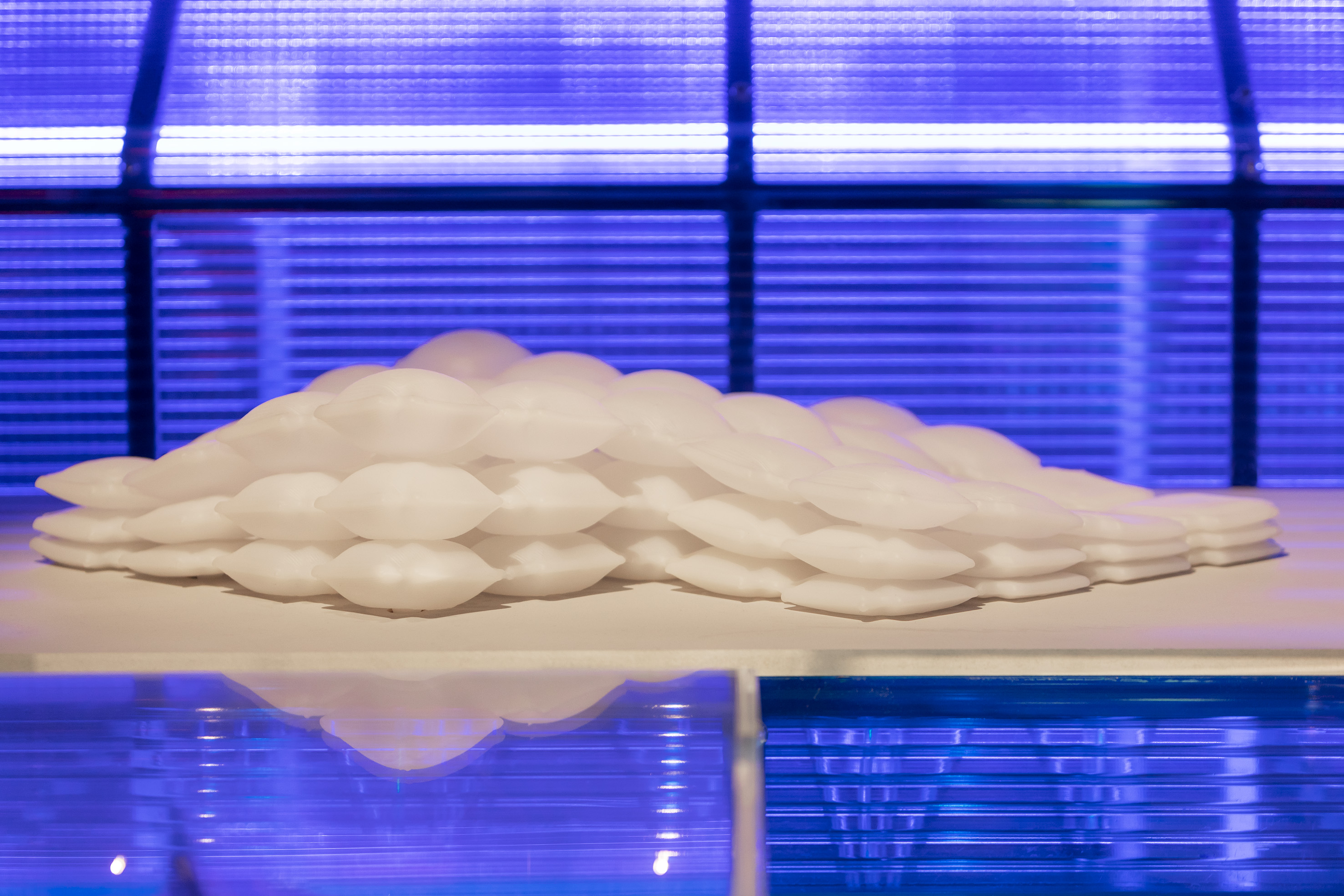
We recently wrote about 3D printed objects created at MIT that are able to change shapes under the influence of magnetism. MIT is at it again, this time in conjunction with automaker BMW, creating 3D-printed inflatable materials that can self-transform and morph into different states.
 Image courtesy of BMW.
MIT’s Self-Assembly Laboratory and the BMW Design Department have been working on the project for two years. BMW was looking for futuristic vehicle interior concepts, and the researchers have come up with a silicone material that will change shape depending on the amount of air pressure present. Pneumatic controls allow the printed structure to take on different shapes, stiffness characteristics and functions.
The solution incorporates rapid liquid printing, soft robotics techniques and other technologies to create complex inflatable structures with tunable stiffness.
"The outcome of this collaboration manifests that a new material future is imminent,” said Martina Starke, head of BMW Brand Vision and BMW Brand Design at BMW Group. “There is no need to lock the car of the future into any particular shape. Interiors could even take on malleable, modular uses.”
MIT has been working on ways to 3D print inflatable objects for several years. Researchers there created the “Printflatables” system for creating human-scale, functional inflatable objects.
In 2014, the Victoria University of Wellington’s School of Design created 3D-printed flowers from a soft rubber material that could be inflated.
BMW and MIT exhibited a meter-scale object at the Victoria & Albert Museum that could perform transformations thanks to a pneumatic system with seven independent chambers. “This adaptive material technology points towards a future of transformable surfaces for adaptive human comfort, cushioning and impact performance,” Starke said.
Source: BMW


Brian Albright is the editorial director of Digital Engineering.
Contact him at [email protected].

Join over 90,000 engineering professionals who get fresh engineering news as soon as it is published.






About Us · Contact Us · Editorial Team · Advertising · Privacy Policy · Subscriber Services · © 2026 Digital Engineering 24/7 · Peerless Media