Helping design and engineering professionals discover, evaluate and specify technologies and processes that shorten the design cycle and enable success.



Digital Engineering April 2026
In the latest issue of Digital Engineering, we take a look at the latest innovations in design for additive manufacturing, including the use of natural language inputs, social media cosplayers, and AI integration. The issue also includes a feature…

January Special Focus Issue: Design for Additive
In this Special Focus Issue of Digital Engineering, learn about the latest advancements in design for additive manufacturing, including new software tools, additive in automotive, custom medical devices, and more.
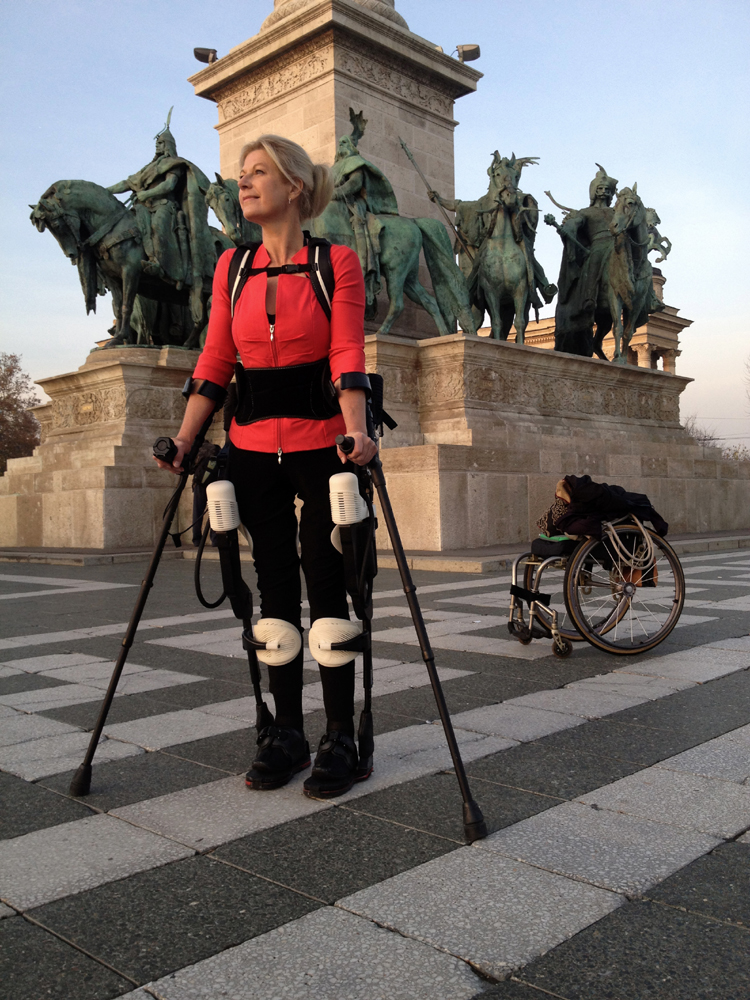
3D Systems and Ekso Bionics have come together to create what 3DS is calling the first bespoke exoskeleton. The exoskeleton was built using body scans performed by 3DS and the robotics technological know-how of Ekso Bionics. The result has allowed Amanda Boxtel, paralyzed in a skiing accident, to walk again for the first time in 22 years.
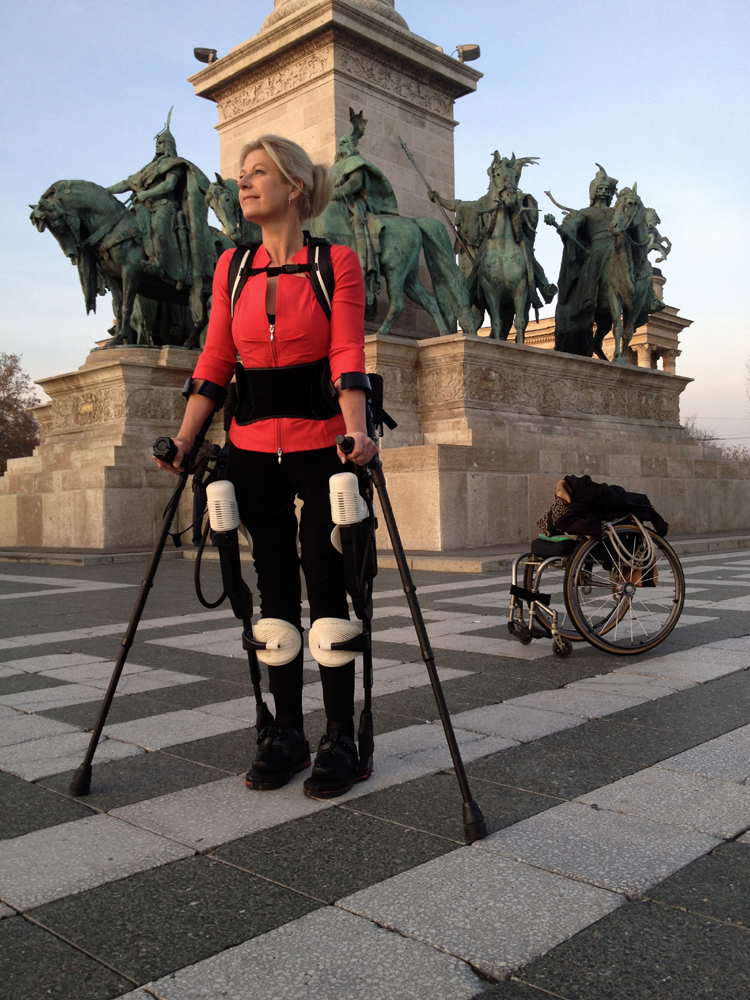
On February 27, 1992, Boxtel fell while skiing in Aspen, CO and was paralyzed from the waist down. Doctors told her she would never walk again. Wheelchair-assisted since that time, Boxtel sought a new manner of mobility, and Ekso Bionics’ exoskeleton gave her that opportunity.
3D Systems scanned Boxtel’s lower body, including her spine, thighs and shins, building a digital model for the exoskeleton to be built around. Particular care was taken with areas where hard plastic might rub against bone, causing bruising Boxtel couldn’t feel, but which could cause more serious health problems if left unchecked. Mechanical actuators and controls, manufactured and provided by Ekso Bionics, were then integrated with the 3D printed components to complete the bespoke exoskeleton.
“After years of dreaming about it, I am deeply grateful and thrilled to be making history by walking tall in the first ever 3D printed Ekso-Suit, made specifically for me,” said Boxtel. “This project represents the triumph of human creativity and technology that converged to restore my authentic functionality in a stunningly beautiful, fashionable and organic design.”
The entire design and production process took about three months to complete. That seems amazing when you really stop to think about it. Three months to offer a woman paralyzed for 22 years the chance to walk again.
Below you’ll find a video about Boxtel’s Ekso-Suit.
Source: 3D Systems


John Newman is a Digital Engineering contributor who focuses on 3D printing. Contact him via [email protected] and read his posts on Rapid Ready Technology.
Follow DE
Join over 90,000 engineering professionals who get fresh engineering news as soon as it is published.






About Us · Contact Us · Editorial Team · Advertising · Privacy Policy · Subscriber Services · © 2026 Digital Engineering 24/7 · Peerless Media