Helping design and engineering professionals discover, evaluate and specify technologies and processes that shorten the design cycle and enable success.



Digital Engineering April 2026
In the latest issue of Digital Engineering, we take a look at the latest innovations in design for additive manufacturing, including the use of natural language inputs, social media cosplayers, and AI integration. The issue also includes a feature…

January Special Focus Issue: Design for Additive
In this Special Focus Issue of Digital Engineering, learn about the latest advancements in design for additive manufacturing, including new software tools, additive in automotive, custom medical devices, and more.
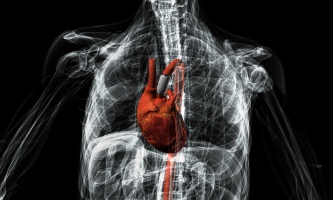
The US Department of Health and Human Services estimates that around 3,000 people seek a new heart each year, with only 2,000 available hearts to go around. During the waiting period, patients are hooked up to a ventricular assist device (VAD), essentially a small pump to regulate heart and blood flow. Researchers at Nottingham Trent University (NTU) have filed a patent for a new, 3D printed VAD that could extend the lifespan of patients awaiting a heart transplant.
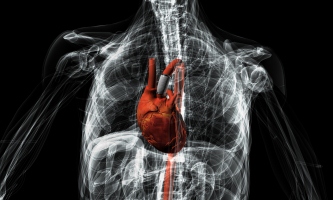
Most VADs are large machines that require constant supervision in a hospital, and even the smaller units leave an opening in the body that invites the potential for infection. The VAD under development by NTU includes a 3D printed enclosed battery power source, and is small enough to be implanted in most patients. A “smart aortic graft” is implanted in a removed section of the aorta and works to artificially support a diseased heart.
"Chronic heart failure is a major health challenge and up to 40% of sufferers die within the first year,” said Dr. Philip Breedon, team research lead. “"The technology currently used to help people with acute heart failure can only be used for a few days and involves the patient being attached to large external machines which need to be plugged into the main power supply. The smart aortic graft has the potential to not only extend a patient's life, but also to provide them with mobility, comfort and a reduced need for carers."
The research team plans to use additive manufacturing to customize each pump for a specific patient, based on information gathered from an MRI scan. The entire 3D printed design will include the battery, and pump architecture, and could theoretically be recharged using wireless methods.
Below you’ll find a short video about VADs.
Sources: NTU, US Dept. of Health and Human Services, CDC


John Newman is a Digital Engineering contributor who focuses on 3D printing. Contact him via [email protected] and read his posts on Rapid Ready Technology.
Follow DE
Join over 90,000 engineering professionals who get fresh engineering news as soon as it is published.






About Us · Contact Us · Editorial Team · Advertising · Privacy Policy · Subscriber Services · © 2026 Digital Engineering 24/7 · Peerless Media