Helping design and engineering professionals discover, evaluate and specify technologies and processes that shorten the design cycle and enable success.



Digital Engineering April 2026
In the latest issue of Digital Engineering, we take a look at the latest innovations in design for additive manufacturing, including the use of natural language inputs, social media cosplayers, and AI integration. The issue also includes a feature…

January Special Focus Issue: Design for Additive
In this Special Focus Issue of Digital Engineering, learn about the latest advancements in design for additive manufacturing, including new software tools, additive in automotive, custom medical devices, and more.
RocketLab has announced its contribution to the continuation of space exploration with the launch (no pun intended) of its new Electron launch vehicle for delivering small satellites into orbit. For a mere $4.9 million — a bargain compared to the standard $10+ million cost per launch — companies can launch a 100kg payload. Part of the secret to the low price is the 3D printed Rutherford launch engine.
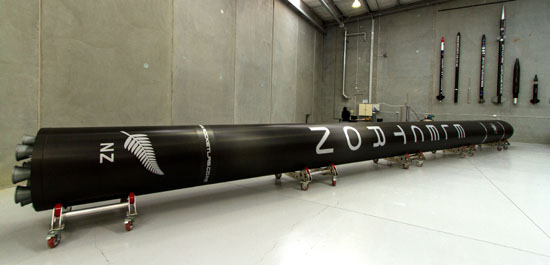 RocketLab's Electron launch vehicle is powered by the Rutherford rocket, which was built largely from 3D printed parts. Courtesy of RocketLab.
“Historically, the time and expense to launch small satellites have been prohibitive, costing many millions of dollars and requiring endless patience and flexibility waiting for months to ‘hitch a ride’ to space,” said Peter Beck, CEO of Rocket Lab. “With Electron, companies can launch whenever they would like, at a substantially more affordable cost. This monumental advancement in space technology gives satellite-reliant businesses the freedom they have been waiting for, which will lead to vast improvements in how we use satellite technology in space.”
According to RocketLab, the Rutherford engine, named after New Zealand born physicist Ernest Rutherford, is the first, “oxygen/hydrocarbon engine to use 3D printing for all primary components including its engine chamber, injector, pumps and main propellant valves.”
The components were built via electron beam melting using designs specifically developed for 3D printing. The result is a lighter, less expensive rocket engine that are combined to achieving 152kN (34,500lbf) liftoff thrust and 183kN (41,500lbf) peak thrust.
Small satellites are used by a number of different business, including TV, radio, broadband and street-mapping services such as that provided by Google. Some 30 business have expressed interest in the Electron launch vehicle, and investment backers include Lockheed Martin.
Other organizations have also researched 3D printing for use in space programs, and the technology is being investigated to build cubesats. It isn’t hard to envision a day where 3D printed satellites are launched by 3D printed rockets. Below you’ll find a video presentation of the Rutherford engine.


John Newman is a Digital Engineering contributor who focuses on 3D printing. Contact him via [email protected] and read his posts on Rapid Ready Technology.
Follow DE
Join over 90,000 engineering professionals who get fresh engineering news as soon as it is published.






About Us · Contact Us · Editorial Team · Advertising · Privacy Policy · Subscriber Services · © 2026 Digital Engineering 24/7 · Peerless Media