Helping design and engineering professionals discover, evaluate and specify technologies and processes that shorten the design cycle and enable success.



Digital Engineering April 2026
In the latest issue of Digital Engineering, we take a look at the latest innovations in design for additive manufacturing, including the use of natural language inputs, social media cosplayers, and AI integration. The issue also includes a feature…

January Special Focus Issue: Design for Additive
In this Special Focus Issue of Digital Engineering, learn about the latest advancements in design for additive manufacturing, including new software tools, additive in automotive, custom medical devices, and more.
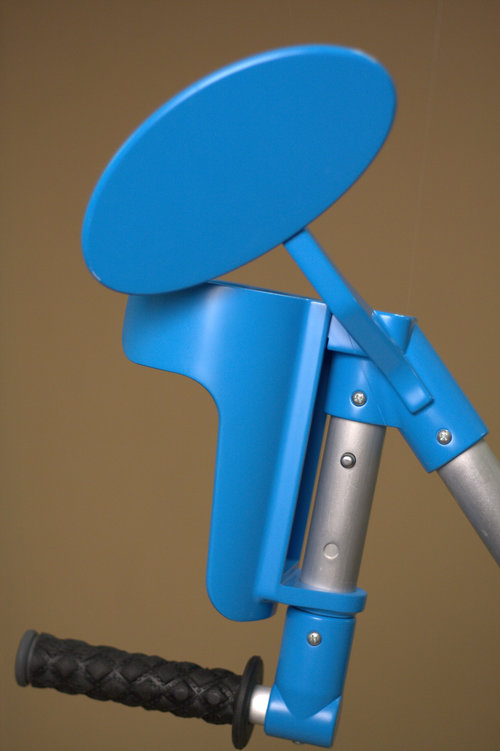 Better Walk used 3D printing to speed their prototyping process. Image: Better Walk
The students launched their start-up company, Better Walk, in 2013, and have already signed up some customers and attracted investors.
According to the company's founders, 3D printing enables a high degree of personalization for the crutches. The technology also helped speed the prototyping process, since they could rapidly integrate feedback from orthopedists during the product development phase.
“We were able to create visual demonstrations of different iterations and changes suggested to us by orthopedic surgeons and physical therapists, and within a few weeks after the suggestions were made, take in the updated design for further feedback,” CEO and co-founder Partha Unnava told MedCity News.
Among the innovations in the crutches are an angled hand grip and attaché dholster, which provides more wrist and forearm support, along with a side contact piece to help users avoid putting weight on their underarms. This removes force from the user's underarm, and reduces direct force on the user's wrist.
Unnava was actually inspired to design the crutches after breaking his ankle playing basketball. After experiencing underarm pain from using traditional crutches, he and two other biomedical engineering students designed an alternative model.
The crutches cost $120. The company is initially targeting orthopedic clinics, since they have more flexibility to adopt (and be reimbursed for) new technologies. Better Walk also participated in Zero to 510, a device accelerator program.
Source: Better Walk


Brian Albright is the editorial director of Digital Engineering.
Contact him at [email protected].

Join over 90,000 engineering professionals who get fresh engineering news as soon as it is published.






About Us · Contact Us · Editorial Team · Advertising · Privacy Policy · Subscriber Services · © 2026 Digital Engineering 24/7 · Peerless Media