Helping design and engineering professionals discover, evaluate and specify technologies and processes that shorten the design cycle and enable success.



Digital Engineering April 2026
In the latest issue of Digital Engineering, we take a look at the latest innovations in design for additive manufacturing, including the use of natural language inputs, social media cosplayers, and AI integration. The issue also includes a feature…

January Special Focus Issue: Design for Additive
In this Special Focus Issue of Digital Engineering, learn about the latest advancements in design for additive manufacturing, including new software tools, additive in automotive, custom medical devices, and more.
Tamicare is well on its way to bringing 3D printed textiles to the public, but other companies are hard at work on the same project. San Francisco-based Electroloom is planning to bring together 3D printing and clothing design by the end of 2014, and to accomplish its goals in an environmentally friendly manner.
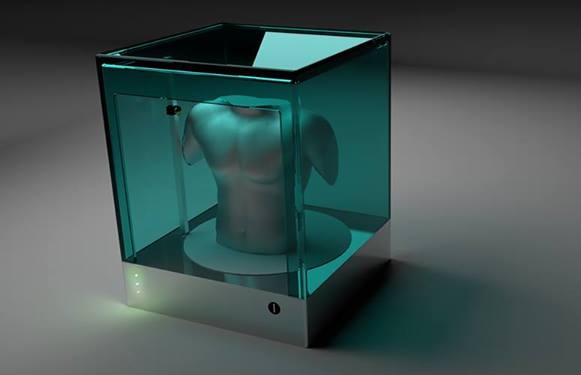
Electroloom was founded by Aaron Rowley, a graduate of California Polytechnic, with the idea that a desktop AM system could produce comfortable, casual clothing in a sustainable manner. The Electroloom is also the name of the 3D printer the company is working on, and the device recently won a grant from Alternative Apparel. The company received $1000 for prototyping, a year-long membership to TechShop San Francisco, and a design mentorship.
The Electroloom spins fabric sort of like the way a cotton candy machine spins sugar. It produces tiny filaments that are stuck together like webbing and are malleable enough to conform to the shape over which they are being produced. Maybe the easiest way to picture how the system might work is to think of how silly string reacts when you make a big pile of it on something.
The Electroloom team hasn’t gotten quite far enough to start wearing their creations, but has managed to build bolts of cloth using their AM process. Natural cotton by itself seems too fragile a material for the process, so the team has gone to a natural/synthetic material blend to ensure quality results. Rowley has predicted that the first successful print will probably be something simple like a beanie.
Along with offering 3D printed clothing and the AM system that makes it possible, Electroloom intends to run a design clearinghouse to provide an electronic boutique for users that aren’t very tech savvy. The company envisions pages of clothing designs submitted by users that can be purchased to print, essentially acting like a Shapeways for your wardrobe.
Below you’ll find a video featuring an early prototyping session with the technology behind Electroloom.


John Newman is a Digital Engineering contributor who focuses on 3D printing. Contact him via [email protected] and read his posts on Rapid Ready Technology.
Follow DE
Join over 90,000 engineering professionals who get fresh engineering news as soon as it is published.






About Us · Contact Us · Editorial Team · Advertising · Privacy Policy · Subscriber Services · © 2026 Digital Engineering 24/7 · Peerless Media