Helping design and engineering professionals discover, evaluate and specify technologies and processes that shorten the design cycle and enable success.



Digital Engineering April 2026
In the latest issue of Digital Engineering, we take a look at the latest innovations in design for additive manufacturing, including the use of natural language inputs, social media cosplayers, and AI integration. The issue also includes a feature…

January Special Focus Issue: Design for Additive
In this Special Focus Issue of Digital Engineering, learn about the latest advancements in design for additive manufacturing, including new software tools, additive in automotive, custom medical devices, and more.
Following its acquisition by Google, Motorola has also been focusing on customization. The early steps were similar to those taken by Nokia, offering variously colored cases and different configurations of the Moto X. Perhaps unsatisfied by mainly cosmetic options, Motorola has moved on to Project Ara, and the goal of developing a modular smartphone with the assistance of 3D Systems.
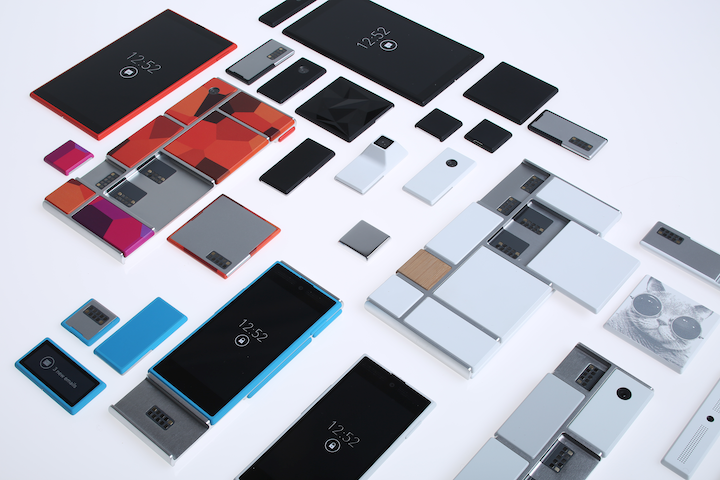
Additive manufacturing is meant to be the most important design element of Project Ara. 3D Systems has been given the task of developing a high-speed, multi-material, production platform that incorporates conductive and functional materials. In essence, Motorola has turned to AM to provide the building blocks of its modular system.
“With Project Ara, we asked the question, ‘How do we bring the benefits of customization and an open hardware ecosystem to 6 billion people?’ That is our driving application,” said Regina Dugan, senior VP and head of Motorola’s Advanced Technology & Projects group. It requires technical advances in areas such as material strength and printing with conductive inks for antennas. And those advances must support production-level speeds and volumes, which is a natural partnership with 3D Systems.”
In addition to finding a working solution, 3D Systems must develop a modular system open to development by third parties. Part of the idea behind Project Ara is to create a competitive marketplace for innovations that add or increase functionality for the modular phones, similar to the way the app market has developed.
From the Motorola blog:
Project Ara is developing a free, open hardware platform for creating highly modular smartphones. We want to do for hardware what the Android platform has done for software: create a vibrant third-party developer ecosystem, lower the barriers to entry, increase the pace of innovation, and substantially compress development timelines.Our goal is to drive a more thoughtful, expressive, and open relationship between users, developers, and their phones. To give you the power to decide what your phone does, how it looks, where and what it’s made of, how much it costs, and how long you’ll keep it.
Below you’ll find a short video discussing Project Ara.
Sources: 3D Systems, Motorola


John Newman is a Digital Engineering contributor who focuses on 3D printing. Contact him via [email protected] and read his posts on Rapid Ready Technology.
Follow DE
Join over 90,000 engineering professionals who get fresh engineering news as soon as it is published.






About Us · Contact Us · Editorial Team · Advertising · Privacy Policy · Subscriber Services · © 2026 Digital Engineering 24/7 · Peerless Media