Helping design and engineering professionals discover, evaluate and specify technologies and processes that shorten the design cycle and enable success.



Digital Engineering April 2026
In the latest issue of Digital Engineering, we take a look at the latest innovations in design for additive manufacturing, including the use of natural language inputs, social media cosplayers, and AI integration. The issue also includes a feature…

January Special Focus Issue: Design for Additive
In this Special Focus Issue of Digital Engineering, learn about the latest advancements in design for additive manufacturing, including new software tools, additive in automotive, custom medical devices, and more.
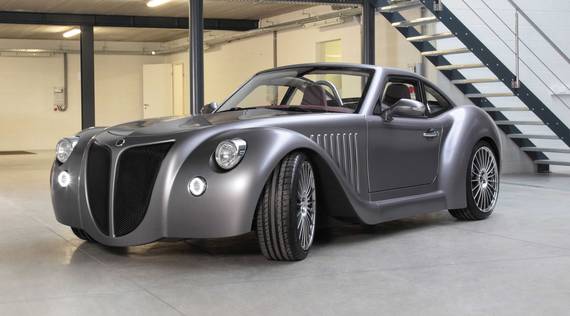
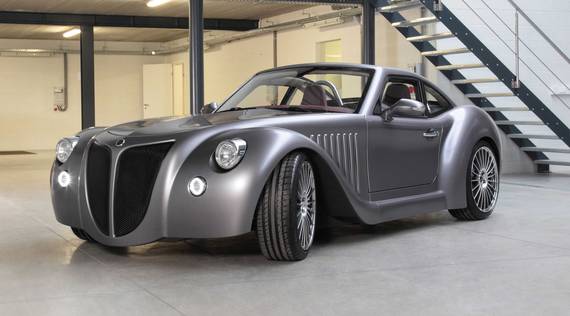
Voxeljet and Green Propulsion have worked together to bring the classic Imperia GP Roadster back to the streets, using AM. Sporting a hybrid engine with 350 HP that can go from 0 to 100 km/h in four seconds, the new Roadster is a reimagining of a Belgium automobile brand that, according to Green Propulsion, developed a fuel-electric motor as early as 1907.
Developing a new car based on a classic model requires some out-of-the-box thinking, and 3D printing helped get the Roadster moving. Reimagining the guts of the vehicle required quick prototyping to provide proof of concept. With the actual vehicle being out of production for quite some time, Green Propulsion couldn’t exactly pick up new parts off-the-shelf to work with. In this case, the VX4000 was used to build sand molds to cast an aluminum prototype gear box.
"[With the] VX4000 we can generate moulds the size of a sports car, the limit being a volume of eight cubic metres,” said Dr. Ingo Ederer, CEO of voxeljet technology. “This presents users with undreamt-of possibilities. The enormous build space enables the rapid production of large individual moulds, but is also flexible enough to allow the cost-effective production of small batches."
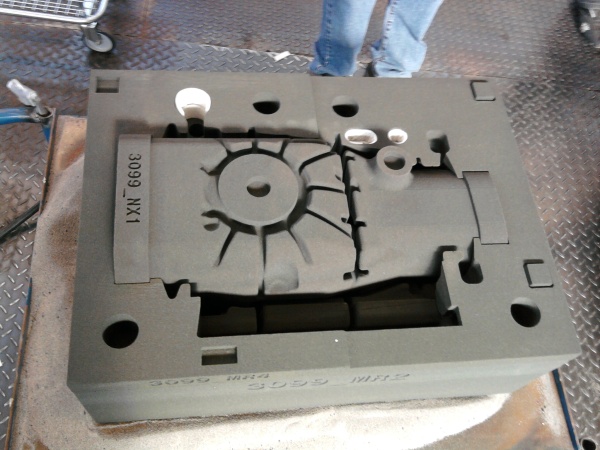
The gear box is just part of the 1.6 liter turbo gasoline engine with 200 HP, and an electric motor with an output of 150 HP. Test declared the prototype’s viability, and with the gearbox declared a success, Imperia was able to begin actual production, providing a sports car that (I think) not only looks cool, but is eco-friendly with CO2 emissions at 50 grams per kilometer.
The new Imperia GP Roadster will run a little over $135,000 to purchase, and the company is only making a limited number. Below you’ll find a video that gives a better look around the vehicle.
Source: voxeljet


John Newman is a Digital Engineering contributor who focuses on 3D printing. Contact him via [email protected] and read his posts on Rapid Ready Technology.
Follow DE
Join over 90,000 engineering professionals who get fresh engineering news as soon as it is published.






About Us · Contact Us · Editorial Team · Advertising · Privacy Policy · Subscriber Services · © 2026 Digital Engineering 24/7 · Peerless Media