Helping design and engineering professionals discover, evaluate and specify technologies and processes that shorten the design cycle and enable success.



Digital Engineering April 2026
In the latest issue of Digital Engineering, we take a look at the latest innovations in design for additive manufacturing, including the use of natural language inputs, social media cosplayers, and AI integration. The issue also includes a feature…

January Special Focus Issue: Design for Additive
In this Special Focus Issue of Digital Engineering, learn about the latest advancements in design for additive manufacturing, including new software tools, additive in automotive, custom medical devices, and more.
Researchers at Oregon State University (OSU) have recently developed an improved glucose sensor for patients with Type 1 diabetes. The sensor is part of a monitoring system that should be less expensive and more comfortable for patients.
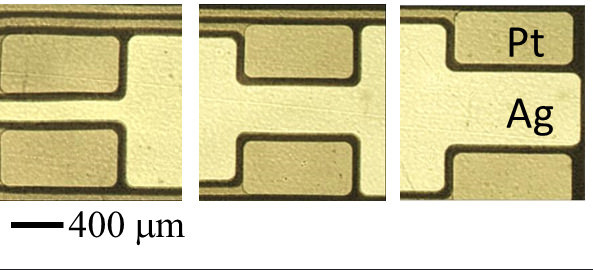 A closeup look at the diabetes sensor being developed by OSU. Courtesy of Greg Herman.
Diabetes is a growing health concern around the world affecting an estimated 387 million people in 2014, according to the International Diabetes Federation. The number of people suffering from diabetes is expected to rise to 592 million in the next two decades. Currently, the global price tag for dealing with the disease adds up to $612 billion.
The sensor developed by OSU would act like an artificial pancreas, to monitor blood glucose levels. When paired with portable infusion pumps, the entire system can assist patients by maintaining proper levels of glucose with controlled delivery of the hormones insulin and glucagon. Additionally, the sensors are thin enough they can be wrapped around a catheter.
The sensor is built using conductive e-ink and a plastic substrate. The new system is less intrusive, requiring a single entry point rather than the usual four, which results in greater comfort for users. Because the sensor is built using AM, each unit can be produced more quickly and with less waste than existing sensors.
“These are disposable devices that only last about a week and then need to be replaced,” said Greg Herman, an OSU associate professor of chemical engineering. “Some other approaches used to make them might waste up to 90 percent of the materials being used, and that’s a problem in a throw-away sensor. It’s also important to keep costs as low as possible, and printing systems are inherently low-cost.”
Below you’ll find a short video explaining diabetes using 3D printed protein models.
Source: OSU


John Newman is a Digital Engineering contributor who focuses on 3D printing. Contact him via [email protected] and read his posts on Rapid Ready Technology.
Follow DE
Join over 90,000 engineering professionals who get fresh engineering news as soon as it is published.






About Us · Contact Us · Editorial Team · Advertising · Privacy Policy · Subscriber Services · © 2026 Digital Engineering 24/7 · Peerless Media