Helping design and engineering professionals discover, evaluate and specify technologies and processes that shorten the design cycle and enable success.



Cut Retrieval-Augmented Generation (RAG) Hallucinations by 50%
Most teams hit the same wall with enterprise AI: LLMs that hallucinate, pipelines that don’t scale, and infrastructure that’s harder to design than the models themselves.

What Is Intelligent BOM Management? A Guide to Smarter Product Development
Learn how intelligent Bill of Materials (BOM) management helps teams collaborate, reduce errors, and bring innovative products to market faster with cloud-based PLM tools.
Dear Desktop Engineering Reader:
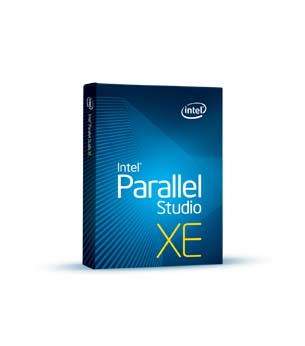 |
Developing enterprise applications for multicore systems presents optimization, reliability, security, and a rasher of other knotty challenges. And now we see the era of many-core processors coming fast—complete with their promise of rendering many of the techniques that you're just beginning to master with multicores obsolete. Intel has been right there creating development tools for multicore systems and, no surprise here, it intends to be there in many-core processor development tools as well. To that end, it has just released Xtreme Editions of Intel Parallel Studio and Intel C++ Studio suites that should help you with what you need to do today and make the transition from multicore to many-core easier when you cross that chasm.
The deal with Intel Parallel Studio XE 2011 and Intel C++ Studio XE 2011 is that they unite formerly discrete development tools into a single package. The suites are engineered to help you get the performance and code robustness out of the applications you develop for today's generation of multicore processors. At the same time, the suites are designed to simplify the transition from multicore to many-core processors in your future by being ready to ease “the procurement of all the necessary tools for high performance.” In other words, Intel knows what’s coming and they laid-in the infrastructure so that your investment today doesn't become tomorrow's shelf ornament.
So what's in these packages? The suite is made of three development products: Intel Composer XE 2011 for optimizing compilers and high-performance libraries; Intel Inspector XE 2011 for error checking memory and threads; and Intel VTune Amplifier XE, an advanced performance profiler. Intel Parallel Studio XE combines Intel's C/C++ and Fortran compilers, performance and parallel libraries, and error checking, code robustness, and performance profiling tools in its single package.
Now, Intel Parallel Studio XE 2011 and Intel C++ Studio XE 2011 are essentially the same suite of tools. Both run on Windows and Linux in integrated development environments or as standalones. The only difference between the two is that Intel C++ Studio XE 2011 is for those of you who only need the C++ compiler, so it does not have a Fortran compiler.
You can learn more about Intel Parallel Studio XE 2011 and Intel C++ Studio XE 2011 suites from the link over there. Once at Intel, make sure to hit the “How To” tab, where you'll find a number of Quicktime videos explaining what various components can do for you. There's also a “try it before you buy it” link.
Anyone charged with developing high-performance computing and enterprise applications knows that quality code, reliability, and tight security are must-haves that are not easy to come by. Intel Parallel Studio XE 2011 suites are engineered to help you get there efficiently.
Thanks, pal. — Lockwood
Anthony J. Lockwood
Editor at Large, Desktop Engineering
Check out Intel Parallel Studio XE 2011 and Intel C++ Studio XE 2011.


Anthony J. Lockwood is Digital Engineering's founding editor. He is now retired. Contact him via [email protected].
Follow DE
Join over 90,000 engineering professionals who get fresh engineering news as soon as it is published.






About Us · Contact Us · Editorial Team · Advertising · Privacy Policy · Subscriber Services · © 2026 Digital Engineering 24/7 · Peerless Media