Helping design and engineering professionals discover, evaluate and specify technologies and processes that shorten the design cycle and enable success.



Design & Simulation Software Guide 2025
In this Special Issue, Digital Engineering presents its second annual guide to design and simulation software vendors.

Special Focus Issue: Artificial Intelligence in Simulation
In this Special Focus Issue of Digital Engineering, we look at the latest trends in integrating AI and machine learning with design and simulation tools. The issue includes features on synthetic data, open-source AI for modeling, AI-powered…
COMSOL has released its latest version of its modeling and simulation software, COMSOL Multiphysics version 6.1. Every aspect of the software's simulation environment—from the ability to perform multiphysics analyses to the functionality for creating apps—delivers feature additions and workflow enhancements.
"This version provides our users with powerful multiphysics simulation tools in areas of highly competitive R&D, like audio technology and vehicle electrification," says Bjorn Sjodin, VP of product management at COMSOL. "We have also strengthened the software's foundation with new capabilities for optimization and the modeling of turbulent flow and mechanical contact."
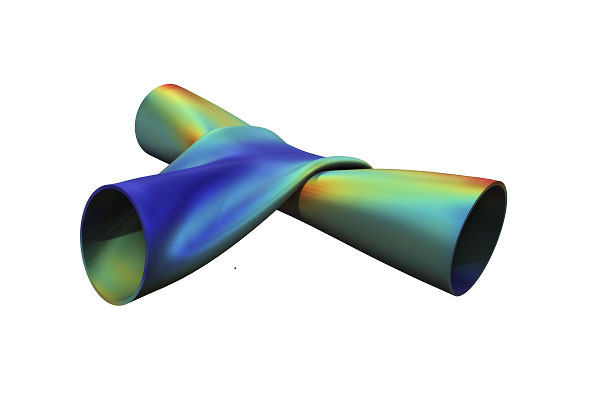
This release brings major upgrades to the fluid flow and mechanical simulation products. The CFD Module now includes high-fidelity turbulent flow with detached eddy simulation (DES). This yields the accuracy of large eddy simulation (LES) with substantially less computational effort. A new and fast method for mechanical contact is included in the Structural Mechanics Module and the MEMS Module. It introduces new functionality for solids, shells and membranes with full support for self-contacting surfaces. There is a new method for assigning materials to thin structures that makes it easier to analyze gaskets, adhesive layers and claddings.
Version 6.1 further expands the software's capabilities for modeling speakers and microphones in consumer electronics with additional functionality for thermoviscous acoustics.
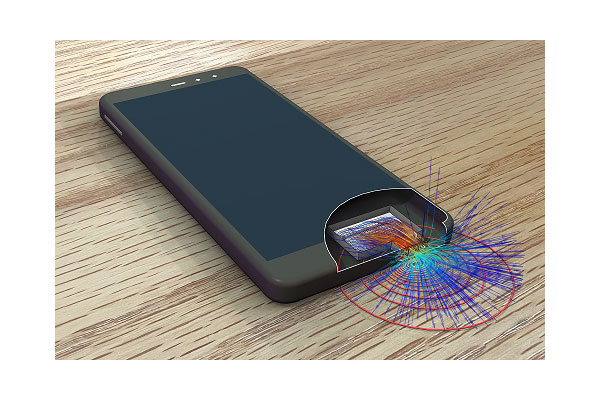
"We have a large and growing community of users among leading developers of audio technology. They use our software to analyze everything from smart phone speakers to earbuds and hearing aids. The functionality in this release completes the Acoustics Module simulation environment for analyzing electrovibroacoustics of microtransducers and microacoustic systems," says Mads Herring Jensen, acoustics technology manager at COMSOL.
COMSOL continues its commitment to providing powerful simulation tools for engineers working on the electrification of vehicles. When assessing the operational reliability and safety of battery technology, users of the Battery Design Module will enjoy several important additions, including support for setting up thermal runaway propagation models. "I am excited about our new user interface for battery packs," says Henrik Ekstrom, electrochemistry technology director at COMSOL. "It will be very practical for battery developers interested in charge–discharge dynamics and thermal management simulations." In the AC/DC Module, new functionality for rapid layout of motor windings and magnet arrays ensures a smooth workflow for electric motor design and analysis.
Sources: Press materials received from the company and additional information gleaned from the company’s website.


COMSOL is a global provider of simulation software for product design and research to technical enterprises, research labs, and universities. Its COMSOL Multiphysics® product is an integrated software environment for creating physics-based models…

Ebook download: Powering Clean Energy Solutions
In this ebook, we explore 6 cases where modeling and simulation were used to help overcome these new design challenges. Topics include water turbines, sand-based heat storage, hydrogen fuel cells, and more.

DE's editors contribute news and new product announcements to Digital Engineering. Press releases may be sent to them via [email protected].
Follow DE
Join over 90,000 engineering professionals who get fresh engineering news as soon as it is published.






About Us · Contact Us · Editorial Team · Advertising · Privacy Policy · Subscriber Services · © 2026 Digital Engineering 24/7 · Peerless Media