Helping design and engineering professionals discover, evaluate and specify technologies and processes that shorten the design cycle and enable success.


Alert!
Digital Engineering ceased publication on July 1, 2026. This website remains available as an archive of engineering content.
For inquiries or information, please email [email protected].


May 2026 Special Focus: Artificial Intelligence in Design and Simulation
In this Special Focus Issue, learn about the latest developments in the integration of artificial intelligence into engineering workflows.

Design & Simulation Software Guide 2025
In this Special Issue, Digital Engineering presents its second annual guide to design and simulation software vendors.
For Andrew Strikwerda, senior application manager of Electromagnetics, COMSOL, design of wearable devices is not just part of his job but also a matter of personal interest. “I happen to be a runner, and I love my Garmin Forerunner watch,” he says. “In Boston right now [bracing for a snowstorm], it’s single-digit 5 degrees Fahrenheit. And in late July, it’s 80°-90° F. And the device operates successfully within that 100 degrees Fahrenheit temperature swing.”
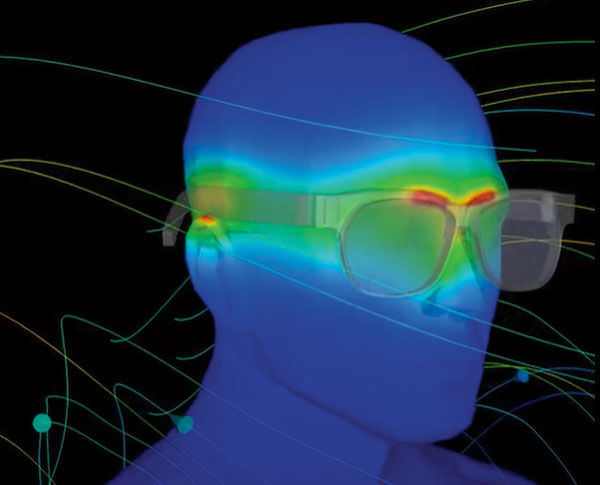
Designing small, wearable devices that sit close to the human skin often involves reconciling the competing needs of various components. Jeff Tharp, product manager for Thermal Integrity in Electronics, Synopsys, sums up the primary challenge: “You don’t have the luxury of real estate.”
He brought up Bluetooth-enabled hearing aids as an example. “You need to maximize the Bluetooth connectivity, and also deal with the power draw and the battery life. Big antennas transmit efficiently; small antennas do not. But the geometric constraint leaves very little room to move things around. You also have the human body, which creates signal loss. And if you’re a vendor in that space, you need to comply with SAR,” he outlines.
SAR (specific absorption rate) refers to the relative amount of radio frequency absorbed by the wireless device user’s head. The U.S. Federal Communications Commission sets SAR limits for different devices with transmission functions.
In July 2025, Synopsys completed its acquisition of Ansys, a household name in simulation software. Because of this, Ansys simulation titles such as HFSS (3D electromagnetic simulation), Icepak (CFD for electronics), and Fluent (CFD for fluid flow, heat transfer, mass transfer, and chemical reactions), are now part of Synopsys. It also offers Discovery, a cloud-based simulation program for quick design iteration, suitable for designers who are not well-versed in advanced simulation methods.
With wearable Internet of Things devices, such as smartwatches, contact with skin adds a new layer of complexity.
Strikwerda points out, “If your laptop gets hot, it’s not that big of a deal, because it’s sitting on a table. But if the wearable device gets too hot, you’ll have to take it off.”
Tharp says, “Primarily, these devices require electromagnetic simulation. That is a feature of Bluetooth devices. This is usually followed by thermal simulation and CFD to understand the heat transfer.”
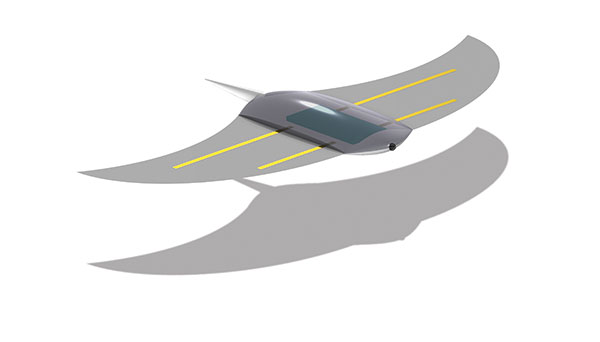
COMSOL published a simulation example on the use of ionic polymer-metal composites to design actuators in a soft robot inspired by a manta-ray. Image courtesy of COMSOL.
Each simulation is governed by a specific type of physics, possibly to be simulated in a dedicated package. For phenomena involving more than one physics, the solution is usually to use the output from one simulation as input for another, to study how the former affects the latter: for example, how the electromagnetic behaviors cause heat buildup in an implant. COMSOL offers a comprehensive package for multiphysics simulation, allowing you to simulate related physics simultaneously.
“You can separate the simulation problem into single physics sessions and run them separately. You can do that in COMSOL as well,” says Strikwerda. “But with COMSOL, the advantage is, whether you run different physics separately or together, it’s the same workflow, the same UI [user interface]. You do not need to be an expert, or to export and import the outputs and inputs from one simulation to another.”
For electronics inside wearable devices with odd shapes, fabrication is a challenge, notes Strikwerda. “You’ll have to quantify the uncertainty in the fabrication tolerances and the material variations,” he says.
The Uncertainty Quantification Module is part of COMSOL Multiphysics software. Engineers may use it to study and identify the uncertainties in electromagnetics, structural, acoustics, fluid flow, heat, and chemical simulations.
Aside from wearable consumer devices, epidermal electronics also present new simulation challenges. They encompass electrocardiography and electromyography monitoring e-tattoos, sweat-analyzing microfluidic patches, UV-monitoring stickers, temperature sensors, and movement-measuring strain sensors. Many are considered skin-friendly, due to their ability to stretch and conform to the human skin in action. That means the embedded electronics inside must also be designed to accommodate the same flexibility.
“Think of how many times you can bend a paperclip before it breaks. So now, you have to consider fatigue on your flexible PCBs [printed circuit boards] in addition to structural simulation,” says Tharp. “And that flexing over time affects signal integrity. That requires you to look at multiple physics domains.”
Engineers also face many similar challenges with the emerging soft robots, made with compliant, deformable materials such as silicone, gels, and elastomers. PCB packages embedded in them are by necessity bendable, not rigid and flat as they usually are in standard mechanical objects.
“With these robots, you have to consider electromagnetic, thermal, and structural simulation, but you may also have to deal with ionic transport,” says Strikwerda. “You have a thin layer of material, which is usually polymer-metal composite. When you apply a voltage difference, you actually see ionic transfer happening within it.”
COMSOL published a multiphysics simulation example on the use of ionic polymer–metal composites (IPMCs) to design actuators for a manta-ray inspired soft robot.
In a blog post, COMSOL writes, “IPMCs are an ideal material for artificial muscles due to their lightweight nature, maneuverability, and ability to generate a flapping motion with electrical stimuli, as opposed to a power transmission, which is energy-inefficient.”
(For more, read “Analyzing the Muscles of a Robotic Manta Ray,” February 2025, COMSOL blog.)
For implants in the healthcare and biomedical field, the U.S. Food and Drug Administration set the requirements to keep the temperature to a safe level. “There’s a certain temperature rise that people perceive as pain,” explains Tharp. The concern is, routine procedures like MRI [magnetic resonance imaging] could cause the implant to heat up, causing discomfort in the patient. Therefore, implants are required to be MRI-compliant.
“You might notice, now, people with pacemakers can get into MRI machines. Before, that was not possible. That’s because we can now design the devices with robust heat dissipation,” adds Tharp.
Because heat dissipates at different rates based on body types, implant engineers rely on phantoms: archetypes representing patients of different gender, size, weight, and age. This may be good enough for generic implants but in the future, Tharp anticipates simulation will be patient-specific, to finetune treatments like chemotherapy to be much more precise in targeting the tumor inside a specific patient.
The simulation software industry has time-tested and reliable solvers, but for simulating objects that come in contact with human anatomy, describing the body part’s complex geometric shape and characterizing its density, elasticity, thermal conductivity, and other properties remain a challenge. Whereas properties of common manufacturing materials such as steel, aluminum, and copper are well-understood and well-defined, human skin is not.
“There are general references you can find, but keep in mind, depending on how much one is sweating, the skin properties can change,” explains Strikwerda. “In some cases, you would need to add anisotropy and thermal conductivity of the tissue to get accurate simulation results.”
COMSOL Software includes the AC/DC database, populated with materials with properties you can select and use.
Another challenge is the dynamic range required for precision—the gap between the smallest component and the largest simulated region. “The physics remains the same, so everything can still be calculated using Navier–Stokes equations. But when you’re simulating a tiny transistor’s impact on the entire human head, you have to calculate many decimal points beyond zero to be accurate. That demands a lot of computation expense,” Tharp explains.
Simulation, Tharp believes, is no longer optional. It’s a necessity. And increasingly, the coupling of different physics is becoming the norm. “My advice is, don’t look at the kind of physics you’re solving today, but look at what you might be solving 5 years from now, and invest accordingly,” he says.


COMSOL is a global provider of simulation software for product design and research to technical enterprises, research labs, and universities. Its COMSOL Multiphysics® product is an integrated software environment for creating physics-based models…

Ebook download: Powering Clean Energy Solutions
In this ebook, we explore 6 cases where modeling and simulation were used to help overcome these new design challenges. Topics include water turbines, sand-based heat storage, hydrogen fuel cells, and more.

Kenneth Wong is Digital Engineering's resident blogger and senior editor. Email him at [email protected] or share your thoughts or suggestions at digitaleng.news/facebook.
Follow DE






About Us · Contact Us · Editorial Team · Advertising · Privacy Policy · Subscriber Services · © 2026 Digital Engineering 24/7 · Peerless Media