Helping design and engineering professionals discover, evaluate and specify technologies and processes that shorten the design cycle and enable success.


Artificial Intelligence for Design and Engineering Workflows
In this white paper, learn how artificial intelligence and machine learning can improve design and simulation.
Technology Focus: Designing for Optimization & Simulation
Simulation is pervasive, with people from different departments and backgrounds discovering new ways to put it to use, in all of its varied forms.
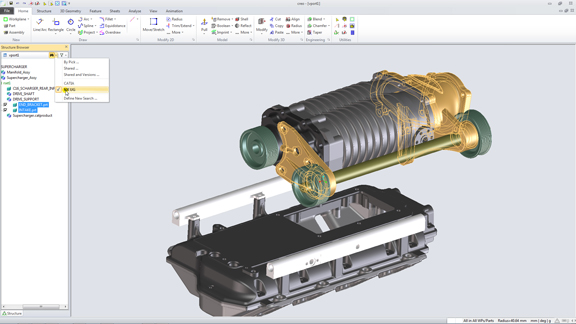
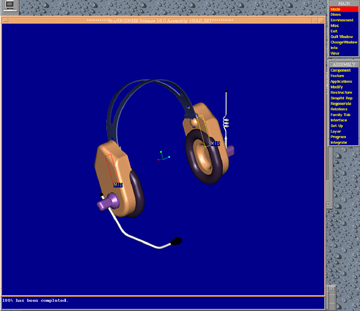
Times have changed. So has one of the most notable brand names in engineering and design. What we used to call Pro/ENGINEER has just been renamed Creo Elements/Pro. In fact, what used to be a comprehensive, all-encompassing parametric program from PTC may soon become a collection of small apps (considerably smaller than a typical high-end MCAD program), tailored for specific purposes: rendering, direct editing, analysis, assembly configuration, and so on. It's an indication that the product-development challenges that once dominated have been supplanted by a new set, prompting established players like PTC to rethink its own R&D approaches.
"The idea is to break up the big, monolithic CAD app into a series of interoperable apps that provide [people with] different roles just what they need," said Brian Shepherd, PTC's executive VP of product development. "I call them bite-size apps."
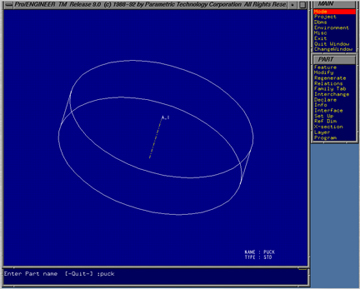
In 1995, when DE got ready to ship its debut issue, Pro/ENGINEER was still in release 15. Shepherd recalled, "At the time, we were focusing on helping our users create higher fidelity models. I think even at the time, solid modeling was gaining momentum, reaching a critical mass -- it really was the obvious way to move forward for companies."
For the new decade, Shepherd feels one of the challenges might be management of "highly configurable products." -- what some people call "mass customization." According to him, configurations may be required to address specific niche markets and, "In some cases, down to individual customers. I think that will place a lot of demands on PLM tools of the future."
Nowhere is this trend more apparent than in the iPhone and iPod accessory market, where owners can now customize and design their own iPhone and iPod skins, then have them rapid-manufactured and shipped to their homes. (For evidence of this, see Macworld 2010 photo album at DE Exchange.)
Shepherd believes, "A broader section of people will become involved in the process [of product design]." At one point in the past, he reminded us, "CAD used to be done in caves" -- rooms equipped with high-end hardware and software, dedicated to running CAD programs, limited to engineers only. But these days (thankfully) are behind us. Today, thanks to inexpensive tools like Google SketchUp, most people are familiar with 3D modeling protocols and can easily be persuaded to interact with 3D design data, provided it's repackaged in a way that's consumer-friendly.
In the next decade, Shepherd thinks we'll see "The ascendancy of PLM into a peer of ERP (enterprise resource management)."
For more, listen to the recorded interview below:




Kenneth Wong is Digital Engineering's resident blogger and senior editor. Email him at [email protected] or share your thoughts or suggestions at digitaleng.news/facebook.
Follow DE
Join over 90,000 engineering professionals who get fresh engineering news as soon as it is published.






About Us · Contact Us · Editorial Team · Advertising · Privacy Policy · Subscriber Services · © 2026 Digital Engineering 24/7 · Peerless Media