Helping design and engineering professionals discover, evaluate and specify technologies and processes that shorten the design cycle and enable success.



Digital Engineering April 2026
In the latest issue of Digital Engineering, we take a look at the latest innovations in design for additive manufacturing, including the use of natural language inputs, social media cosplayers, and AI integration. The issue also includes a feature…

January Special Focus Issue: Design for Additive
In this Special Focus Issue of Digital Engineering, learn about the latest advancements in design for additive manufacturing, including new software tools, additive in automotive, custom medical devices, and more.
Companies like Modern Meadow are developing technology for bioprinters that could result in Trek-like meals, some cooking required, but thus far it is prohibitively expensive to produce a single hamburger. Dr. Marin Sawa is working on the other end of the future foods spectrum. Sawa’s work with her “Algaerium Bioprinter” prototype looks to algae to provide a steady supply of food as long as you have light and electricity.
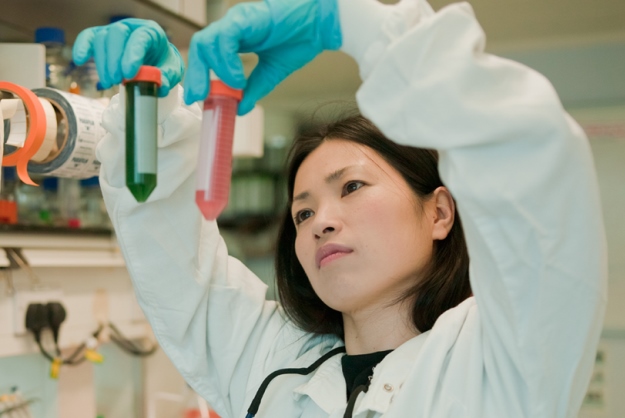
The ‘Algaerium Bioprinter’ prototype demonstrates how microalgae can be cultivated in our domestic space to provide digitally printed health food on demand. Here, Algaerium acts as an ink reservoir, containing ‘superfood’ microalgae such as Chlorella, Spirulina and Haematococcus. The selection of the algae strains reflects the diversity of colours in algae and allows for colourful printed patterns. –Dr. Marin Sawa
I’ve never been all that fond of most vegetables, so the idea of eating bioprinted algae doesn’t particularly inspire me, but it is a reasonable method to increase food production. With more and more people moving to the cities (half the world’s population will soon be urban), cultivation will become a much larger issue. Some cities have even begun to create gardens in abandoned warehouses.
Sawa’s bioprinter can also be turned to other forms of production. By altering “farmed” algae, she plans to build green energy sources and filtering devices. The intent behind the research, other than providing a sort of safety net for critical food shortages, is to encourage environmentally conscious solutions to modern and future problems.
“This research intends to establish distinctive features of algae culture in the context of food security and carbon neutral technology within urban agriculture,” writes Sawa. “The theoretical context provides a framework to critically design sustainable aesthetics in relation to the spatial and phenomenological implications of algae farming/gardens in agrarian urbanism.”
Below you’ll find a video that discusses bioprinting.
Sources: University of the Arts London, Alive, Marin Sawa


John Newman is a Digital Engineering contributor who focuses on 3D printing. Contact him via [email protected] and read his posts on Rapid Ready Technology.
Follow DE
Join over 90,000 engineering professionals who get fresh engineering news as soon as it is published.






About Us · Contact Us · Editorial Team · Advertising · Privacy Policy · Subscriber Services · © 2026 Digital Engineering 24/7 · Peerless Media