Helping design and engineering professionals discover, evaluate and specify technologies and processes that shorten the design cycle and enable success.



Digital Engineering April 2026
In the latest issue of Digital Engineering, we take a look at the latest innovations in design for additive manufacturing, including the use of natural language inputs, social media cosplayers, and AI integration. The issue also includes a feature…

January Special Focus Issue: Design for Additive
In this Special Focus Issue of Digital Engineering, learn about the latest advancements in design for additive manufacturing, including new software tools, additive in automotive, custom medical devices, and more.
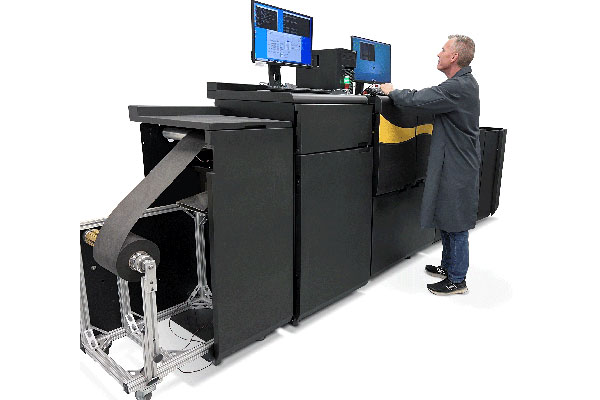
Impossible Objects introduces the CBAM 25, which it describes as a composite 3D printer 15 times faster than comparable technologies now on the market. The CBAM 25—an abbreviation of composite based additive manufacturing—is rated by the company to run at 25 feet per minute. It also claims “better dimensional accuracy than any technology on the market.”
“This is a Moore’s law moment,” claims Robert Swartz, founder and chairman of Impossible Objects. “We are entering a new era of 3D printing with nearly unlimited material options at the speed of true mass production.”
The CBAM uses high-performance composite materials, including its own Carbon Fiber PEEK. The company says this allows the CBAM 25 to produce parts with better strength-to-weight ratios compared to aluminum and better temperature performance than conventional materials.
The speed and precision is due to a new additive process invented by Impossible Objects. Long-fiber sheets are fed into the printer, and layered shapes are printed onto them in a three-pass process, which includes removing excess powder. The sheets are stacked, heated and pressed. A final step removes unbonded portions to reveal the final product.
Using it PEEK polymer as an example, Impossible Objects claims parts can have:
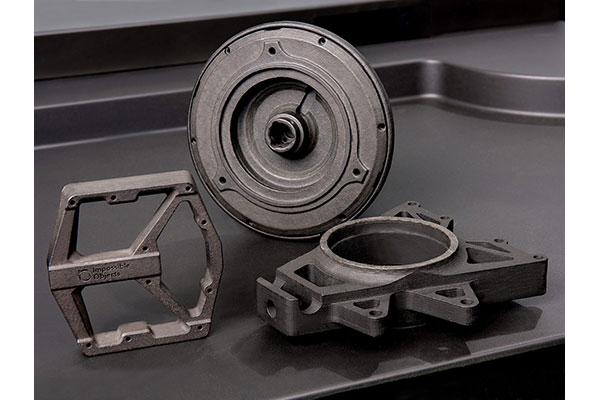
The company claims parts produced with their PEEK polymer are suitable for tooling, spares, repairs and end-use products.
Selected specifications:
Impossible Objects says the CBAM 25 can run in standard manufacturing environments. The use of roll-fed substrate minimizes sheet handling errors, while an artificial intelligence-based in-situ process control ensures stable and repeatable results. Unused fibers can be recycled.
Impossible Objects is demonstrating the CBAM 25 at this year’s RAPID + TCT; it expects first shipments in early 2024. For more information visit the Impossible Objects CBAM 25 home page.
Sources: Press materials received from the company and additional information gleaned from the company’s website.


DE's editors contribute news and new product announcements to Digital Engineering. Press releases may be sent to them via [email protected].
Follow DE
Join over 90,000 engineering professionals who get fresh engineering news as soon as it is published.






About Us · Contact Us · Editorial Team · Advertising · Privacy Policy · Subscriber Services · © 2026 Digital Engineering 24/7 · Peerless Media