Helping design and engineering professionals discover, evaluate and specify technologies and processes that shorten the design cycle and enable success.


Alert!
Digital Engineering ceased publication on July 1, 2026. This website remains available as an archive of engineering content.
For inquiries or information, please email [email protected].

May 2026 Special Focus: Artificial Intelligence in Design and Simulation
In this Special Focus Issue, learn about the latest developments in the integration of artificial intelligence into engineering workflows.

April 2026 Special Focus Issue: Generative Design
In this Special Focus Issue, Digital Engineering takes a look at how generative design solutions can be used across different types of design problems and with a variety of manufacturing approaches to accelerate design space exploration, and…
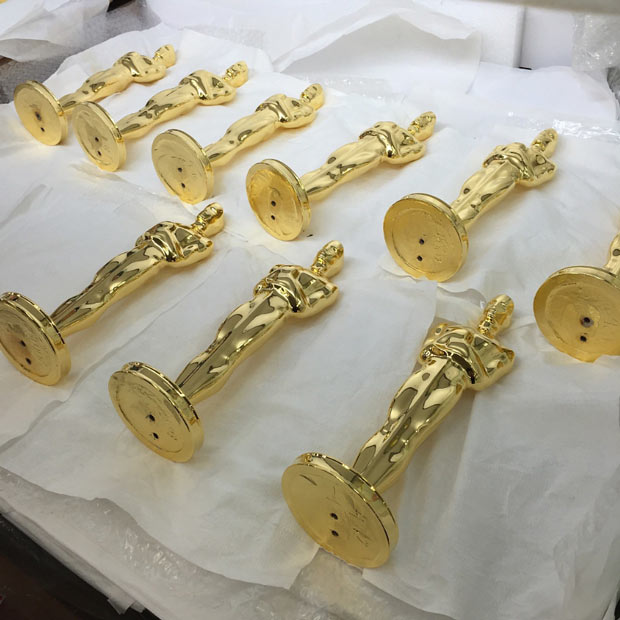
The Oscar statuette has traditionally been manufactured with molds and metal, but production methods faced deterioration over time. This year, Polich Tallix updated the design by scanning a handful of past awards and the current face. Once a digital design was formed, the company used a casting to combine wax and ceramic slurry. After this production process, Oscar is plated in 24 karat gold. (Editor's Note: Read more about 3D printing and Oscar on Rapid Ready Tech).
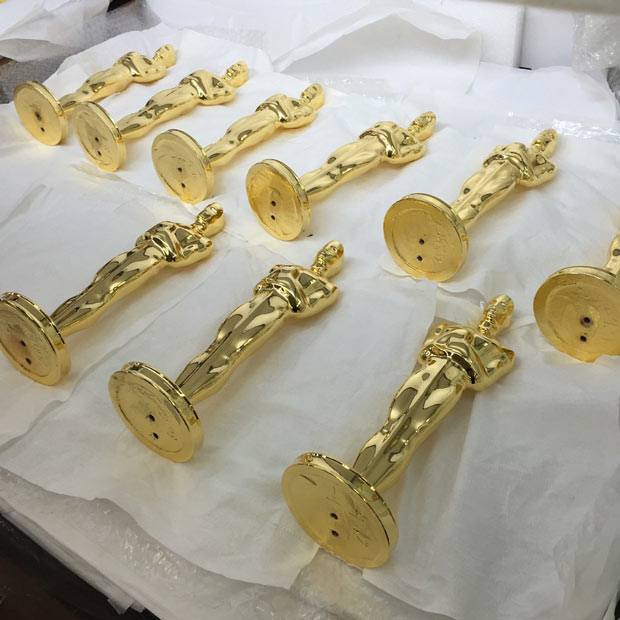 This year's Oscars are plated in 24-karat Laser Gold. Image courtesy of Epner.
However, this year's gold is also used on NASA spacecraft. Originally developed by Epner technology, Laser Gold is used by the space agency for its ultra-high infrared reflectivity, which helps maintain thermal control of on-board instruments. It is deposited by electroplating and is three times harder than pure gold, Epner states.
But technology at the Oscars doesn't just stop at the statuettes themselves; the Academy recognizes scientific and technical achievements.
“Our honorees represent an enormous range of technologies, from camera rigs to software systems, with names as colorful as ‘Biscuit Jr.,’ ‘Barbershop’ and ‘PhysBAM,’” said Richard Edlund, visual effects artist and chair of the Scientific and Technical Awards Committee. “They exemplify the phenomenal creativity of professionals in the scientific and technical community, and the invaluable contributions they make to what is arguably the most creative industry in the world.”
Among this year's winners are:
The red carpet kicks off at 7 p.m. EST on Feb. 28th, with the all-new 3D-printed Oscar statue making its debut.


DE's editors contribute news and new product announcements to Digital Engineering. Press releases may be sent to them via [email protected].
Follow DE
Join over 90,000 engineering professionals who get fresh engineering news as soon as it is published.






About Us · Contact Us · Editorial Team · Advertising · Privacy Policy · Subscriber Services · © 2026 Digital Engineering 24/7 · Peerless Media