Helping design and engineering professionals discover, evaluate and specify technologies and processes that shorten the design cycle and enable success.



May 2026 Special Focus: Artificial Intelligence in Design and Simulation
In this Special Focus Issue, learn about the latest developments in the integration of artificial intelligence into engineering workflows.

Design & Simulation Software Guide 2025
In this Special Issue, Digital Engineering presents its second annual guide to design and simulation software vendors.
Coreform unveils Coreform Cubit 2026.6, the latest version of its advanced meshing software for simulation-driven engineering workflows.
This release delivers improvements across meshing, geometry preparation, import/export workflows, visualization, scripting, and machine learning support.
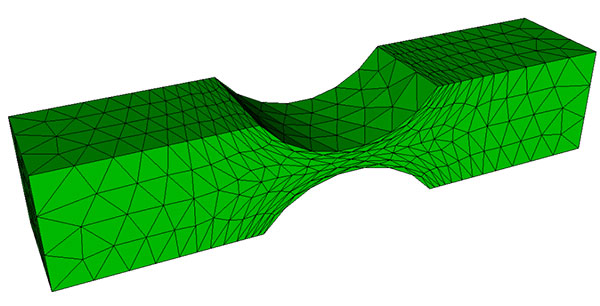
Highlights include new anisotropic tetrahedral meshing, cohesive element generation for crack and interface modeling, more triangle and tetrahedral meshing, improved mesh quality metrics for higher-order elements, reduced memory usage in Sculpt refinement, and expanded file compatibility for solver workflows.
Coreform Cubit 2026.6 is fis designed to help users generate higher-quality meshes, work with complex geometry, and move models between Cubit and downstream simulation tools.
For users working with advanced fracture and interface problems, this release introduces cohesive element generation and anisotropic tetrahedral meshing. For users preparing large or complex models, improvements to triangle and tetrahedral meshing, composite surface handling, assembly file opening, and Sculpt refinement performance help streamline workflows. The release also includes expanded import/export capabilities, including more robust MCNP import for nuclear users working with radiation transport models.
Sources: Press materials received from the company and additional information gleaned from the company’s website.


DE's editors contribute news and new product announcements to Digital Engineering. Press releases may be sent to them via [email protected].
Follow DE
Join over 90,000 engineering professionals who get fresh engineering news as soon as it is published.






About Us · Contact Us · Editorial Team · Advertising · Privacy Policy · Subscriber Services · © 2026 Digital Engineering 24/7 · Peerless Media