Helping design and engineering professionals discover, evaluate and specify technologies and processes that shorten the design cycle and enable success.



May 2026 Special Focus: Artificial Intelligence in Design and Simulation
In this Special Focus Issue, learn about the latest developments in the integration of artificial intelligence into engineering workflows.

Design & Simulation Software Guide 2025
In this Special Issue, Digital Engineering presents its second annual guide to design and simulation software vendors.
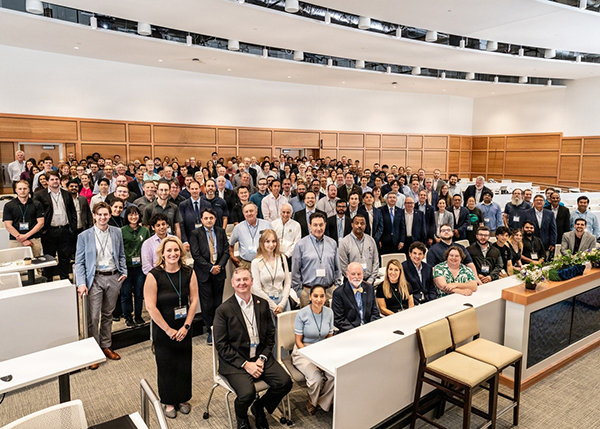
More than 280 members of the Automotive Research Center (ARC) from across academia, government, and industry came together this month to offer updates on some of the Army’s chief investments in science and technology.
ARC is a U.S. Army Center of Excellence for the modeling and simulation of ground vehicles, led by the University of Michigan. It operates in a Quad structure, with Army scientists, academic investigators, industry engineers, and graduate students working together to solve problems ranging from autonomy, power and energy management, and mobility to ground vehicle survivability.
At the 32nd ARC Annual Program Review (June 10-11), participants demonstrated how collaboration, digital engineering, and modeling and simulation continue to solve Army problems and shape its future capabilities.
“The technologies you are all spearheading will help prepare our military for the battlefield of the future,” said U.S. Sen. Gary Peters during opening remarks.
Dr. David Gorsich, Chief Scientist for U.S. Army DEVCOM Ground Vehicle Systems Center (GVSC), noted, "[The Quad model] creates an environment where promising ideas mature faster and transition more effectively from research to capability. That ability to connect research, development, and experimentation is critical to delivering new technologies to soldiers.”
The event featured keynote speeches from industry and military leaders in automation and robotics, case studies, technical talks, and a panel with ARC partners. The main focus was on autonomous vehicle systems, advanced modeling, and digital engineering development.
During the presentation titled “Engineering the Army–Academia–Industry Innovation Ecosystem for U.S. Defense Modernization Through Digital Engineering,” GVSC Ground Vehicle Robotics Associate Director Jillyn Alban, said, "Collaboration is key—it’s the linchpin. Sharing oversight and validation results will reduce duplication. It will build trust and ensure acceptance from the research and development side of the house all the way to fielding.”
Similarly, GVSC Director Michael Cadieux said, “It’s industry and academic partners that carry forward the research that you’re doing. You mature the products and have the next set of questions you want to get after that feed that pipeline into the future.”
Alban stressed, "Homegrown talent is essential. We must empower young engineers to innovate and make our AI solutions resilient—because without that, this just won’t be accomplished.”
ARC has over the last several years brought together more than 80 industry partners and nine government agencies, currently working with 15 different universities.


Kenneth Wong is Digital Engineering's resident blogger and senior editor. Email him at [email protected] or share your thoughts or suggestions at digitaleng.news/facebook.
Follow DE
Join over 90,000 engineering professionals who get fresh engineering news as soon as it is published.






About Us · Contact Us · Editorial Team · Advertising · Privacy Policy · Subscriber Services · © 2026 Digital Engineering 24/7 · Peerless Media