Helping design and engineering professionals discover, evaluate and specify technologies and processes that shorten the design cycle and enable success.


Alert!
Digital Engineering ceased publication on July 1, 2026. This website remains available as an archive of engineering content.
For inquiries or information, please email [email protected].

Digital Engineering April 2026
In the latest issue of Digital Engineering, we take a look at the latest innovations in design for additive manufacturing, including the use of natural language inputs, social media cosplayers, and AI integration. The issue also includes a feature…

January Special Focus Issue: Design for Additive
In this Special Focus Issue of Digital Engineering, learn about the latest advancements in design for additive manufacturing, including new software tools, additive in automotive, custom medical devices, and more.
Thermal Dynamics (West Lebanon, NH), a unit of Thermadyne, is one of the world’s largest suppliers of manual and automated advanced plasma-cutting equipment (Figure 1). The company has been a premier name in the business for more than half a century.
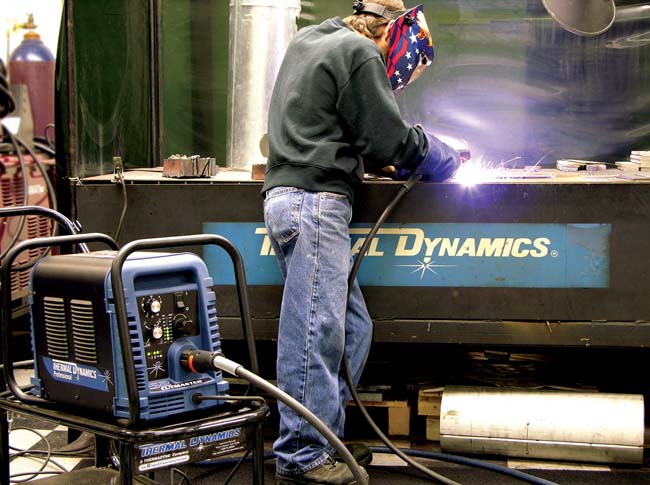 Figure 1. Thermal Dynamics is one of the leading suppliers of plasma-cutting equipment. |
Plasma cutting involves blowing a gas at high speed from a nozzle and forming an electrical arc through the gas to the surface being cut. The gas turns to plasma—a state in which the molecules break into ions. The plasma is hot enough to melt the metal and fast enough to blow the metal away from the cut. Plasma cutting is extremely fast, and it creates a clean cut that requires little cleanup.
Plasma cutting systems consume considerable electrical power, and as a result, their power supplies generate a lot of heat. Thermal Dynamics’ power supplies use a special thermal-interface material to protect electronic components by transferring heat away from the components (Figure 2). The material is applied to the heat-generating components, using hand-held air-powered pumps, commonly called “goo guns.”
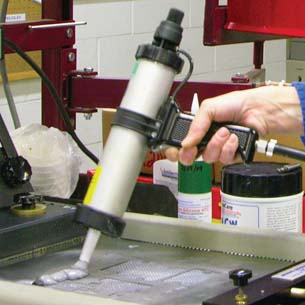 Figure 2. In production, the “goo guns” dispense thermal-interface material, which protects electronic components from heat. | 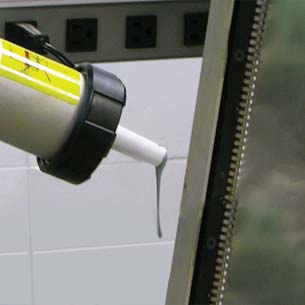 Figure 3. After each application, expensive material would leak out of the guns, adding to material costs and making a mess. |
Real Challenge
As part of their job, assemblers repeatedly pick up the goo guns, apply the viscous thermal-interface material, and set the guns down. In the past, the assemblers expended considerable energy by continually picking up and setting down the heavy guns. After each material application, a small amount of the expensive supstance was lost when it leaked from each gun, creating a sticky mess that had to be cleaned up (Figure 3). Production workers tried building several makeshift fixtures to make the guns more accessible and to capture the leaking material, but they did not achieve satisfactory results.
| “]FDM] actually paid for itself in only seven months.” Matt Colpitts, Thermal Dynamics |
Recently Thermal Dynamics’ R&D department purchased an FDM-based Fortus 3D Production System, which it uses for the rapid prototyping of injection molded parts. The department’s goal was to perfect product designs before they reached tooling, reducing the need for mold rework.
Real Solution
Although the Fortus system was put to work building prototypes, engineers quickly realized its potential for direct digital manufacturing. Thermal Dynamics Manufacturing Engineer Jill Markowski designed a fixture to make the guns easily accessible and to capture leaking material on a tray for reuse. R&D Engineering Associate Matthew Colpitts suggested building the fixture from thermoplastic rather than metal, using the Fortus machine.
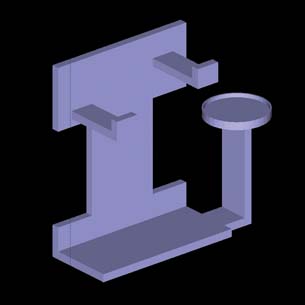 Figure 4. The fixture was designed to hold a production “goo gun” and capture any material that dripped from the instrument. | 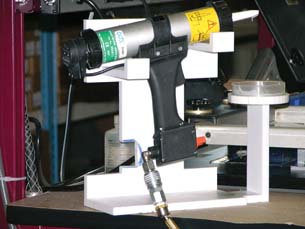 Figure 5. The FDM-built fixture cradles a “goo gun.” |
Colpitts estimated it would have cost at least $2,000 and taken one week to build the fixture from aluminum, using conventional machining and fabricating. Instead, the company used direct digital manufacturing to produce the fixture overnight. With the Fortus system, Colpitts built the fixture from polycarbonate in just 17 hr., at a cost of $20 per hour, totaling about $340 (Figure 4). The assemblers liked the racks but suggested a few changes. Colpitts integrated the improvements and manufactured five more of the fixtures. It took only about 4 days to build six fixtures. “We saved about $10,000 on the cost of building these fixtures,” he says. “And we may not have built them at all if we didn’t have the FDM direct digital manufacturing tool.”
How Did FDM Compare with Traditional Methods for Thermal Dynamics?
|
“The new fixtures speed up the assembly process by making the gun more accessible, and they reduce material costs by capturing essentially all of the thermal-interface material,” Colpitts says. “The assemblers like the fixture (Figure 5) because it makes their job easier and their workplace cleaner.”
Colpitts has since used the Fortus system to build other fabrication and assembly tools, such as a screw jig that holds eight M6 screws in place as they are fastened to printed-circuit boards. By holding the screws in exactly the right position, the screw jig reduces the time required to run the screws down, and it prevents damage to electronic components.
The Fortus FDM system has also been extremely effective in its original role of producing prototypes of injection-molded parts. “When we originally purchased the machine, our president said that he wanted to see it pay for itself in one year,” says Colpitts. “But it actually paid for itself in only seven months by avoiding a tremendous number of changes to molds.”


DE's editors contribute news and new product announcements to Digital Engineering. Press releases may be sent to them via [email protected].
Follow DE
Join over 90,000 engineering professionals who get fresh engineering news as soon as it is published.






About Us · Contact Us · Editorial Team · Advertising · Privacy Policy · Subscriber Services · © 2026 Digital Engineering 24/7 · Peerless Media